Content warning: Long, rambly, and heavy. There are Bible verses used unironically to argue about the world.
Allow me, if you will, to get religious with you for a few minutes. It’s a cliche that Jesus is the “reason for the season,” but I’m not sure that people – especially those of you who are not religious – can fully appreciate the power of Christmas. Christmas is far, far more than Jesus’s birthday (I mean, he was actually born roundabouts September, so yeah). Christmas, I think, is not just a celebration, or an occasion for gift-giving, or an excuse for lights and decorations and parties and frivolity. No, Christmas is more than an anything an occasion for joy.
Because Christmas is a glimpse of what the Kingdom of Heaven is like.
Let me explain.
Most people – most Christians, even – don’t really study the teachings of Jesus. In a technical sense, I mean. They know all the stuff about “love thy neighbor” and “turn the other cheek,” but there’s lots of parts of his message that are often lost. I don’t intend this as a criticism! There’s nothing at all wrong with just picking up the general moral thrust of Christ’s message from the church and just going with that. But to fully appreciate Christmas, we need to dive in a little.
I really should know who did this painting originally. It’s used so often.
Fundamental to Jesus’s message is the idea of the Kingdom of Heaven or the Kingdom of God. He mentions it over 100 times in the Gospels. At heart, the Kingdom of God is the moral and social re-ordering that Jesus brings: the fallen world will be overthrown and replaced with a new order, one of peace, righteousness, and justice at its heart.
But this is not a sudden event. This is not Christ come again in Glory to destroy the princes of the world and proclaim His divine reign in fiery letters writ across the sky. No, the Kingdom of God is a process – it is a gradual transformation. And it’s one that’s already ongoing. It’s a process that started more than two thousand years ago, in Galilee:
And He said, “How shall we picture the kingdom of God, or by what parable shall we present it? “It is like a mustard seed, which, when sown upon the soil, though it is smaller than all the seeds that are upon the soil, yet when it is sown, it grows up and becomes larger than all the garden plants and forms large branches; so that THE BIRDS OF THE AIR can NEST UNDER ITS SHADE.”
Mark 4:30-32
You see? It grows. The Kingdom of God starts small – it did start small – but from there it will grow, until ultimately it is so large that it dominates everything around it. The tree does not appear out of nowhere fully formed – neither does the kingdom. It begins from a tiny seed, and spreads.
all this from a tiny seed
It isn’t something Christians wait for, but something Christians must work for.
Consider another:
And He sent them out to proclaim the kingdom of God and to perform healing.
And:
“And as you go, preach, saying, ‘The kingdom of heaven is at hand.’
And
“This gospel of the kingdom shall be preached in the whole world as a testimony to all the nations, and then the end will come.
Various chapters of Matthew and Luke. Look ’em up if you want.
In short, the Kingdom is something that you have to work in order to bring about. It’s not something that just happens, but is instead something that we have in our power to create. We – you, me, all of us – have the power to bring this world a little bit more into line with the will of the Almighty, that is, to make it a bit more joyful, a bit more peaceful, a bit more just, a bit better – to make it a little more like Heaven. It’s something we’ve been working on for 2,000 years at this point.
Now in those days John the Baptist came, preaching in the wilderness of Judea, saying, “Repent, for the kingdom of heaven is at hand.”
Matthew 3:1
Note that John preached that it was at hand, imminent, two millennia ago – the Kingdom is not the end of the world. It’s part of the world already. It is here.
What am I driving at, with this? And what does it have to do with Christmas?
In short, the Christmas season is this time, above all others, when I think that the Kingdom is made most obvious in the world, the most manifest. Why?
Because Christmas is the time when we feel most comfortable loving our neighbors. And at heart, that is all the kingdom is: a place where we dwell in love with everyone around us.
We’re not comfortable talking about love, I think. Or maybe it’s just me. I’m not. I tend to be a somewhat private person, unless I’m talking to a computer screen and pretending that this is basically just a diary. But love has connotations of romantic love, the attraction between a man and a woman*, which is an artifact of the limited nature of the English language. Love, though, is more than just an erotic connection between two people – love is any connection between people. It’s a force that calls on us and demands that we place the needs of others above our own desires – that we do everything we can to help our brother. But love is so much more than an action:
Beloved, let us love one another, for love is from God, and whoever loves has been born of God and knows God. 8 Anyone who does not love does not know God, because God is love. 9 In this the love of God was made manifest among us, that God sent his only Son into the world, so that we might live through him. 10 In this is love, not that we have loved God but that he loved us and sent his Son to be the propitiation for our sins. 11 Beloved, if God so loved us, we also ought to love one another. 12 No one has ever seen God; if we love one another, God abides in us and his love is perfected in us.
1 John 4:7-12
Whoever loves knows God.
Whoever does not love does not know God.
God is love.
In my opinion, that passage of 1 John – is the greatest insight of Christianity, and the rock-solid foundation of the entire faith. Love is divine. When you work for the good of another, when you sacrifice for them, protect them, help them, you are touching the divine. You experience the presence of God.
Consider, then, what happens: the more you love, the more you experience God. It needn’t be radical love for people you have never and will never meet. The love of parents for children, of siblings for each other, love between friends – this all is love, and this all connects us to God.
What does love look like? If we love someone, how should we act? I’ve got one more passage I’d like to share.
But now I will show you a more excellent way.
If I speak in the tongues of men and angels – but have not love – I am only a resounding cymbal or a clanging gong.
If I have the gift of prophecy – and can fathom all mysteries and all knowledge, and if I have a faith that can move mountains – but have not love, I am nothing.
If I give all I possess to the poor, and surrender my body to the flames – but have not love, I gain…nothing.
Love is patient. Love is kind. It does not envy, it does not boast – it is not proud. It is not rude, it is not self-seeking, it is not easily-angered, it keeps no record of wrongs. Love does not delight in evil but rejoices in the truth. It always protects, always trusts, always hopes, always perserveres.
Love never fails.
– 1 Corinthians, chapter 13
God is love. When we love, we are in the presence of God. The kingdom of God, then, is the kingdom of love. And what is love?** Patience. Kindness. Humility. All the characteristics Paul listed – that is how we should live with our fellow man at all times. The more we can do this, the more the mustard seed grows, drawing closer to the day when its shady branches shall shelter us all.
You know that warm, fuzzy feeling you get when you help someone? That little inner glow that fills you and warms you and gives you contentment that here, now, at least for this little moment, in this little corner all is right with the world? That’s divinity. The Holy Spirit – whatever you want to call it, you are touching God. It’s one of the best feelings in the world – like summer, in the midst of winter. It’s our soul shining the way it was meant to – hence, the summer of the soul in December.
So let me bring it back to Christmas, one last time. I’ve gone on long enough. At Christmas time, we most allow ourselves to feel love.
Why not do this all the year?
It is this time, above all others, when we give most to charity. When we throw the change into the Salvation Army’s bucket. It is this time when we’re most patient with each other – or when we should be, at least. Insults and slights that might ruffle our feathers at other times we let fade, because hey, it’s Christmas, right? We forgive ongoing feuds with each other. We catch up with old friends. And, of course, we give gifts.
Everywhere you go at Christmastime, you see people affirming their dedication to each other. It’s not about the gifts. It’s about the thinking of others, and trying to find ways to make them happy, to show them you care. It’s about reflecting on our common humanity, and the fact that really we’re all trapped here together, and we can make our time together light and easy, or we can make it miserable and burdensome. Imagine everyone making one choice and sticking to it!
A Muslim man gave Christmas gifts to the needy in his town.
In short, then, Christmas is the one time of year when everyone at least pays lip service to the idea of putting others’ needs before their own, when we all allow ourselves to feel and to express our love for each other. So, this Christmas, just be kind to one another. Find someone in need – there are many, I assure you – and reach out.
And that’s what the Kingdom of God is. Christmas, then, is a glimpse of the kingdom. A time for us to see what awaits us once we get that mustard seed all nice and grown up over the whole world. And that’s why Jesus really is the reason for the season.
Christmas is so much more than a birthday.
** Or whoever. I’m not here to judge. ** Baby, don’t hurt me…
Every ten years – and again, the year after that – I fight one of my most futile and petty battles: when, properly, a decade is considered to have ended. As 2019 races towards 2020, this debate has reared its ugly head once more.
Well, no one else is talking about it but me, so I guess I’m the one doing the rearing. Well, so be it.
See, most people follow the simple and intuitively appealing rule that when the number in the 10s digit changes, bam! New decade. So the Seventies ended when 1979 became 1980, the Eighties ended when ’89 rolled over to ’90, and so on.
Regrettably, these people are wrong.
What follows is a repost of a little essay I wrote ten years ago, arguing with people. It didn’t convince anyone then and it won’t convince anyone now, but I’m still sharing it because I’m stubborn, dammit.
When, properly, does a decade end? It seems this debate crops up every ten years. Indeed, it is a glorious debate stretching back centuries. In the January 1, 1801 edition of Boston’s Columbian Centinel, a reader letter commented on “the daily altercation known as the Century Dispute” by predicting that “if we could be indulged with a peep upon earth a hundred years hence we should find our children as warmly engaged untying this knotty point as ever we have been.” Indeed, two centuries hence here we are.
The divide between the two camps is well-known, their point of contention bitter. On one side, there is the “0-9” camp, relying primarily upon the seemingly forceful “isn’t it stupid for the year 1960 to be part of the 50’s and not the 60’s?” argument. On the other sits the “1-0” crowd, which asserts that the beginning of the calender is a 1, not a 0, and can’t you people count?
Of course, if you go with *sniff* informed opinion, there is no debate at all. For example, there is the lively debate that raged over whether the twentieth century would begin in 1900 or in 1901. A poll of fourteen college presidents yielded only two who argued for 1900: Caroline Hazard of Wellesley and L. Clark Seelye of Smith. And whoever heard of Wellesley and Smith? I haven’t and I haven’t bothered to Google them, so all force of logic dictates that they’re probably terrible. The New York Times sniffed that, ““facts and reason, the authority of all dictionaries, and the support of every chronologer and historian that ever lived, to say nothing of the invariable understanding and custom of all lands and ages” pointed clearly to a 1901 start date, dismissing “the delusion that there is a controversy as to when the twentieth century begins.”
It was not alone. The Atlanta Constitution was also firm for 1901, refusing to call ninety-nine years a century even though it endorsed the free-silver scheme of calling sixty cents a dollar. The St. Louis Post-Dispatch, while endorsing 1901, suggested deciding the issue in true American fashion by holding a referendum.
Elite opinion in Europe was also deeply concerned over the weighty controversy. Astronomers and leading newspapers such as the Times of London were quite clear as to the 1901 start date. However, the imperial council of the Kaiser in Germany decreed that the 20th century would start in 1900. “Now let it decree that black is white,” responded one American newspaper; another called the Kaiser “the only man of any prominence who cannot count up to one hundred.” As things turned out, the Kaiser’s chronological slip-up was one of the lesser mistakes that Germany would make in the twentieth century.
pictured: a greater 20th century German mistake
The 1901 start date also recieved “official” status when it was endorsed by the Pope Leo XIII. Since the Catholic church is responsible for creating the Gregorian calender, presumably they would know. While that clears up matters for Catholics, Protestants and other heathens are unfortunately still left to unravel the knotty problem for themselves.
A simple appeal to commonsense further cements the position of “1 to 0”: Quick! Count to 10. Which number did you start with? 0? Or 1? You started with 1, unless you were anticipating my response and so started with 0 deliberately to confound me. Nice try, but that doesn’t count, so shut up. You learn to count 10 numbers ending at “10” in the first grade.
If you have 99 pennies, do you have a dollar? Does your second dollar begin when you hit 100 pennies? Or is the 101st penny the 1st penny of your second dollar? If you are counting pennies to make a dime, will 9 do? Or do you need 10? I suspect the US Department of the Treasury will back me up in confidently asserting that 10 is the requisite amount. Yet, if we are counting years instead of pennies, suddenly the magic number is the jump from 9 to 10? I think not!
Perhaps recognizing that in the “official” or “technical” battlefield they are utterly outmatched, the “0 to 9″ers retreat to the field of culture. Most of society believes that the decade ends tonight, and besides, isn’t it an informal designation, not at all resembling a century or a millennium (they are, of course, inescapably wrong concerning those epochs: The new millennium didn’t begin until 2001, sorry).
First off, numbers are irrelevant. Ten thousand people embracing the same error does not mean that the one dude who disagrees is wrong. That being said, there is some weight to the “cultural” argument. A decade can, after all, be any ten-year period. It need not be a formal progression in an orderly manner since Christ Himself. However, if we accept this, what is the culural marker that ends this decade, eh? Why the ten years from 2000 to 2009? There is nothing to distinguish 2009 from 2010 at all!*
When people refer to the “Sixties,” or the “Seventies,” the “Eighties” or the “Nineties,” they refer to a specific set of cultural markers: Long hair, miniskirts, hippies, Vietnam, or oil shocks, disco, bell bottoms, the afro, or leg warmers, big hair, Ronald Reagan, really awful music, or flannels, the “grunge” look, and the like. Thus, it is generally accepted that the year 1960 was culturally part of the 50’s. The ’80s are generally held to begin in 1981, with Ronald Reagan’s inauguration as President, and end in 1991 or so, with the collapse of the Soviet Union. The ’90s, as we think of them, did not really begin until after this period, perhaps not even until the election of Bill Clinton, and the current decade culturally probably began in 2001 (for obvious reasons). There is nothing new about this. Historians often refer to the “Long 19th century,” the period lasting from 1789 to 1914 that was essentially unified in terms of culture.
So, if you’re just arguing that the decade is a cultural term, well, then. Point out what dramatic event in 2009 brought this particular 10 year period to a close (and if you say anything at all involving Barack Obama I will hunt you down and punch you in the face). You can’t. There’s nothing. We can’t know what ended the “Aughts” (or the “naughties” in Britain) until sometime after it ends.**
To conclude: All the weight of “official” opinion backs up the “1 to 0” camp. The others are reduced to making the argument that it is a cultural term of measurement, not “official” – but then can’t explain why this particular decade must end in 6 hours, as opposed to another year and six hours.
Besides, the Pope hisownself is on my side, and that’s the next best thing to Jesus. Who can argue with the freakin’ Pope?
So, to conclude, I think it fitting to share a little poem composed by the Connecticut Courant marking the turn from the 18th to the 19th century back in 1801:
Go on, ye scientific sages, Collect your light a few more ages, Perhaps as swells the vast amount, A century decade hence you’ll learn to count.
So shut up.
*This is true in 2019 as well.
**In retrospect, probably the Tea Party election of 2010 or the Arab Spring of 2011 mark the transition.
This post has been a passion project of mine for about 6 weeks now.
See, I’ve heard it often said that American schools are failing, and that we could learn a lot from the way places like, say, Korea*. I think that’s wrong for a number of reasons.
First, it’s all but impossible to make generalizations about the entire American school system. American schools are organized on a district-by-district basis, educate literally tens of millions of students, and are spread across an entire continent in a wildly diverse array of towns, cities, landscapes, economies, cultures, races, religions, and so on. There is no “typical” American school. Do you take the private prep school in Connecticut as an example, or the tribal reservation school in Montana? The massive Los Angeles high school, or the little rural Mississippi schoolhouse?
No, American schools have to be taken on a case-by-case basis. My own experience is hardly the most extensive, but I’ve had the privilege to work alongside some brilliant educators in a great district at Clayton (shout out to Deb, Aimee [both Aimees], Richard, Barry, Josh, Jo, Mel, Spencer, Heather, Susan, Chris, Dave, Rob, Kate, Stephanie, Julie, Sarah, Mike, Paul, AnnMarie, Mark, Cassie, April, Erin, Jennifer, Caitlin, and others – let me take a moment to say that I admire each and every one of you individually, from your talent in the classroom to the love and enthusiasm you bring to your work each day. Having the opportunity to work and learn alongside all of you was one of the greatest blessings of my life. Keep it up), and I’ve also worked at some not-so-great schools. So, there is no “American” school that we can point to as representing all of American education.
Second, I don’t think Korean education is a system we necessarily want to import. It might work for Koreans, but not for us.
Let me explain.
Why Korean Schools are Not American Schools
A quick overview of Korea’s school system
The Korean education system is widely touted as one of the best in the world. Korean students’ high achievement scores in math and literacy are often cited as showing the superiority of the Korean way, and as an indictment of countries with lower average scores (most often the USA).
Everything that follows is based on my own personal observations and opinions and should be in no way treated as authoritative – but if you want a view from the Korean trenches it may serve.
The bottom line is I think there’s something to the stereotypical view – Korea has certain cultural and institutional advantages, and its education system is practically designed to achieve good test scores. However, I also think that a focus on test scores alone masks a lot of serious problems with Korean education, and I am not at all convinced that the system is the best means of preparing Korea’s young citizens to face the future.
——-
Korea’s Cultural Advantages
It’s very important to understand that Korea is not like the US. I have no doubt that many of you are reading this now and either snorting or rolling your eyes at an obvious assertion, but I just want you to pause and appreciate it for a moment: Korea is not the US. We understand that intellectually, but that has important consequences on the cultural level.
The main thing is Korea’s Confucian culture. Confucian ethics heavily emphasize duty, responsibility, and hierarchy. Sons have a duty to respect, honor, and obey their fathers. Fathers in turn have a duty to defend and provide for their sons. The Korean worldview (which is shifting somewhat as Korea integrates with the modern, largely-Western world) neatly places everyone into their place into the hierarchy: Parents over children, elders over the young, men over women, etc. Now, individualist Western sensibilities chafe at this, but it’s important to note that Koreans are fully aware that the West does things differently, but they don’t really care. The way they do things is perfectly natural and works well for them. They view us the same way we view them.
Confucianism emphasizes order and hierarchy, with respect flowing up from subordinates to superiors. Elders and teachers are especially respected.
So, most people (not all – just as there are Westerners that want to promote more communal ethics over our own individualist ethos, there are Koreans who want to make their own society less communal) are perfectly comfortable in this system. This sense of heirarchy is everywhere. Young people I’ve never met before are unfailingly polite and respectful, both from my status as an elder (I’m only 30! I’m not old) and as a teacher (when they know I’m a teacher, which is a fair guess when you see a Westerner here – probably an English teacher). Young people are socialized their entire lives to obey their parents and their teachers.
Now, what do those parents and teachers want them to do? To learn. Education is almost holy to Koreans. Everyone here respects and honors getting a good education. Top to bottom, from the President all the way down, the message is universal: you must get a good education and go to a good university. Korea is an extremely proud and patriotic nation, and one of their badges of honor is their educational attainment. It is every students’ duty to uphold that and contribute to Korea’s continuing dominance in the world rankings (they especially need to keep ahead of the hated Japanese).
These two factors – Koreans’ respect for elders/teachers, and the society-wide veneration of education – means Korean schools have an influence over Korean students to a degree Western teachers can only dream about. Seriously, I used to teach middle school in the USA, and the difference is night and day. Student behavior here is an absolute dream and it’ll be hard for me to go back to the, uh, livelier environment of an American middle school. The result of this school power is that schools can ask a lot more of Korean students than American schools do. If Americans tried some of the things I’m about to tell you, well, they’d not only have students but parents also revolting. They’d never get away with it. But in Korea, parents will – almost – always support the teachers over the students.
The Korean school system – an overview
Korean schools are modelled after the US system, due to the long-standing presence of American troops and the accompanying bleed-through of US culture in the country. Students attend 6 mandatory years of elementary school and 6 years of secondary, split between 3 years of mandatory middle school and 3 years of “optional” high school. High school, while neither mandatory nor free, is basically universal among Koreans due to the society’s intense focus on educational achievement.
No, I don’t know what “We are 1st Grade” exactly teaches.
Students learn math, science, “life skills” like pro-social behavior, and, starting in 3rd grade, English, history, and other “soft” subjects in elementary school. Middle school is more of the same, with an increasing focus on English, math, and science. High schools are split into general academic subjects (about ¾ of students), “vocational” schools (about ⅕), and specialized private prep schools (like the one I teach at).
English proficiency is an obsession with the country. The language is mandatory starting in 3rd grade, and the Korean government is heavily focused on promoting competent English education, including paying its own teachers to live for extended periods of time in English-speaking countries and offering native English speakers very generous contracts indeed to come over and teach their own students (now you know why I’m here). Many high schools and universities are taught exclusively in English. In addition, there are possibly thousands of private English academies in the country – I pass posters and ads for them all the time.
All of this is aimed at the big event: the CSAT. This event, held in November every year, is THE college admission test in Korea. The results of this single test is the highest of high stakes for Korean students – just short of life or death (actually, given the suicide rate, for many students it IS literally life or death). Traffic shuts down and the government runs extra busses and subways to make sure students make it to the test on time. Air traffic over Korea is shut down for the 8 hours the listening portion of the test takes place in.
The baseline for admission to Korea’s top three universities (Seoul University, Korea University, and Yonsei University, “SKY”) is a near-perfect score.
Tailor-made for tests
The result of all this is intense, even insane competition amongst Korean students. No reputable job will look twice at them if they fail to have a degree from a top university. Worse, their friends, their family – everyone will be disappointed in them if they fail. In the heavily Confucian culture of the country, this is an almost unbearable shame. It’s difficult for Westerners, at least those of us from guilt cultures like America, to empathize, but imagine how your family would look at you if they knew you, I don’t know, hosted dog-fighting rings for fun or had a huge stash of kiddy porn. Well, maybe not that extreme, but you get the idea. Failure is unthinkable.
But for many students, failure is inevitable. There are millions of students jostling for a very limited selection of spots. There’s no way for all of them to get in. The result, then, is an arms race. Private schools, tutors, hours upon hours of study – any edge students, and especially parents, can find for their kids, they take, starting as early as elementary school. Anything less results in your child falling behind, and that is doom.
Most schools know this, and respond. Korean education is very grade-focused, and the reputation of drill-drill-drill, rote-memorization is, while a bit exaggerated, not entirely inaccurate. Schools demand perfection in memorization and recital, whether of math facts, of complicate chemical equations, or a massive list of English idioms for some goddamn reason (I still don’t get that last one). I once was called in and chastised by my principal because my students were averaging scores of 90 on my tests and I needed to get that down to 80.
So, all of Korean education is optimized around students delivering the best score they possibly can on a single standardized test at the culmination of their academic career. Their entire culture, society – the whole support network students have access to is dedicated to this one goal. Thus, of course you get a system that is very, very good at churning out students that will score well on standardized tests!
The college entrance exam is taken so seriously that airplanes are diverted from over the country to avoid disturbing the students.
But all that optimization comes at a high price.
Costs
Let’s talk about my own personal experience. I teach English at a gifted high school – and right there was my first cultural shock. A gifted high school would never fly in the United States. Why not is left as an exercise for the reader. For my part, it’s a dream job. I only have 3 or 4 total preps a week (barely 20% of my middle school preps), the administration is supportive, and the students not only are imbued the Korean spirit of subordination and respect, but also are motivated, talented, and proud of earning their place at the school. That makes instruction a breeze – behavior problems are totally absent from the school and I can focus solely on providing content. I’m not a babysitter here. In fact, the only trouble I ever have with students is one common problem: They sleep in class.
Big deal, you think. They’re teenagers. Teenagers sleep in class all the time. And you’re right! They do! In this way they are no dfferent than American teenagers.
But the way Korean students sleep is different than American students. The students shuffle in at the start of class, take their seats while waiting for the bell to ring, and immediately nod off. Some will sleep until the bell rings, then do their best to stay attentive through the lesson. Others – well, not so much. They remind me of nothing so much of stories I’ve read of soldiers in combat zones, who quickly master the art of sleeping whenever they have a spare moment. They resemble veterans in other ways – Korea’s suicide rate is the highest in the OECD, and suicide is the leading cause of death among Korean teenagers. The most commonly cited reason? Academic stress.
No wonder, either. Here’s my students’ biweekly schedule.
The front of my school.
At 7:30, wake-up music blasts through the dormitory (I was allowed to set the playlist during Halloween week, and you bet your ass I scheduled all the spooky music I could. Halloween isn’t really a thing here, but it’s my favorite holiday so by God I’m making it a thing). The students must all rise from their beds and report to a check-in desk, which will note that all students are awake and up. If a student fails to check in, a teacher will be sent to investigate.
By 8:00, all students are out of the dorms. They can go to the mess hall for breakfast, if they like. Breakfast is typical fare – rice, some sort of fish soup, kimchi. The same food they’ll eat for lunch, and for dinner.
8:20, and they need to report to home room. Many students have opted to skip breakfast so they have more free time, so they will straggle in from all over campus. Following 20 minutes of home room, the school day begins – 50 minute classes with 10 minute passing periods, plus a lunch period. No individualized classes here – they move with the same group all day. The ~16 people in their home room will be their main companions for the entire academic year.
At 4:20, the final class ends and it’s time to clean the school. They scatter to the various rooms, dig out cleaning implements from various cupboards built for the purpose, and swiftly sweep, take out the trash, dust, etc.
4:40 and their “special after school club” begins. Basically this is another class – math, physics, chemistry, some subject that they selected. You choose at the beginning of the year and, of course, cannot switch. Many have said that their biggest regret at school was choosing the wrong club.
A typical day of classes.
At 6:00, it’s time for dinner. Same stuff as lunch – rice, fish soup, kimchi, some form of meat dish usually. Same as breakfast will be in the morning.
At 7:00, it is time for “self-study.” Self-study consists of the students gathering in a large study hall filled with individual study cubicles. They will set up, each in their own cubicle, and spend the next two hours hitting the books.
At 9:00, they get a break.
At 9:20, self-study resumes. Another two hours. Same as the first. Some admit they have difficulty concentrating at this time.
At midnight, the dorms are at last unlocked. The students are allowed to return to their rooms and to sleep. Most don’t, of course. They have been unable to socialize outside of mealtimes literally all day, so most stay up for one to three hours talking with their friends and visiting. It is their only free time during the day. Most go to bed around three am.
Four and a half hours later, the morning music blasts again and it resumes.
Saturdays, there are no classes. Instead, students spend the morning at a special club – maybe sports, if they were smart enough to sign up for baseball or badminton or soccer – or else writing, art, music, one of the finer arts. In the afternoon, after lunch, self-study time resumes. This will last in 4-hour sessions, with breaks and a meal, until bedtime.
Sunday, they have self-study in the morning, and then the afternoon is free.
Every other weekend, they are allowed to visit home.
Now, my high school is an intensive, elite high school dedicated to training Korea’s gifted and talented children in the ways of science. Surely normal high schoolers don’t have it so bad, you’d think? And you’d be right! …sort of.
Not all high schools are boarding schools (although many are). And no elementary or middle schools are. However, such is Korea’s intense focus on education, and such is parents’ obsessive competition to get their children into a top university, that letting your kid only study at school is for fools and beggars. Everyone else ponies up for private tutoring, most commonly hagwons.
Afterschool study in a hagwon
Every expat teacher in Korea knows hagwon horror stories. These soulless institutions crouch inside virtually every Korean office block, gaudy advertisements outside blaring that they will give hopeful parents’ kids a leg up in math, in science, in English. And some of them do! But many are exploitative babysitting mills, hoovering up guileless parents’ cash and shoving kids into bleak rooms lit by dim rows of fluourescent bulbs being taught by an underpaid foreign teacher (who may not even be in the country legally and so is unable to complain to the government about poor treatment).
Hagwons, to my mind, illustrate a potential failure of private school choice, which I otherwise support. Parents find it very difficult to judge quality, and besides are often unable to afford better even if they know it’s not the most ideal circumstance for their kids. But they feel they have no choice, because if they pull little Kim Hwang-Ju out, how will he ever get into a good high school? And if he fails to get into a good high school, what chance does he have at university? You’d basically be throwing his life prospects into the fireplace if you did that. There’s an aching, roaring demand for private tutoring in this country, anything at all to give your kids a leg up on those bastards’ devilspawn next door, and hagwons are a parastic entity come to fill the void. Some may be legitimate, run by scrupulous employers and offering quality education – maybe even a majority! But there’s also plenty of profiteers out to grift parents.
Anyway, kids outside the gifted high school may go home at night, but it’s just long enough for dinner or so. Then it’s off to the hagwon, where they will stay until 10:00. It used to be later, but the government cracked down and installed a curfew on students – with the result that many underground late-night hagwons exist.
The point of all this is that Korean education is a relentless, ruthless, remorseless grind. Students are under tremendous pressure from their families, their peers, and all of society to succeed, with total shame being visited on any who fail to keep up. The school system has developed into an authoritarian monster bent on packing every last moment of the students’ day with more study! More education! More knowledge! With the entire focus bent on a few standardized tests – not tests mandated by the government, mind, but by the universities. You have to pass a difficult entrance exam to get into a good high school. And a good high school which focuses single-mindedly on preparing students for the single national college entrance exam is the only way you have prayer of making it through the brutally competitive college admissions process.
President Moon Jae-In with one of his Cabinet members – who is embroiled in a scandal over his daughter’s academic fraud. Education is a constant national issue here.
It’s important to note that the Korean government is aware of many of these problems, and President Moon Jae-In’s administration is working to correct them (making high school admission more equitable, trying to find jobs for college graduates, trying to improve students’ life satisfaction so they stop killing themselves, fighting the hagwons). But everyone here knows how difficult it is for a government to fight cultural inertia, and Korea’s educational system is not the result so much of deliberate government design as it is the natural consequence of a set of cultural imperatives. So, President Moon’s efforts have not met with universal success.
So yes, Korean students get good test scores. With all this, it’d be completely astonishing if they failed to be one of the top nations in the world when it comes to test scores. But I am increasingly left with the feeling that that’s all they have: test scores. And what good are test scores, in and of themselves? Tests are only good insofar as they measure something real, and to my mind the only real thing Korean national tests measure is students’ ability to optimize for the tests. Are Koreans more innovative than the rest of the world? Do the best Koreans outcompete the best Americans, or the best Germans, or the best Israelis, when it comes to scientific breakthroughs, to new tech start-ups, to powering the innovative and creative information economy of the future? I’m not so sure.
The Korean economy, which rapidly grew from the 1980’s, has been slowing down in recent years. Korea’s unemployment rate among college graduates is extremely high. With virtually every young person pursuing a degree, naturally degrees have become devalued by many companies. Perversely, the ferocious competition to get into college to get a good job has resulted in getting into college no longer guaranteeing a good job. Observers have noted that Korea’s students often seem narrowly focused, have difficulties taking initiative, and lack the flexibility needed for the modern economy. At the same time, vocational training is way down (much as in the US) and many “blue collar” jobs go unfilled here because of the extreme social stigma from not getting a college degree (and consequentially being overqualified to be a “mere” plumber or electrician).
Korea’s youth unemployment has consistently been twice the national average.
I don’t want to say that the Korean education system is a failure. It’s not. Korea has one of the highest rates of literacy in the world and one of the highest rates of tertiary education in the world. Korea has grown from abject dirt poverty in 1953 to one of the 10 largest economies in the world today, while stuck on a tiny, resource-poor peninsula wedged between the devil and the deep blue sea (the People’s Republic of China and Korea’s hereditary enemy, Japan). Many great and popular brands are Korean – Samsung, LG, Hyundai, Kia – and Seoul is one of the greatest cities in the world. The Koreans are probably the best-educated national group in the world and they have a lot to be proud of. But that success comes at a high price. And in my opinion, having worked in it, is that their system is one that is neither capable nor desirable of being emulated elsewhere.
Tl;dr: Yes, Korea has great test scores, but don’t read too much into that.
Images like this are what made me first look into my student’s schedule. I see this every day.
*I really have come around to calling it Korea instead of South Korea. It’s one nation that’s presently in a state of civil war, and has been for the last 70 years. Both governments claim sovereignty over the whole peninsula, so it’s not like there’s an official North Korea and South Korea. There’s one Korea, and which government is the legitimate one is, well, open to disputation. Personally, I back the regime that’s not a murderous Communist dictatorship.
The sun was so low that it was almost hidden behind the flank of the mountain as I staggered down the trail. Only a scant few rays slithered between the trees, leaving most of the path down in shadow. Tricky footing, but I had to hurry, since I wanted to make it to the bottom and get back to town before dark.
But it was hard going.
Mudeungsan on a wet day in late autumn.
I was probably overexerting myself on this one. It was early Saturday evening. I had spent most of the day at rehearsal – which, of course, any theater geek can tell you is draining by itself – then had come out here before dinner. I had a few hours of daylight left – about 4 – which seemed like enough, if I pushed myself, to accomplish my task.
I had come to Mudeungsan intent on finding the top, but the intricate network of trails (all marked mostly in Korean) had defeated me on three consecutive attempts – including this one. I had forged quickly past the ajummas and ajassis in their climbing gear, then hit the stairs and steep, boulder-lined pathways winding up the flank of the mountain. I was quickly blown, but even though I’m a damnfool, I am at the very least a stubborn damnfool, so I kept at it, letting the long legs God saw fit to grace me with eat up the distance, until I reached – well, not the peak, but certainly a peak.
The view from one of the tops I reached.
My legs were stiff and weary, I was out of breath, and, again, because I am an idiot, I hadn’t brought enough water. But the light was starting to go and coming down the mountain in the dark was not going to be a pleasant experience, so I resolved to tackle the descent and then recover with some dinner afterwards.
This was likely a mistake.
The shadows were already growing long, and the path was narrow and, perversely, just as steep going down as it had been coming up. Imagine the cheek! My breath came short, my swollen tongue clung to the roof of my mouth, and in general I was not having a good time.
Good view from the top, though.
So it was that, tired, sweaty, and maybe crying just a little bit (although I’ll never admit it if I was), I staggered down the trail and into the courtyard of a small Buddhist temple that lies near the base of the mountain. It was your typical little Korean Buddhist mountain sanctuary: three buildings – barracks, temple, kitchen – arrayed around a central courtyard and a small stone pagoda. A handful of Koreans were walking around the grounds, visiting. Most importantly, though, I saw a small stone bench next to the main temple. Eternally grateful for the great, I stumbled over to it and sank down.
The temple. The stone pagoda in the center predates the Norman Conquest of England.
While I sat there and just sort of panted and concentrated on continuing to exist for a bit, a middle-aged Korean man with a shaved head and the simple blue habit of a monk emerged from the kitchen and glanced over at me for a moment before vanishing back inside. I dully watched him go, too drained to really be curious.
A few minutes later, he emerged again and walked over to me. In his hands were two steaming mugs. Without a word, he sat down on the bench next to me and handed over one of the mugs. The steam carried the scents of mint and other herbs from the tea to my nostrils. I held the mug up to him in acknowledgement, then sipped.
For fifteen minutes we sat there, we two, with our tea, watching the world go by. The sun got a bit lower. The evening breeze got a bit cooler. The crowd got a bit thinner. And my spirits a bit stronger.
Then the tea was done, and so was the moment. I stood up, nodded farewell, and stepped off back to the mountain and the rest of the world.
Neither one of us ever said a word to each other in the whole encounter.
I paused in the middle of the stream of people and glanced around. Scores of Koreans in their best mountain gear flowed around me – mostly middle-aged and elderly men and women, clad in sleek climbing gear, visors, hats, and gloves, in many cases masks, too, so that only a few inches of skin peaked out around their eyes – Koreans greatly fear the sun and go to extreme lengths to avoid exposing themselves to it. True story. They all were heavily equipped in backpacks, water bottles, and walking sticks, looking more suited to an expedition scaling the Matterhorn than an afternoon’s hike on Mudeungsan.
Except, that is, for one man.
He was short, bald, and round – in fact, his whole body from his little bald head down to his expansive waste seemed to be mostly a series of spheres. His head was round, and bare, only a few wispy strands of once-black hair laying limply across the crown. Little black eyes, glittering with humor and good cheer, squinted out from beneath heavy brows, framed by his ears which stuck out just a bit from his head. His cheeks, naturally, were round and seemingly perpetually stuck in laughter. A pair of chins hung over his body, which, again, resembled nothing so much as a globe.
Actually, he looked like one of those classic laughing Buddha statues, come to life and now wandering around Mudeungsan ambushing foreign travelers.
He wore the same track suit that other Koreans did for exercise, but that was about the only way he resembled them. Most Koreans are stern and grave in public, especially seniors. This man was – well, the only way to describe him was jolly.
He came bouncing up to me, seeming amused as hell to see me on the mountain. “You English? Yeah? English?”
I nodded. “Yep. I speak English.”
“Oh! Good! Where from, where from?”
“America – Missouri, if you know where that is.”
“You guess where I from! How my English? I practice with you! You guess where I from!” The man’s words came out in a mad rush, as if each was eager to be the first to reach my ears, so that they were tripping over each other and getting in each other’s way, all kind of just stumbling in at once.
I looked him over. I mean, he looked Korean, more or less – a bit rounder than most, a lot happier than most. But if he was Korean, why would he ask me to guess?
“You’re not Korean?”
“Nope! Guess again!” He grinned widely at me (well, more widely).
Well, he’s obviously Asian, so let’s play balance of probabilities here.
“Then you must be Chinese?”
“Yes! Good! Good! You good guesser!” He doubled over, laughing. “How my English?”
“Not bad,” I said, not untruthfully I felt. But he insisted I was a liar, and that his English was horrible, but he wanted to practice.
The laughing round man and I stood for perhaps 20 minutes there, on the path up the mountain, while the crowds flowed around us. Our conversation – interrupted by his frequent bouts of hilarity – was generally sufficient for me to learn this:
1)His name was Kim Cheong-wan. 2)”I bet you didn’t expect me to have Korean name!” 3)Turns out he was born to Korean parents in northern China – Dalian, to be precise, the former Mukden/Port Arthur during the days of Russian and Japanese domination. 4)His parents had met after the war – mom was from the North, dad from the South, but due to the war neither one of them could go home. So they made a life in China. 5)Cheong-wan loved to travel, loved to learn new languages. 6)Did I speak Chinese? 7)Wow, my Chinese was very good!* 8)Cheong-wan’s English, despite my insistence, was terrible. 9)”You tell me I make mistake! You tell me, yes?” 10)Of course I would tell him.
He had lived in China most of his life, but had moved to Gwangju to retire about a decade before, living near his father’s family. He liked to come out and hike every day – important to stay healthy, you know? He also liked meeting new people (I hadn’t noticed), especially foreigners (so he could practice his English).
Eventually, we parted, me headed up, him headed down, to the bus stop. I summited, scrambled down the mountain (not without difficulty – a story for tomorrow, perhaps), and staggered into the bus stop a good two hours later. I found a handy bench to wait for the next 09 bus to take me home, when a hand fell on my shoulder.
“Heeeeeeey! American! Remember me!?” How could I forget? Our reunion prompted renewed hilarity from Cheong-wan. His bus was late, so he was having to hang around the bus stop. He didn’t seem to particularly mind, as he wandered from person to person and chatted animatedly with everyone.
His English was – well, not great. Neither was my Korean. But nevertheless, we talked for perhaps an hour there, waiting for the bus. And at the end of it, I think I had made another friend. All because he wanted to practice his English.
In other words – sometimes the language barrier is no barrier at all to communication. Instead, it promotes it.
Glad to know you, Kim Cheong-wan.
*My Chinese is not very good. I got out “ni hao” and “xie xie” and a handful of other basic phrases.
Most people, I think, don’t really appreciate Thanksgiving as much as they could, or should. For most – again, as I see it – it’s a day to gather with family, to eat a delicious meal together, and to be vaguely thankful for various things. Maybe I’m projecting, because that’s certainly what I used to think Thanksgiving was.
Boring, mostly. Wholesome, sure, but not a holiday with teeth like Halloween or Christmas.
As usual, I was wrong.
What changed Thanksgiving for me was learning about the first Thanksgiving. See, history is a remarkable tool. It gives context to things. It lends weight. By understanding the origins of things, how they came to be, you understand what they’re truly for, and how they can best be used and appreciated. In other words, history is the best tool I know of for giving our world meaning. Including things like Thanksgiving.
You must understand, the first Thanksgiving was not Pilgrims and Indians gathering together in peace in order to celebrate the harvest. That’s a story we tell children, and like many stories, the real world is much more complicated and much more interesting. The feast at Plymouth did happen – I’m reasonably sure – but it was not repeated and it did not become a yearly tradition. That is to say, it was merely a thanksgiving, not Thanksgiving as we know it. Was it the first? Undoubtedly not – harvest feasts and festivals are known in every culture around the world, including Native American. The only thing Plymouth Rock could possibly be first in was the first time Europeans celebrated a thanksgiving in North America. Except, wait, there was already an English colony in Virginia that had been having thanksgivings for years, and we have records of the Spanish and even the French from decades before Plymouth. So Plymouth really isn’t the first anything, except, possibly, the first thanksgiving by religious refugees in Massachusetts. Super boring.
No, after Plymouth, Thanksgiving died away, with sporadic revivals here and there, but it was always a one-time thing. Presidents would proclaim them for various reasons – the defeat of a rebellion here, an invasion repulsed there – and people would celebrate, and life would roll on. Thanksgiving did not enter our pantheon of holidays until 1863.
The height of the Civil War.
Woah. That means something.
The most important thing in any history is context. What was happening at the time of the events described? What was the world the people lived in like? What did they think, what did they believe? What did they love and cherish, what were their hopes? What did they fear? You can’t understand a man until you’ve walked a mile in his shoes, if I may borrow from Harper Lee, and you can’t understand history until you can open up your eyes in that time and look around the world some. So let me give you the context here.
On October 3, 1863, Abraham Lincoln issued a proclamation that officially established a regular Thanksgiving on the final Thursday of each November. Now, Lincoln was in his third year as President and he was not very well-liked. A rail-thin politician from Illinois, he had catapulted to the Presidency in 1860 despite an almost total lack of experience or much record of accomplishment beyond a gift for rhetoric. Imagine an even less-experienced Barack Obama and you’ve about got the picture. His Cabinet was largely staffed by political rivals eager to undercut the young President at any turn, France in Mexico and Britain in Canada were continuous problems, the Sioux out west were restless…oh, and half the country was awash in the fire and blood of rebellion.
I don’t think people today realize how monumental the Civil War was, but for me, for nearly 25 years now, it has been my lodestone – the one piece of American history I always come back to. My interests in other things wax and wane – Rome, Byzantium, China, World War 2, the Cold War – but I always return to the Civil War. It has a grip on my imagination like no other period.
Because it was the moment America could have failed.
We were right on the brink, friends. There were a thousand ways the war could have gone differently. A thousand different paths that all lead to an independent South and, ultimately, the shattering of the great Republic and the end of the American dream. Make no mistake – those were the stakes. The war may have started over secession, provoked by the great question of slavery, but defeat for the Union cause would not merely have meant probable decades more of bondage for the millions of African-Americans living south of the Mason-Dixon line, but also the failure of the first truly great experiment in self-government in history.
Lincoln knew the score. He said:
It is not merely for to-day, but for all time to come that we should perpetuate for our children’s children this great and free government, which we have enjoyed all our lives. I beg you to remember this, not merely for my sake, but for yours. I happen temporarily to occupy this big White House. I am a living witness that any one of your children may look to come here as my father’s child has. It is in order that each of you may have through this free government which we have enjoyed, an open field and a fair chance for your industry, enterprise and intelligence; that you may all have equal privileges in the race of life, with all its desirable human aspirations. It is for this the struggle should be maintained, that we may not lose our birthright–not only for one, but for two or three years. The nation is worth fighting for, to secure such an inestimable jewel.
Speech to the One Hundred Sixty-sixth Ohio Regiment Washington, D.C. August 22, 1864
The idea that we all have value. That no man is born better than another. That any one of us worthy to rise and go as far as our abilities can carry us – in 1863, there was no place outside the United States where that was true. It truly is “an inestimable jewel.” And so the Union was worth fighting for.
The Civil War is an American Iliad, four bloody years of struggle and turmoil. By the end of it entire states were laid to waste – smoky pillars rising towards the sky all across the formerly fertile and prosperous fields of the South. Hundreds of thousands of Americans lay dead, in battlefield cemeteries and outside pestilential war-camps spanning half a continent. There were deeds done of great heroism, on both sides – and villainy. You have colorful characters – instead of Hector and Achilles, Ajax and Nestor, Priam and Odysseus, you have men like Lee and Grant, Nathan Bedford Forest and Stonewall Jackson, Abraham Lincoln and Jefferson Davis, every man doing his utmost to fulfill his duty as he saw it. You have tragedies of brothers literally killing each other on the same battlefield, best friends falling side by side – and the occasional comedy like two one-legged veterans meeting after the war, discovering they had the same shoe size, and vowing to buy the same pair and split ’em up forever after. It was at once America’s darkest hour and perhaps our most heroic.
That is the context that Lincoln proclaimed a day of Thanksgiving. 1863 had been the most tumultuous year yet. It had opened in January with bloody battles in Tennessee and with the Emancipation Proclamation (which promptly stiffened Confederate resistance even further). As winter turned to spring, the great Army of the Potomac had launched itself once more against Robert E. Lee’s Army of Northern Virginia, with twice the numbers of its Southern foe – and once again it had been driven back, reeling and bloodied, this time in less than four days of fighting. And out west, Grant was stuck in the mud opposite Vicksburg, a Confederate fortress city that had defied all efforts to capture it for six months. As summer turned, the Confederates had flooded north into Maryland and Pennsylvania, the invasion climaxing in the titanic Battle of Gettysburg – the largest and bloodiest battle ever fought in the Western Hemisphere – while Grant had boldly outflanked and outfought 3 separate Confederate armies around Vicksburg and at last forced the surrender.
But you mustn’t be deceived. The war was not over, and Lincoln did not issue his proclamation in the aftermath of victory. Dixie had rallied. Lee was not destroyed and was as strong as ever behind Virginia’s swift-running rivers. Grant bogged down again Mississippi. And two weeks before the proclamation, in Tennessee, an entire Federal army had been bloodied and beaten at Chickamauga and even as Lincoln penned the words, stood on the brink of total destruction, surrounded and starving in the city of Chattanooga.
That is the context of the first Thanksgiving. Torn by war, hampered by bloodshed, surrounded by hostile foreign powers, Lincoln proclaimed a day of thanksgiving and praise for the blessings of the Mot High. Because no matter how dark the hour, no matter how many troubles you may face, there is still much to be grateful for.
Thanksgiving is a holiday with teeth, my friends.
Below I have placed the whole text of the original proclamation. If you’ve never read it before, I highly recommend you give it a look.
But above all else, remember this this Thanksgiving: life isn’t always going to be perfect. In fact, it never will be. We’ll always have stress from our jobs. Stress with our family. My relationships aren’t going the way I thought they’d be, and this isn’t where I thought I’d be at thirty. The nation’s politics seem more divisive than ever, and every day the news shows us more reasons to be afraid, more reasons to be upset, more reasons to be dissatisfied with the state of the world. But none of those things are a reason not to be grateful.
In fact, it’s in times like those that we need to be grateful most of all.
“Do not doubt: in this world you will face trouble. But take heart! I have overcome the world!”
John 16:33
I’m thankful for many things, but this year, I’m especially thankful for Thanksgiving.
Washington, D.C. October 3, 1863
By the President of the United States of America.
A Proclamation.
The year that is drawing towards its close, has been filled with the blessings of fruitful fields and healthful skies. To these bounties, which are so constantly enjoyed that we are prone to forget the source from which they come, others have been added, which are of so extraordinary a nature, that they cannot fail to penetrate and soften even the heart which is habitually insensible to the ever watchful providence of Almighty God.
In the midst of a civil war of unequalled magnitude and severity, which has sometimes seemed to foreign States to invite and to provoke their aggression, peace has been preserved with all nations, order has been maintained, the laws have been respected and obeyed, and harmony has prevailed everywhere except in the theatre of military conflict; while that theatre has been greatly contracted by the advancing armies and navies of the Union.
Needful diversions of wealth and of strength from the fields of peaceful industry to the national defence, have not arrested the plough, the shuttle or the ship; the axe has enlarged the borders of our settlements, and the mines, as well of iron and coal as of the precious metals, have yielded even more abundantly than heretofore. Population has steadily increased, notwithstanding the waste that has been made in the camp, the siege and the battle-field; and the country, rejoicing in the consciousness of augmented strength and vigor, is permitted to expect continuance of years with large increase of freedom.
No human counsel hath devised nor hath any mortal hand worked out these great things. They are the gracious gifts of the Most High God, who, while dealing with us in anger for our sins, hath nevertheless remembered mercy. It has seemed to me fit and proper that they should be solemnly, reverently and gratefully acknowledged as with one heart and one voice by the whole American People.
I do therefore invite my fellow citizens in every part of the United States, and also those who are at sea and those who are sojourning in foreign lands, to set apart and observe the last Thursday of November next, as a day of Thanksgiving and Praise to our beneficent Father who dwelleth in the Heavens. And I recommend to them that while offering up the ascriptions justly due to Him for such singular deliverances and blessings, they do also, with humble penitence for our national perverseness and disobedience, commend to His tender care all those who have become widows, orphans, mourners or sufferers in the lamentable civil strife in which we are unavoidably engaged, and fervently implore the interposition of the Almighty Hand to heal the wounds of the nation and to restore it as soon as may be consistent with the Divine purposes to the full enjoyment of peace, harmony, tranquillity and Union.
In testimony whereof, I have hereunto set my hand and caused the Seal of the United States to be affixed.
Done at the City of Washington, this Third day of October, in the year of our Lord one thousand eight hundred and sixty-three, and of the Independence of the United States the Eighty-eighth.
“No, I want it on this card,” I said, exasperated and glancing at the clock. “On the back, here, in a little chip! I’ve seen it!”
The teller looked at me in helpless embarrasment, carefully maintaining the friendly smile on her face – but I could see underneath she was desperately trying to work out what the crazy foreigner was ranting about. FInally, she tentatively ventured, “T-Money card not here, only convenience store!” She also crossed her hands in an X gesture, in case I couldn’t follow.
I sighed. “No, not a T-money card, I want a bank card that I can use – look, I know this is possible, I’ve seen other people with these cards!”
Another helpless stare for a few seconds. Finally, “…not for foreigners!”
“But I’ve seen foreigners – people I know 100% to be foreigners, they’re my friends – with this card, and….and your English isn’t nearly good enough follow me, is it?”
The teller looked at me in bewildered good cheer (and a hint of terror, as if I were going to lunge across the desk and attempt to throttle her in my frustration). I sighed again, and gave up.
As I settled into Korea, many things became easier and part of my daily routine. Other, smaller annoyances remained, perpetually exacerbated by the language barrier (which I am slowly but surely chipping away at). One such inconvenience was the bus system – either I had to have a couple of thousand won in small bills ready, or I had to use my transport card. Now, the card was easy enough to refill at any convenience store, but I needed cash for that as well, meaning if I was going to get around I needed a perpetual supply of ready cash on me, which I hate. Not a great inconvenience, in the grand scheme of things, but one I didn’t necessarily have to put up with. Some of my friends had transport cards built right into their bank cards – one swipe of the debit card and the fare came right out their account. Super easy, barely an inconvenience. So I set out to get one of my own.
Only to bounce off a brick wall at the bank.
Korean banks keep, well, banker’s hours – 9-4 every day, and no weekends. Since I work from 8 – 4:40 every day, getting to any bank is difficult. There are small branches everywhere, of course, but most serious business needs to be done at a center, and those can be hours away by bus. Not practical to get there without taking a full day off.
I am lucky, however – NH Bank, my local bank, happens to keep a center in the Gwangju metropolitan government offices, right across the street from my school.
My view of the government compound on my morning walk.
So one lunch break I slipped in, intending to obtain my card and get out. Things did not go so well.
My first attempt – As I approached the building, hundreds of well-dressed Koreans flooded out and started milling around the sidewalk. I glanced around in confusion, but there were no alarms ringing, and the front doors were open. A pair of policemen intercepted me in the lobby.
“No,” one of them growled. “No building.”
“Not even the bank?” I said, haplessly gesturing across the lobby to the center’s doors. He shook his head.
“No. You come back later.”
“Do you know how much later?” I said. Blank stare. “Er…hang on, uh…” I dug around in the recesses of my brain. Korean verbs aren’t conjugated according ot person and number, like English verbs, but rather according to other bits of essential information like the relative social status of the speakers, one’s attitude toward the recipient, relations of cause and effect to other parts of the sentence, and of course the word’s own status as something one IS doing, something one NEEDS to do, something one is doing IN ADDITION to something else, and so on.
I often need to write my verbs out on a bit of paper to make sure I’ve got it all right before I dare say it aloud, but no such luck here.
“몇시에 돌아와야합니까?”
“30 분 정도.”
“Eh?” I said. I recognized the phrase “sam-ship” at the start, which meant “three-ten” or “thirty,” but nothing after that.
“Oh, uh…twenty, thirty minute?”
“Okay. Gotcha.” Shrugging, I turned around and went outside. It was a pretty day and I had another hour left before I needed to teach again, so I took a walk.
Thirty minutes later I returned, this time made it to the bank, where I was directed to the lucky teller in front of me – the only one in the bank who spoke even a passing measure of English and so had drawn the happy duty of dealing with the foreigner, a task she was clearly thrilled with.
With no bank+transport card on the table, I would have to just settle for a normal bank card, so I could stop using cash all the time like a peasant. Her English was more than competent enough to handle this, as she handed me several forms and then showed me where to sign. Trusting that I wasn’t actually indenturing myself to Nonghyup Bank for the remainder of my natural life, I obliged. Smooth sailing for sure now, I thought.
haha of course not.
As we finished up and I nervously eyed the clock, she slid the large sheaf of papers back across the deck at me one last time. She gestured at a box filled with incomprehensible gobbledygook* and said, “Name?”
“Oh, uh…Brad. Brad LaPlante,” I made to scrawl it across the box again. Scowling, she snatched the paper back.
“No, uh, cahdu name?”
“Card name? Uh, just mine. Just Brad LaPlante.”
In helpless frustration, she pointed at my name on the paper. “Which one, uh…which one first name?” I glanced down. LaPlante, Bradley Thomas was clearly throwing her off. The Korean custom of family name-personal name is sometimes confusing, mostly because you don’t always know which convention people are following right away – sometimes Koreans will “helpfully” render their names Western-style for you, which more often confuses me as I promptly execute the usual mental flip-flop and get their names all scrambled again. By way of example, it’d be as if you knew the Dear Leader of the DPRK as Jong-Un Kim, instead of the Korean-style name of Kim Jong-un. Not super hard to overcome, but sometimes a bit irritating. Now the banker woman didn’t know which was my family name and which my personal.
“LaPlante, family name,” I said, pointing. “Family name.” I pointed at Brad. “First name.” I pointed at Thomas. “Middle name.”
She hesitantly picked up the paper. She pointed at Thomas. “Personal name?”
“No, no!” I said. “Bradley is my personal name.”
“Which name on cahdu? LaPlante Thomasu?”
“No, not Thomas,” I said. “Just Bradley!” Another look at the clock. I had to teach in five minutes.
“Just Bradley?”
“Yes, just Bradley, please. Not Thomas.”
“Okayokayokay, not Thomas. Just Bradley.” She nodded and bustled away to print my new card.
I leaned back in the chair and heaved one final sigh, this one of relief. My lack of Korean is a pain in the butt a lot of the time. The simplest things become much more difficult when you don’t speak the language. Please, be kind to any immigrants you meet, especially if they’re struggling with English.
Still, though, I thought we had done pretty well, all things considered. We had successfully concluded a business deal, and, difficult thought it was, I had worked with the kind teller to bridge the language gap and we had both made ourselves understood. She returned and handed me my card. I nodded in gratitude, shoved it in my wallet, and dashed out the door to get back to work on time.
Later that night, in my apartment, I pulled out the card to take a look at it – where I learned that they had, indeed, put just Bradley:
I know in the United States, November 11 has been Veteran’s Day for decades now. But for my part, I always prefer to remember Armistice Day instead. The day the guns fell silent in France and ended the greatest war the world had ever known to that point. Because it’s important to remember.
The First World War – or the Great War – has always had a special fascination for me. I think the war is largely overlooked, especially in the United States – maybe only rivaled by the Korean War in its absence from the public consciousness. We remember far more readily the more Iliadic Second World War, or the tragic Vietnam War. The First World War is usually remembered only as a prologue to its second, more terrible cousin.
I guess that makes sense. Who isn’t drawn to a heroic narrative? The Second World War features good and evil at its most stark in all of human history. The Nazis are tailor-made (literally, in those Hugo Boss uniforms…) for the big stage, with wonderful staging and theatrics. The scale of the war draws us in, from the fields of Belgium and northern France to frozen Norwegian fjords. From the sandy deserts of North Africa to the boreal Baltic forests, the sun-blasted ruins of Crete and Sicily to the deepest Russian steppe. The urban hellscape of Stalingrad, the malarial jungles of New Guinea, the fields of China, the cold wastes of the North Atlantic, or the glimmering sun-lit Central Pacific – there is nothing like World War 2.
But, at the same time, World War 2 is ultimately a heroic epic. The murderous, grasping slave empires of Nazi Germany and Imperial Japan are wonderful villains, but they are unambiguously that: villains.
The First World War is not so simple, and that is why I think it is worth remembering.
The thing that always struck me about the First World War is that there are no bad guys. Sure, the United States fought against the German and Austro-Hungarian Empires, but we didn’t hate them. There is no unprovoked invasion of defenseless states here, and of course, no Holocaust. Indeed, many of the Holocausts’ victims fought bravely for the Reich in this war.
No, this war is German farmers and shopkeepers struggling to their utmost with British and French farmers and shopkeepers, not out of any special hatred, but for the rivalries of kings and empires.
And that is the exquisite tragedy of the FIrst World War.
Both sides are humans. Both sides shared practically the same culture. They shared the same history, worshiped the same God, even shared the same songs. One of my favorite stories in all of the wide sweep of history is the Christmas Truce of 1914.
Christmas Eve, 4 months into the war that was supposed to be over by Christmas and would drag on for 4 more bloody years. The Germans and the Allies are dug in across from each other in the longest siege line in history – hundreds of miles from the Swiss Alps across France to the Sea. The trenches are close enough for shouted conversations.
Or for shared music.
One good film depiction. If you want.
No one quite remembers how it begins, but one side starts singing Christmas carols. O Come All Ye Faithful, Silent Night – little matter. And, not to be outdone, the other side joins in. And for a while – only a little while – the war of bullets ceases and is replaced by a gentler war of music…and then even that, too, fades away and is replaced by music in harmony. Germans and British and French, singing together.
And for the first – and last- time in human history, instead of war, peace breaks out, up and down the line. Christmas Day and men from all sides are out of their trenches, mingling between the lines, swapping souvenirs and stories, taking photos, introducing themselves, playing soccer (reports say the British won), and just being human together.
Brothers.
If you can spare the time this Armistice Day, this dramatization from the film Joyeaux Noel does a good job depicting it:
There was not one Christmas truce. There many. Dozens. Right up and down the line, from Switzerland all the way to the Atlantic ocean. The farmers and shopkeepers of Europe for one day put down their weapons, forgot the rivalries of their kings and empires, and embraced each other as fellow Christians. And for a moment – one, brief, shining moment – the war stopped.
And you could almost think, maybe this is it. Maybe the killing ends here. We go home, forget about the stupid Archduke, and get on with our lives. Love our families, grow old, and maybe one day tell our grandchildren about those 4 months back in ’14 when Europe took itself right up to the brink…before Christmas.
But no. It doesn’t work like that. In the end, the kings and their generals will have their way. And the war goes on.
Lots of people, I think, don’t really understand tragedy. They think tragedy is conflict between good and evil, like any other story. Tragedy is just when the bad guy wins. But that’s not it.
Tragedy is when good and good come into conflict. Neither side is evil. Neither deserves to be destroyed. But one must be. One must win – and the other must lose. And in their struggle they must both destroy. In true tragedy, no one wins – by the very nature of the conflict, no one could ever win.
The First World War is one of the most perfect tragedies in history.
Neither side – German nor Allied – deserves to be destroyed. But the world has driven them into conflict, and now one of them must be. And because of that, millions of innocent human beings – millions of husbands, brothers, and sons – will die in the mud-choked fields of northern France.
When I was younger, I used to always prefer comedies or histories to tragedy. Tragedy was too sad. Now, though, I find myself appreciating it more and more. There’s a kind of heart-wrenching, exquisite beauty that is unique to tragedy alone. What’s more, we learn from tragedy more than from anything else.
Learn from the First World War. History is not a matter of good guys versus bad guys. It’s regular people – just like you and me. People who just want a decent life for themselves and for their families. And if you allow it, circumstances can force you to make war on them, and to do your utmost to destroy them, lest they do the same to you.
Don’t allow it. Don’t fall into the trap of thinking “if we just side with the good guys and fight the bad guys, all will be well.” The world is not so simple as World War 2 would have us believe.
Instead, remember the FIrst World War. And remember the Armistice that ended it – because it must never, ever happen again. Remember the millions of good men who were once thrown onto the pyre and consumed, because History demanded it. And learn from that.
When I originally came, I had vague ambitions of writing every day. After all, I’d be lonely, and have lots of evenings to myself, and lots of new experiences, so surely that’d be easy?
At the same time, I always acknowledged that I am, well, lazy and irresponsible, so a weekly update schedule was more likely. But now even that is threatened! I’m actually writing this during a break at work – I have 90% of my lessons planned through the end of December, so I feel I can allow myself this time.
It’s not that I’ve had a shortage of material to write about. I’ve gone to Busan, auditioned for a play, climbed Mudeungsan (different part), met more people, had mroe adventures. That’s not the issue.
No, it’s more that I am way more busy than I anticipated. Life comes at you fast. Instead of spending evenings lonely with nothing to do but write, I find myself trying to juggle a schedule and meet a host of conflicting demands.
Let me catch y’all up – is anyone even still reading? Whatever, I don’t care, I love the sound of my own voice (“You’re not even talking, Brad.” Shut up). Quick hits and a to-do list:
I went to Busan with Tom, Maria, Lily, and Erica. I took many pictures – they are on Facebook. I’ll try to do a full trip writeup here. We saw many things. Had a wonderful dinner. Tom and Maria are falling in love. Good times.
I had to hurry back from Busan because I was auditioning for a play here in Gwangju. This is something that’s been on my bucket list for more than ten years, it deserves a full entry.
I climbed Mudeungsan. On the bus out there, I met Kim Seung-Il, a middle-aged man who sat next to me. He wanted to practice his English because he is taking his family on a vacation to Guam this week and he’s never been to an English-speaking country before. He was nervous and wanted to make sure he’d be able to get around okay and take care of his family.
On the mountain, I met Kim Cheong-wan. Cheongwan…I’ll give him a full post. He’s a delightful human being and I’m glad to have met him.
My bank and I have battled on some things as I try to settle into life here. That’s probably worth a post.
I’ve been working on a very lengthy – well, it’s not even a blog post anymore, it’s practically an article – on the Korean education system. I want to get input from some other people here before I finalize it, but this is something I’m pouring a lot into and I want it to be great. So look for that soon.
In general, I am happy here. The city is beautiful and I feel mostly at home now. The weather is turning and a lovely chill creeps into the air every morning. The trees are blazes of red, orange, and gold. The walk to work is crisp, cool, and clear. I have many friends and many activities.
I miss home, though. I miss being able to read all the street signs, I miss St. Louis’s broad (and clean!) streets, the little burger joints you can go to, walking into Wydown on a fall morning and hearing Lori call my name on the intercom to go and substitute for some damned class (just kidding on that last one). Most of all I miss my family – Lona and Rowdy most of all.
9 months to go.
Gwangju’s metropolitan government offices this morning on my way to work. Fall here is beautiful.
As I publish this, the sun is setting on Halloween around the world, and I am sad. Like the Mayor of Halloweentown* I am devastated – 365 days until next Halloween!
Wait, 2020 is a leap year.
366 days until next Halloween! Agony!
See, I love Halloween. It’s my favorite holiday season. Christmas is a wonderful holiday – don’t worry, I’ll give Christmas its due when the time comes.
Halloween is a wonderful time of year. The drab, boring, every-day suburbia gradually transforms into cobweb-ridden neighborhoods ridden with creaky old houses, ghouls lurking behind every corner, scraggly old trees, and the promise of mystery in the air.
In a nutshell, that is the glory and the beauty of Halloween.
Halloween doesn’t exist everywhere. Korea, for example, doesn’t really celebrate it. And that is a shame to me. We need Halloween. Halloween is one of our 3 most important holidays.
Halloween is a time of fun and frivolty. We decorate. Stores, normally so strait-laced and conservative, get in on the fun. People compete with each other for the best carved pumpkin, for the most creative costume. Children excitedly pick out their own costumes and count down the days til trick or treating. And all the while, the trees slowly turn from green into a blaze of red and yellow and orange, the air grows crisp and then chill, and gradually the natural world recedes and prepares for winter.
There’s no deeper meaning to Halloween. Not anymore. We no longer believe the world of spirits are threatening the world of the living. We don’t need jack o’ lanterns to frighten off wandering ghosts. It marks no important or solemn occasions.
In short, Halloween is about nothing important – which is precisely why it is important.
Humans need fun in their lives. We need an occasion to play, to scare each other for no good reason other than the joy of it. We need to indulge our flights of fancy, to shiver in delighted fright as we contemplate horrible things from the cozy safety of our living rooms. Halloween is a time for our darker sides to come out – but also our lighter sides. Halloween is a time for fear, but also joy.
Imagine a world with no Halloween! Imagine a world with just a bit less joy in it. Instead, we get a world that’s just a bit brighter, just a bit happier, just a bit weirder, than we otherwise might have. And I think that’s a wonderful thing.









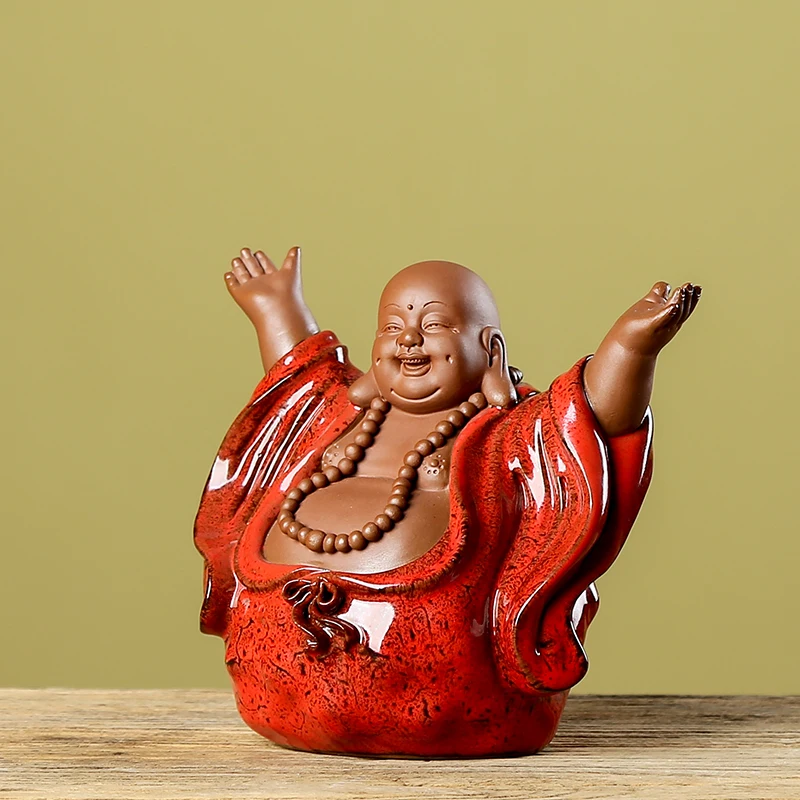


 Gwangju Dreaming