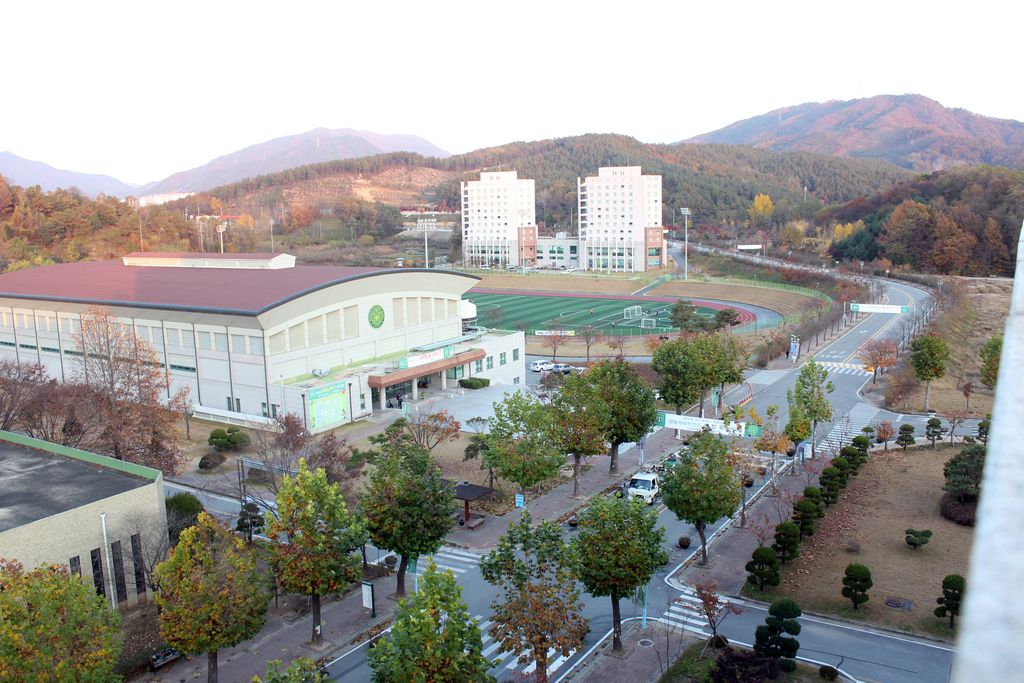
Konkuk University. I live in the tower at center right.
Tomorrow is a big day for us. For the last five days we have shuffled around from class to class and had the rudiments of Korean culture, language, and education jammed into our brains. We’ve once again had to go through the nerve-wracking experience of choosing where to sit in the lunch room, as well as choosing a seat in lecture.
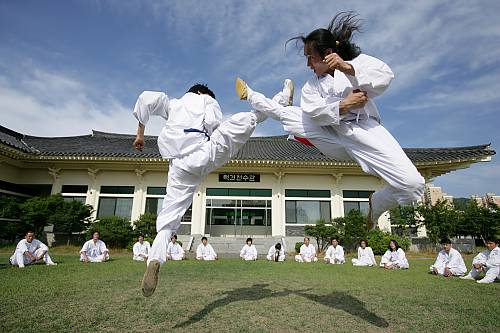
The lectures themselves have been useful. Four classes a day, 90 minutes each, two before and two after lunch. Classes on Korean culture. On teaching elementary school. On teaching reading, on classroom management, on lesson planning. On EPIK life and life on Korea. On making one’s English comprehensible.* Once, notably, we went rowing on the Han River and learned takkyeon, a traditional Korean martial art.
The taekkyon academy in Chongju.
The payoff for all this, of course, is that we’re hopefully prepared when we hit our classrooms next week. And I’m incredibly nervous.
As always, my nerves wax and wane. Some hours I think I’ll be brilliant. Others that it’s going to be a nightmare as I stumble through a boring lesson in front of a group of bewildered students, while my principal, no-doubt an older, distinguished, very stern-looking Korean man looks on in disappointment and vague disgust.
No one is better at looking stern than older Korean men.
Tomorrow is when the real work begins. We’ll start with presenting a lesson, and while I DO feel pretty confident about this one – I’m one of the only people here with teaching experience, many of the rest of these lunatics signed up without even a teaching degree – it’s still a nerve-wracking experience knowing your first outing teaching a brand new grade level (I drew elementary for this assignment) and subject (I’ve never taught ESL before) is going to be watched and judged by an experienced stranger. My partner and I at least have the happy duty of going first, so we’ll get to set the bar (naturally I shall set it very high).
Later, though, we’ll meet a bunch of officials – the officials responsible for selecting us in the first place. Most people are meeting the heads of their Provincial or Metropolitan Office of Education. I, however, am not working for a POE or an MOE, I’m working for a private school. So I’ll meet my principal directly, tomorrow. Most people will be meeting them in groups – usually a dozen or so teachers are assigned to one province. I will be solo. My Korean is all-but nonexistent, although I am improving at comprehension, at least. So yeah. It’s nerve-wracking.
Intellectually, I feel more prepared than anyone. I know I’m an okayish teacher when my heart’s in it. Sometimes maybe even a good one! But my heart still pounds when I think about tomorrow, or when I (gulp) think about my first day or week in front of an actual class!
This is normal, I think. Consider students. Is there any one of us who wasn’t nervous on the first day of school, right up through 12th grade, into college, and beyond? Even though we can be masters at going to school, after more than a decade of it, we still feel a bit of trepidation. Will I do well? Will I make friends? Will I make some mortifying faux pax that will tar my name in infamy for the entirety of the coming year? What if I can’t find all my classes?
The first day of school can take its toll.
So I’m not too concerned about the fact that my stomach is turning somersaults. Totally normal feeling, nothing to be afraid of.
But man, sometimes I wish I was still in the warm, cozy confines of Wydown Middle School.
*My English is apparently a nightmare for foreigners to attempt to parse. I talk too fast, use too many idioms, too many hand gestures, and too many changes in tone. Koreans don’t like changes in tone – theirs is a monotone language.
There are, approximately, 400 million native English speakers in the world. About 231 million of those reside in the United States. A further 60 million may be found on the shores of the United Kingdom, and 5 million more in the neighboring Republic of Ireland. Australia furnishes 25 million, Canada 37 (million. I know, I was surprised, too!), and New Zealand another 5 million. South Africa fields 56 million, making it actually the third-largest English speaking country in the world, but not 56 million of those are native speakers.
So, call it 400 million (to make the math easier – you’ll see in a second). Of those 400 million, approximately 400 are at this EPIK orientation. Thus, we should expect roughly 1 EPIK teacher out of every 1 million English speakers in the world. To put it another way – there should be about 60 Brits of varying stripes, 5 Irish, 25 Aussies, 37 Canucks, etc.
Within the States, we can break it down further. 40(ish) of the 231 US representatives should be from California.* 20 should be from Florida. 6 should be from Missouri, but I’m having a devil of a time finding the others.
Now, the average age of EPIK teachers seems to range from 22 at the low end to 30 (me) at the high end. There’s a handful of us graybeards around, but let’s leave the age gap at 8 years, we’re going for a Fermi estimate here. Now, each year, the undergraduate class of Truman State University is about 6,000 students. So, in 8 years, Truman graduated approximately 48,000 students, including yours truly and many of my friends and coworkers.
So! We can expect about 6 EPIK teachers to be selected from Missouri’s population of about 6 million souls. Let us suppose that all 48,000 Truman grads are Missouri natives, and eligible to be EPIK teachers. That means that any EPIK teacher selected from Missouri has a 48,000/6,000,000 chance of being a Truman grad, which works out to about .8%. The odds of there being two such is .8% x .8%**, or .68%. You could run EPIK for a hundred years and never have two Truman grads in the same orientation.
So imagine my surprise today.
I am always on the lookout for likely neighbors, and thus far I had been having to make do with Nebraskans and Oklahomans as being from sort-of the same area as me. But, what joy, at dinner today I spotted a fellow considerate enough to wear a KC shirt!
Playing it cool, I casually sat down at the same table. I would be crafty and evasive with my questions, so he wouldn’t know how eager I was to find a hometown friend.
“So, are you from KC?”
Oops.
“Yeah, Olathe,” he responded. “Are you?”
“Grew up in Lee’s Summit.”
He nods, then asks where I went to high school (West), then college. His eyebrows shoot up when I say Truman.
“Wait here!” he says. He turns around. “Hey, Lexi!”
A girl eating at the table behind us pauses with a chopstick-full of kimchi halfway to her mouth. “Yes?”
“I found you another Truman grad!”
Her face brightens, she exclaims in surprise, and a moment later we are next to each other, exchanging reminisces of Ryle Hall and the PHRE department.
What a weird and wonderful world we live in.
*I don’t know how much of California’s population is a native English speaker, so this math is somewhat off. It’s not essential, just go with me, I’m on a roll.
**TECHNICALLY .8% x (47,999/5,999,999), or .8% x .79999%, since after all I can’t be two EPIK teachers.
I am starting this entry ensconced in my dorm room (the palatial accommodations I showed off yesterday), with the lights from the soccer field (or football pitch, as half my classmates insist it’s called, for reasons unknown to science) streaming in through the window. I’m told they go off at 10:30, but I haven’t yet managed to stay up that late, so I’ll have to take their word for it.
I had intended to go for a walk around Chengju and then show off some of the city, and I DID go for the walk – but then other things came up.
I have always been a somewhat uncertain person. My confidence and my nervousness are constantly waxing and waning inside me, the one growing as the other weakens. One moment, I’m brimming with excitement, certain that I’m going to be the best frickin’ English teacher this peninsulas ever seen. The next, I quiver, and wonder what the hell I was thinking coming over here. Now, I have no illusions that I’m unique in this regard – I’ve always believed that 90% of humans share 90% of their internal experiences. Everyone feels like this at some point or another, including probably a great deal of my classmates at this very moment (obviously they’re wrong about being the best, ‘coz dat’s me).
But, over all of it was a growing sense of loneliness. I am…not particularly adept at making friends. I tend to be blunt and sarcastic towards people in order to mask my fuzzy and romantic core, which is probably a bit off-putting. In the three days, lots of people have quickly formed up into groups. I see the same groups or even just pairs constantly together, chattering back and forth, traveling around. Lots of people seem like they already belong. But I was feeling, well, a bit out of place. I had made attempts, and certainly many people were friendly towards me. But no one especially felt like a friend. Any group I joined, I felt largely surplus to requirements. A perpetual fifth wheel.
Now, again, obviously, I’m only seeing the surface – no doubt there are other singletons here, people feeling out of place, homesick, lonely, in over their head, what-have-you. No doubt many of those groups of people are clinging to each other in something like desperation, so far from home, while each member privately worries that they don’t truly belong there.
Nevertheless, I was somewhat glum as I made my way into town to explore. I couldn’t even think of who to ask to come with me. I resolved to focus on discovering the city in front of me, and then work out the loneliness thing once I arrived at Gwangju next week.
But, as I was making my way back to the dorm, I was reminded that things always get better. See, there’s only one main entrance to the good old billiard academy (which the dorm moonlights as, remember). Outside, there’s a series of picnic tables lining the main approach, three on each side. As I trudged up through the gathering gloom, I noticed a gathering of people at one, whose nametags all proclaimed their ultimate destination of Gwangju. I wandered over to investigate, and found out that everyone going to my city – about 12 of us – wanted to gather so we could meet and bond.
And so we did.
Two hours later, I know Lily (who is from California, loves theater and hiking, and wants to teach poly-sci), Thomas (Nebraska, wants to publish a novel based on his Americorps experiences), Emma (Wales, bounced around England and New Zealand before landing in Korea), Nadine (London, once hitchhiked from Spain to Dover), Seorse (Irish, once sang with the winner of The Voice France), Erica (Ottawa, once a theater producer), and others. They were determined that we in Gwangju would be there to support each other in the year to come, and there was no question at all about whether or not I belonged there.
At present, the sun is going down on my second day in Korea, and I’m already tired (again). Perhaps some lingering jet lag, perhaps the fact that every hour seems determined to cram about four thousand new experiences into my brain, or maybe I’m just getting old (30 is only one month away…).
But! I already did most of the legwork for today’s entry. I thought I might show everyone around the campus where orientation is taking place. So, this morning, after my morning run, I hit the bricks and did my best to run down all the relevant sights around campus.
So, what does a Korean college campus look like? Let’s take a look!
The view out my dorm’s window.
Konkuk University’s Glocal Campus is located in Chengju, a modest provincial town about two hours outside the capital. Like most colleges, it’s a loose conglomoration of buildings clustered around green spaces filled with art installations more or less at random, depending on the whims of generations of donors, presidents & provosts, and students.
Let’s start with my cozy home sweet home for the next 7 days. As you can see, my accommodations are basically a palace:
Note monogrammed towel!
The other half of the room (yes, this is almost exactly half) belongs to my roommate. But I don’t complain – after the brutal travel I was willing to sleep on a pile of wet cardboard should that prove necessary. And hey! We get our own bathroom!
that’s….that’s it. All of it.
Outside our door, the building is triangular, with a large central well open through the entire core.
I don’t know why some of these are formatted weird. Dammit, Jim, I’m a doctor, not a…photo-formatter!
At the bottom spindly trees claw for life in a bed of sand. The well doesn’t go all the way to the bottom of the building, though. The lower floors are inaccessible to us, because apparently the Konkuk Billiard Academy is housed there:
For some reason, our dorm is isolated from the rest of campus by the stadium, necessitating a lengthy walk to reach anything of consequence. Oh, and some stair climbing.
Do you have a phobia of stairs?* If so, I have bad news…
See, the campus is not what you’d call flat. This ain’t like Truman or Mizzou where a modest elevation change of 15 feet or so can provoke cries of shock and despair from freshmen slogging their way to Intro to Creative Writing. Chengdu (like most of South Korea) is nestled into the loving arms of the surrounding mountain range, and that means campus is, well…wrinkly. So if you want to get anywhere, you climb stairs.
After reaching this first summit, if you hang a left you’ll come to the most important building on campus.
This sprawling complex houses two important rooms: a gym, and the cafeteria.
Now, here’s where I learned that the other folks I’m sharing this campus with have no killer instinct at all. See, if lunch (for 400 people) is being served at 11:30, what time should you arrive?
That’s right, at LEAST by 11:15. As such, I was able to swoop in, have my pick of food, and eat in comfort while watching the long line of whippersnappers shuffle past me for darned near 40 minutes of the 60 minute lunch period. Old age and treachery will always beat youth and exuberance.
Below the cafeteria lies the gym, but beware, for it has a fell guardian:
in the dimness, it waits
back out in the sun, we can head for some academic buildings. First, of course, we climb some stairs:
Do pictures of stairs bore you? Then I have bad news…
Still with me? Fantastic. Remember to pace yourself, there are more of those. Anyway, near the cafeteria, down a shady, tree-lined boulevard, there lies the computer lab, open 24/7 for all your academic (or Starcraft 2) needs.
On the other side of the boulevard are several of Konkuk’s academic buildings, labelled with 10-foot tall letters whose massive size is balanced by their maddening vagueness, rendering them helpful and unhelpful in equal measure:
What’s this building for? Search me!-shrug-hold on, more stairsPossibly a library? I know it’s U7, but what does that mean?mind your footing here, it’s a steep hillU11? That certainly clears things up, thanks Konkuk.On the bright side, this country must be wicked good for sledding in the winter.K2, yes, of course, how could I have forgotten.
So much for the academic buildings. Note that very rarely is one of these mysterious edifices on the same level as another, and usually you must scramble up and down at least once to reach your destination.
But, honestly, Konkuk is beautiful. The university has taken its time to craft spaces that are wonderful to spend time in. If you prefer something grand and monumental, or more cozy and peaceful, there’s a spot for you. It has playful areas and graceful ones. Come with me and let’s look at the best parts of Konkuk.
A placid gazebo rests near K2.
Much of the campus is green, and nature is woven in wherever it’s possible to grow something. There are myriad pavilions where you can study, have a picnic, or just relax and enjoy the day.
But art, too, hath its place:
A companion for the lonely student.A performance of Oedipus Rex would be right at home here.
And sometimes, art and nature even intertwine, like this sculpture of a woman reaching into the branches of a tree. There’s also a silly, sentimental influence, like this cat home carefully placed near another sculpture:
The kitty, in the most cat move ever, had instead opted for a nearby bush where he was amusing the passersby.
Even the stairs can be pretty:
i’m so tired of climbing
But without a doubt, my favorite part of Konkuk is the plaza at the center of campus. The garden planted there is lovingly maintained, tranquil, and incredibly soothing to spend time in, as water, leaf, and human craft all come together:
You know it’s serious business when the fountains are on. They only do that when there’s someone around to be suitably impressed.
Just beyond, there’s a wide open plaza showing off as much of the university as it can:
Click to enlarge (I hope)
With that, it’s time to head home – soon it will be time for another day:
Tomorrow I’ll take you on a sunset walk into town. But first –
At present, our bus is mired in a traffic jam somewhere in the hills south of Seoul. Our tour bus, crammed full of 20 EPIK teachers and all their luggage, crawls slowly along the narrow ribbon of highway weaving its way between a hundred Korean mountain and hillsides. At the end of our journey is Konkuk University and the promise of food, a hot shower, and warm beds, but for now, my travel odyssey, now nearing 32 hours long, continues. Just one of the many inconveniences of travel.
But I don’t mind. My nose has been pressed up against the glass for the last two hours, ever since I finally escaped the cloistered confines of Incheon Airport (where I landed at 3:30 am local, some 12 hours after leaving behind American soil) and breathed Korean air for the first time (a bit smoggy, but it smells heavenly after 28 hours of the antiseptic bottled air of airplanes and airports). Of my fellow teachers, at present count 13 are snoring in various positions around the bus, 5 are carefully studying their phones, and one is busily Super Smashing on his Switch. I’m the nerd looking out the window. On every side there’s something new to see – on one hand a cluster of distinctively Korean 40-story apartment complexes looming above the highway, on the other a verdantly wooded hillside leaps up into the air, on the gripping hand a quaint rice paddy with a small farmer’s shack nearby. I don’t begrudge the time. This is what I came here to see.
I told you they loom.
My rubbernecking started before I even left the United States. See, whenever possible, I always, always, always want the window seat on the plane. I’m a kind of gangly six feet, so I’d certainly be more comfortable sprawling in the aisle. But I never grew out of the window seat phase (I believe every child would prefer the window to the aisle seat on the plane).
Before we even left St. Louis, as we took off I was able to trace the roads away from the Arch – there lay 44, which meant that intersection was Laclede Station road, and if I follow that south, yes, there was the church, and across the street? An anonymous little roof amidst a sea of anonymous little roofs. One last look at home with my own eyes.
Across Missouri, and Kansas – rolling fields of green divided by ruler-straight roads, their stark artificiality a striking contrast with the more irregular shapes of the natural forests and fields. In places, little hamlets or even goodly-sized towns clustered around intersections, or else isolated farmhouses miles distant from any neighbor. Perfectly circular irrigation fields, again far too regular to ever be mistaken for anything nature would produce on her own, neatly checkering the landscape.* From the ground, Kansas is flat and boring as hell. But from the air, everything is beautiful.
Well, maybe it’s just me.
On across the Rockies, the ground folding up and reaching out as if it wants to meet our plane halfway (please don’t), in places harsh, dessicated rock faces scoured clean by millennia of winds unobstructed by anything growing. Winding mountain roads, thick pine forests, in one place a mountain lake held back by a massive concrete dam, and, I’m pretty sure, the Continental Divide.
Utah, and Nevada – miles of bleak, scorched desert, red rocks, wind-carved canyons, and what looks like a blasted hellscape of heat and thirst. And yet, even here, every now and then, a little farmhouse, a small crop circle of green standing out amidst the waste, a road signifying that here, too, human beings live and travel.
Over the snow-capped peaks of the Sierra Madre, the trackless mountain range one last reminder of Nature, red in tooth and claw, before the peaks fall away and yield to California’s softer, cultivated bounty. And then, San Francisco, the waves of her bay golden in the setting sun. One last look at the United States.
I would never give up the window seat for anything. Sure, I could have the opportunity to stretch my legs – but the price would be missing all of this! What a continent we live on!
But I feel like this attitude isn’t universal. Lots of people would prefer comfort, and convenience over spectacle. Well, far be it from me to judge – it takes all sorts to make a world and it’d be a really boring place if we were all the same. Adults have other concerns, far busier minds. They’ve seen mountains before. Deserts, too, probably. And it can get really cramped on a long flight (believe me, I know, and empathize).
Nevertheless, I think something important is lost when we start to prefer the aisle seat over the window seat. Travel means being inconvenienced. It means sometimes your legs are going to be cramped. Or you’ll be stuck on a Korean highway, tired and grimy and smelly from thousands of miles behind you.
At least it’s a party bus
Oh, well. I’ll have lots of showers, and beds, in my future. But I’ll never see these hills for the first time again. So, may as well enjoy it while I can.
*Can circles checker? I say they can. Checker pieces are circles, duh.
At present, I am sitting, alone, outside Gate G99 of San Francisco International Airport. It is about 10:00 pm, local time, and I am approximately 7 hours and 2,000 miles into my journey to South Korea and, ultimately, Gwangju.
In other words, far, far less than halfway.
I promised everyone that I’d keep them updated on my adventures, and it seems that now, at the very beginning, is a good place to start.
So let’s start at the beginning – the very beginning. Namely, why am I doing this? Why did I leave my family, my friends, the life I’d built in St. Louis to fly halfway around the world, to a country I’ve never been to, to teach a bunch of young people I’ve never met, whose language I don’t even begin to speak? Well, if we’re being totally honest, I can hardly even consider not doing it. Let me explain – no, there is too much. Let me sum up.
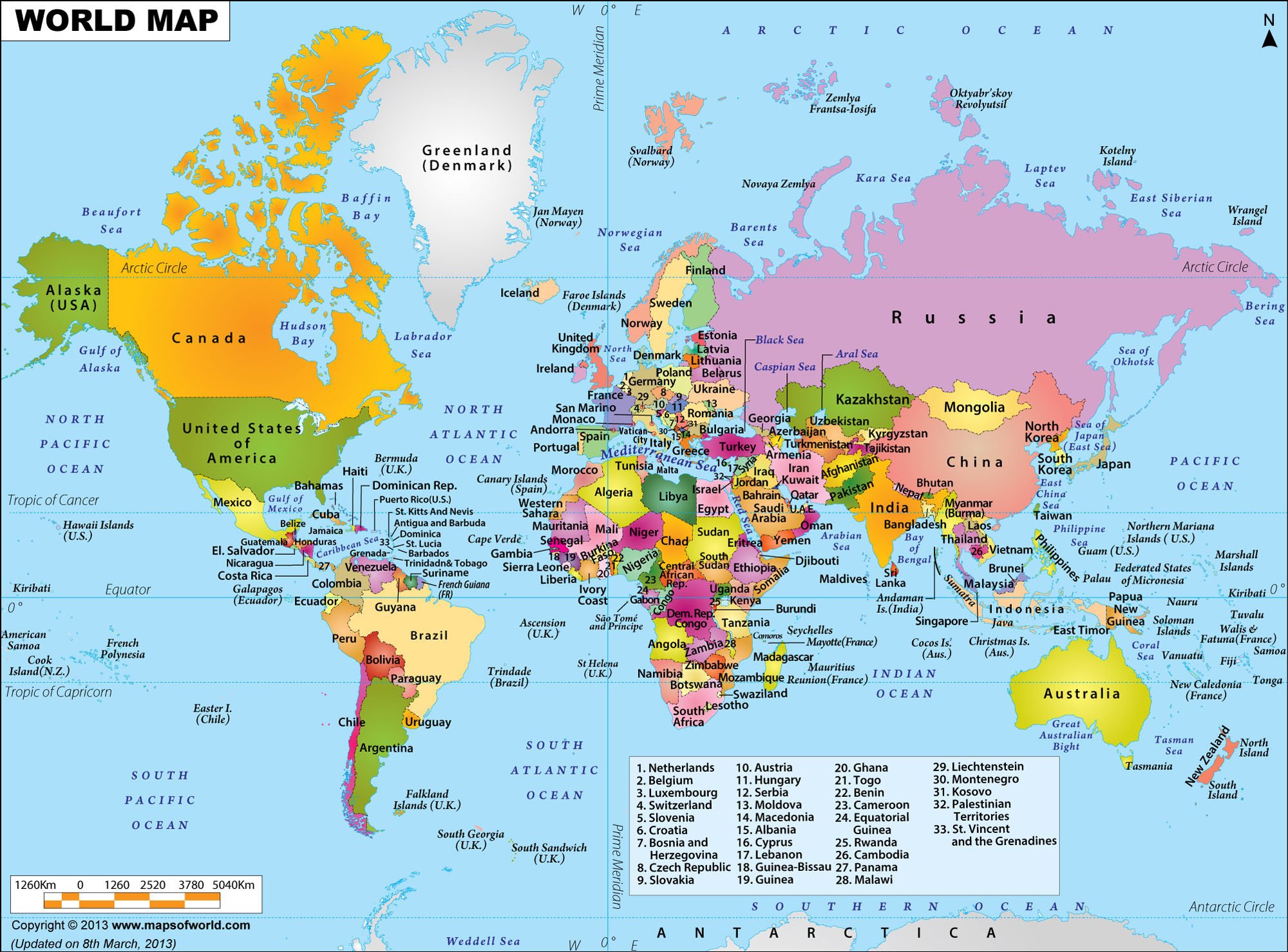
When I was young, I loved to pore over maps. My gaze would rove up and down their contours, taking in the exotic names, my finger tracing the strange borders, and I would wonder, what is it like there? I doubt Bolivia is truly orange all over, despite what my ancient atlas insisted, and Egypt’s borders seemed suspiciously regular – far too regular to be what it was really like on the ground in Egypt. I would find obscure countries nestled in the mountains of Central Asia,* far from seemingly everything in the world (a geographical oddity, that), and wonder what life was like on the far side of the world.
Because fundamentally, maps are blank spaces. Vast expanses of territory are reduced to a few swatches of color. Ten thousand cultures, vibrant, living cities, entire peoples would be rendered as nothing more than perhaps a dot here with a strange collection of syllables penned in next to it. And eventually, I realized something fundamental about maps: Maps are not the territory. They’re just a picture of the territory – and a limited, incomplete picture at that. Maps have their place, but they really don’t tell you anything about the world. How can you learn about the world, then? How can you take the small splash of color on the tip of a distant Asian peninsula, helpfully labeled “The Republic of Korea”, and fill in the blank space?
We’ll begin by breaking it down in numbers. South Korea is a nation of about 100,000 square miles thrusting itself south from the Asian mainland, nestled cozily between the Yellow Sea, the East China Sea, and the sea of Japan. It lies about 6700 miles from the continental US – 12 and a half hours flying time from San Francisco, incidentally – and is 15 timezones from any human being I know. More than 50 million souls call it home, and in the last 5 decades it has risen from abject poverty, suffering under the boot of Japanese occupation, to the 10th largest economy in the world. Its high-tech sector is among the world’s most advanced, its Starcraft players are renowned worldwide, and it has played host to two Olympic games in the last 30 years.
Do you feel like you have a good understanding of Korea now?
No, neither do I.
For as long as I can remember, I’ve wanted to explore the world. What’s over the next hill? Where does this river start? Where does it end? How far does this street run? The world is here to be experienced and enjoyed in the brief window we’re given to do so, and you can’t do that if all your interactions with a place are mediated through the pages of a book or the pixels of a screen. If you want to know a place, you have to go there. You have to let the thousand sights of it batter your eyes, the roaring sound of it storm about your ears, the smells pour into your nostrils. You need to feel the heat of the sun or the coolness of the breeze on your skin as you simply breathe in someplace new.
Now, anyone who knows me knows that I’m a huge nerd, and among my many hugely nerdy hobbies is a love of poetry. If you’ll indulge me – and you will, ‘coz it’s my blog and I can do what I want here – let’s let Henry Wadsworth Longfellow share the stage for a bit:
What The Heart Of The Young Man Said To The Psalmist.
Tell me not, in mournful numbers,
Life is but an empty dream!
For the soul is dead that slumbers,
And things are not what they seem.
Life is real! Life is earnest!
And the grave is not its goal;
Dust thou art, to dust returnest,
Was not spoken of the soul.
You cannot know a place just by analyzing cold statistics. The only way to know it is to go there. And why do I care about knowing a place so much? Because life is short, and I want to experience as much as I can in my flitting threescore-and-ten here on Earth.
Not enjoyment, and not sorrow,
Is our destined end or way;
But to act, that each to-morrow
Find us farther than to-day.
Sure, I could have stayed in St. Louis, and been happy. I had a great job, good friends, a wonderful home. But I was also stagnant. I loved my work, but I wasn’t growing as much as I could have been. I need to push myself further, to see how much I can grow.
Art is long, and Time is fleeting,
And our hearts, though stout and brave,
Still, like muffled drums, are beating
Funeral marches to the grave.
In the world’s broad field of battle,
In the bivouac of Life,
Be not like dumb, driven cattle!
Be a hero in the strife!
Well, this is my way of making myself a hero in the strife. Enough of going along with the flow, doing what was asked of me more or less competently. For the first time in my life, I feel like I’m fully in control of my own destiny: If I alone had not chosen to go to Korea, then I would not be going. And yet now, here I am, alone in San Francisco, entirely through my own choices and powers. That’s actually kind of an intoxicating feeling. Empowering!
Trust no Future, howe’er pleasant!
Let the dead Past bury its dead!
Act,— act in the living Present!
Heart within, and God o’erhead!
Well, this is me acting. I have no idea what to expect, really. I have no idea what I’ll do after Korea. But let the future take care itself (he marks the fall of the littlest sparrow). For now, I have enough to worry about.
Lives of great men all remind us
We can make our lives sublime,
And, departing, leave behind us
Footprints on the sands of time;
Footprints, that perhaps another,
Sailing o’er life’s solemn main,
A forlorn and shipwrecked brother,
Seeing, shall take heart again.
I don’t know about sublime, but part of the reason for this blog is my own paltry attempt to leave footprints for my forlorn and shipwrecked brother. I don’t know who they are, or if they’ll ever read this, but I pray that it may be of some small service. I mean, it certainly is making me feel better.
If you’re reading this, and feeling like you’re in a similar stagnant place – take heart, brother! The world is yours for the taking! Go out there and seize it!
Let us, then, be up and doing,
With a heart for any fate;
Still achieving, still pursuing,
Learn to labor and to wait.
Henry Wadsworth Longfellow, A Psalm of Life
Thanks for indulging me. This concludes our Poetry Corner – for now.
So, there you have it. I have the opportunity to explore, to see a part of the world I never have before, and fill in some of the blank spaces of the map with vibrant, living color. I’ll be in the heart of Korea, working to try and open up the horizons of the young people I have the privilege of teaching. China and Japan are both just over the water – I’ll be closer than I’ve ever been to Qin Shi Huang’s wall and the Forbidden City on the one hand, and the ancient land of the daimyo and the shogun on the other. And beyond? Vietnam, Thailand, the Philippines…eventually, the entire world. I’m so excited I can hardly wait.
I have to wrap this up – they’re calling the boarding now. Time to leave everything I know, and dive into the unknown. Wish me luck, everyone.
“Following the light of the sun, we left the Old World.” – Christopher Colombus




 Gwangju Dreaming