The following series is one I wrote a few years ago. The American Civil War has always been a particular passion of mine, ever since a childhood visit to the battlefield at Gettysburg at seven years of age. However, I found that the naval side of the war is sadly neglected – a few cursory paragraphs on the blockade, a chapter on Hampton Roads, perhaps the battle of Mobile Bay or the Kearsarge and Alabama if the author really goes all out, is all the mention the subject usually merits. So, I wrote this series for interested parties. I’ve since updated it and rewritten a few segments since its original posting in 2019.
Meet the Harriet Lane
The vehicle for our journey back to the bays and bayous of 1861 is going to the Harriet Lane. This little cutter is emblematic of the wartime Union navy, and some contrived to involve herself in most of the major events of the war at sea. I don’t want to go into every fortress assault, landing, or cutting out expedition, so instead let’s use her career to stand for all.
She’s a modest little ship – only 730 tons, barely 50 m long, 10 in beam. She mounts a paddlewheel on either side, each powered by a little steam engine capable of driving her at a princely 13 knots. Her armament matches her small size – she has 1 big 9” gun, 2 8”, and a little 4” popgun. Later on she’ll mount 2 24lb howitzers as well, giving her a little bit more teeth. To compare, the steam frigates that were the mainstay of the Navy like the Minnesota (made famous at Hampton Roads) were 3,300 tons, 80 meters in length, 15 in beam, were very nearly as fast (12.5 knots), and boasted 2 10-inchers, fully 28 9”, and 14 8” guns, meaning one broadside could blow the little cutter out of the water.
Why, then, focus on the Lane and not on the Minnesota? Well, to start with, there aren’t that many steam frigates like the Minnesota in service.
The United States Navy consisted of only 42 ships at the start of the war. That was a significant problem, because the Confederate States’ war plan depended on trading cotton for arms and political support abroad. They would use their economic leverage – their cotton, the sole source of income for tens of thousands of British mill workers – to force the European powers to intervene and mediate a peace in the conflict. In the meantime, they would trade their cotton for the guns and ammunition that the South lacked hte industry to manufacture in sufficient quantities to supply their rapidly mobilizing armies. It would be the job of the Navy to close the rebel ports, prevent the export of cotton and the import of food and arms, and put a stop to the whole plan.
That was a tall ask – impossible for 42 ships alone. The Confederate coastline stretched from the Potomac to the Rio Grande, and was a tangled rat’s nest of islands, inlets, bays, estuaries, tidal archipelagos, swamps and bayous, and major ports.** In total it was 3,500 miles in length, with 180 separate ports of entry, over a dozen navigable rivers, and countless small inlets and bays capable of concealing a blockade runner. Most of the major ports were heavily fortified against attack from the sea (adding insult to injury, the forts were paid for by US taxpayers, intended to defend against a European power [Britain] invading in a future war. Fort Sumter, where the war started, was one such, guarding Charleston harbor) and would need to be reduced via land and sea investment to be closed.
The United States had some advantages, though. All major shipyards save Norfolk were concentrated in the North, and virtually the entire pre-war navy stayed loyal, giving the Union an experienced core of officers and men to draw upon. The rebels had no naval tradition and no merchant marine and would have to build all their warships and blockade runners virtually from scratch. They were more or less incapable of offensive action against the blockade. Finally, the Union had the aforementioned 42 ships in service already, with a further 48 available for sea as soon as they could be demothballed and some crews trained up for them.
So, 1861 began with Gideon Welles, Secretary of the Navy, whom Lincoln fondly insisted on referring to as “Father Neptune,” laying hands on every vessel he could find. No matter how small or obsolete, he needed hulls to start patrolling those 3,500+ miles of coastline and start intercepting rebel shipments of guns and ammunition before those guns were killing Union soldiers. By the end of the war, through Welles’ efforts, the navy had grown from 42 ships to a first-rate force of nearly 700 vessels, capable of rivalling even the Royal Navy at the height of its power. This was achieved via frantic programs of crash-shipbuilding, snapping up every even vaguely serviceably civilian hull available and strapping some popguns to it, and raiding all of North America for any odds and sods lying around. The Harriet Lane was one such.
The little cutter began life for the Treasury Department originally. She was a revenue cutter, built to catch smugglers and make sure the tariffs were paid, hence her small size and light armament. She had a neat little career after her launching in 1855, once sailing to Paraguay to threaten the locals into a trade treaty, another time embarking the Prince of Wales when he visited America. After Welles prised her out of Salmon P. Chase’s claws during the winter crisis of 1861, she got her howitzers installed and was sent off on her first wartime mission: to resupply the beleaguered garrison at Fort Sumter.
The Harriet Lane steamed south along the coast, when she spied a merchant ship with no colors flying. Lt. W. D. Thompson had the watch that night, April 11, 1861, and he presumably concluded that the merchant ship – the Nashville – was a Confederate privateer or something. Now, the Confederates had no privateers at this time, but that didn’t stop Thompson, who promptly opened fire on the civilian ship. The Nashville hastily ran up a US ensign and so avoided further consequences of Lieutenant Thompson’s zeal, but the first naval shots of the war had been fired.
Not the first shots of the war, though. Not officially – US vessels jitterily firing on their own civilians didn’t count. The “real” war started the next day, when the secessionists – now rebels – began bombarding Ft. Sumter before the relieving squadron, including the Lane, could arrive.
The fort, designed to defend against attack from the sea by the Royal Navy, not from shore bombardment from Charleston (why would a hostile force ever hold Charleston without taking the fort first?), surrendered after a few hours, and the Lane turned around and sailed back to New York, her first wartime mission complete (albeit having accomplished nothing other than scaring the bejeezus out of some innocent civilians).
The Early Blockade – The Battle of Pig Point
While Welles frantically trained up as many warships as he could, he used the paltry ships he had to begin establishing the blockade around the Confederate coast. A blockade was only legal under international law if it could be enforced by the blockading power, and to delay risked the European powers blithely ignoring Lincoln’s proclamation and openly trading with the rebels – a dangerous first step to foreign recognition of the Confederacy as a sovereign state, which would be more or less fatal to the Union cause. So, as one of the few “military” vessels available, the Lane was dispatched to the Virginia coast in the spring of 1861 to serve there.
Now, in April 1861 Virginia was not technically in rebellion, but Lincoln wasn’t about to let legal niceties like that stop him. As the rebellious states seceded one by one, most Federal garrisons in the little forts guarding the coasts surrendered and turned their property over to the CSA, but not all. One such hold out was Fort Sumter (briefly). Another was Fortress Monroe, at the tip of the peninsula between the York and James rivers. The fort was commanded by Benjamin Butler, an incompetent general but a canny politician who would get up to much mischief wherever he was assigned through the war. But, he was a Democrat, and brought in thousands of Democratic votes for the Lincoln administration, and so Lincoln couldn’t afford to be rid of him.
Places like Monroe were crucial to the Navy. It would be impossible to maintain a blockade if the nearest bases were in Maryland and New Jersey – ships would be too long in transit and wouldn’t have enough time on station. At any given time, roughly ⅓ of your ships are in service, ⅓ are in drydock being maintained, and ⅓ are in transit between the two. The more you can lessen the time ships are in transit, the more of your strength you can effectively deploy. So, the Union needed bases south of the Potomac. Indeed, in the first weeks of the war, the Union ships around Fortress Monroe captured 24 Confederate vessels.
In the early days, everyone was scrambling to throw together armies in a previously pacifist country, and no one quite knew exactly how the lines would shake out. Butler decided he would use his position at Monroe to start pushing the rebels back from around him, and sent a handful of troops up the river to seize Newport News.
Now, at the same time, the rebels were eager to squeeze the pimple that was Fortress Monroe out of existence if they could. In the slapdash manner of everything in those days, they set up a battery at Pig’s Point, just over the river from Newport News. Well, this insult to the national authority could not be tolerated, not if Benjamin Butler could help it, so he resolved to destroy the battery. To do that, he needed to find out the strength. Accordingly, he laid hands on the only warship he had – the Harriet Lane – and ordered her captain to ascertain how stoutly defended Pig’s Point was.
The captain, one John Faunce, nervously sailed his cutter towards the rebel cannon on June 5, 1861. No one had been under fire before and so no one had any idea what to expect. There had been no real battles since Fort Sumter, after all. Unfortunately for Faunce, the channel had not been surveyed in years, and the fear of shallow water caused him to drop anchor well out of effective range of the battery. Then he started slinging his shells at the rebels. Most of them fell short. While the navy gunners sweated and cursed in the hot June sun over their guns, the Rebels, excited to be under fire for the first time, swirled about like an angry hornet’s nest, then started to reply in kind.
For a few hours in the hot afternoon, the little cutter and the little battery exchanged fire over the water. Faunce only had 30 shells in his entire magazine, though – it was a small ship -and most of his shot fell harmlessly short. He inflicted no damage. The men in the battery watched the shot splashing into the water in front of their battery, maybe a few shells whistling harmlessly overhead, and bent about their own work. The rebel return fire also mostly missed – great sprays of water would lash the ship and soak the sailors rushing around their guns, but no more. Late in the afternoon, though, the rebel aim improved and they blasted a few holes in the Lane, and 5 men were wounded by splinters.** Faunce concluded that honor was satisfied by this exchange and withdrew. He reported that he had successfully determined the strength of the rebel battery and that it was, quote, “Strong.” Butler was satisfied by this foray and made no move against Pig’s Point, which remained in rebel hands for nearly a year until McClellan arrived with the entire Army of the Potomac.
The “battle” of Pig’s Point drew a lot of excitement in those early days, before Bull Run, and brought brief celebrity to the Lane. But the government defeat at Bull Run showed that the war would be a long one, and the blockade a weary duty. That summer, the Lane was assigned to the first efforts to extend the blockade south, down to the Carolinas. Next week, we’ll look at her role there, and how the early amphibious operations of the Navy worked, in the expedition against the Hatteras Inlets.
*Note that the blockade on this map exists mostly on paper. In reality there’s only a few dozen ships sailing back and forth along those lonely sea lanes, their lookouts straining their eyes to see a Confederate blockade runner dumb enough to try approaching the coast in daylight.
Most rebels approached at night, and less than 1 in 10 were caught by the blockading ships.
**When I say splinters, I don’t mean little slivers that get stuck in your finger. On wooden warships, splinters meant great chunks of wood – basically wooden shrapnel – that were the main killers in naval engagements. I don’t know how seriously the 5 men were hurt, but none died.
Ten days after it had left camp, Redvers Buller’s army staggered back into Springfield. It had lost more than 10% of its strength and was no closer to Ladysmith than when it started. The Boer line on the Tugela looked as unbreachable as ever.
But events were already in motion elsewhere that would render Spion Kop, and all the blood and sacrifice made for the hill, irrelevant. Over on the western front, Lord Roberts, his Chief of Staff Kitchener, and 30,000 very irate British soldiers were prepared to settle the business once and for all. Within two weeks of the failure of Bullers’ maneuver to relieve Ladysmith by crossing the Tugela, Roberts would relieve Ladysmith by crossing the Modder. Sir John French (the last man out of Ladysmith the previous spring) led the British cavalry in a daring raid right around Boer lines at Magersfontein and shattered the ring around Kimberly.* Soon the entire western Boer army was in full flight back towards the Free State – but Roberts was hard on their heels and soon to surround and bag (nearly) the lot. (That was a significant nearly, for the record).
Over on the Tugela, Buller had tried once more to get across at Vaalkraanz the week after Spion Kop, with much the same results as before – the British had a sound plan executed terminally slowly, and Botha was able to shift his little force to cover it. The only reason Vaalkraanz never achieved the notoriety of Colenso or Spion Kop is that Buller realized he was about to stick his hand in the bear trap again and yanked it out before it could snap shut, ending the operation prematurely perhaps but at a low cost in casualties, for which his men were grateful (as pilloried as he was about to be in the press and by the British government, his soldiers adored General Buller). As word of Roberts’ victories spread among the commandos on the Tugela, many demoralized burghers upped stakes and lit out for the Drakensberg passes, to defend their homes from the invaders or just giving up the war as a bad job (fair enough).
A month after Spion Kop, in late February, Buller at last succeeded in his original objective in Natal. In a series of actions beginning at Hlangwane (that isolated hilltop at Colenso that was the key to the entire position), Buller remarkably and alone among the British generals hit up on the winning tactics for the war. First, he finally started acting like a general instead of a disinterested observer: In the February battles all of Buller’s army would operate in concert, instead of as isolated brigades as hitherto. Second, he used combined arms at last: a steady, deliberate advance, hill to hill, each advance heavily supported by shellfire from the artillery. The next hill taken, the artillery would be brought up and dug in, and the Boers blasted off the next hill, and then the next, and then the next…after a few days, eventually the Boers ran out of hills (and admittedly the patience for being repeatedly blasted off them) and soon enough Botha’s entire army was disintegrating. Bullers’ relieving columns rode into Ladysmith on the last day of February, 1900 – a day after the entire western Boer army had surrendered to Roberts. By the middle of March Bloemfontein had fallen, and by June so, too, had Pretoria. By September the last organized Boer armies had been driven from the field.
But the war didn’t end there. Their capital occupied, their armies dispersed – the British confidently expected the Boers to surrender as soon as they realized they were beaten. Only…no one had gotten the Boers the memo that the war was over. Through the spring and summer of 1900, and then through the winter, spring, and summer of 1901 into 1902 the war dragged on, as isolated bands of Boers, well-mounted, fast moving, intimately familiar with the terrain, and lionized by the populace (seriously, De La Rey, the man who won the battle of Magersfontein in 1899, became a folk hero), raided isolated British garrisons and tore up the railroad all throughout the occupied Transvaal and Orange Free State. In response, the British scorched the earth – Boer farms and eventually entire villages were put to the torch, lines of barbed wire stretched like spider’s webs across the country, parceling it into smaller and smaller pieces, a massive system of blockhouses to defend the railroad gradually spread from the Cape clear to Pretoria, and, most infamously of all, the Boers’ wives and children were herded into concentration camps to isolate them from their men still fighting in the field. Something like 25,000 women and children, over 5% of the Boer population, died in the camps – herded there by the invaders their husbands were desperately fighting to eject. In the end, Britain deployed over half a million soldiers to the little republics (which had a combined Boer population of only about 450,000), mercilessly stamping out all resistance to imperial rule. By May, 1902, their homes burnt, their families dying, the last Bittereinders threw in the towel. Transvaal and the OFS ceased to exist as independent states and became part of the united British South Africa.
The war cost the empire billions of pounds (more than any previous war in their history) and tens of thousands of lives – over 22,000 of the 500,000 khakis died in South Africa, about ⅔ due to disease. The commandos lost about 6,000 men in combat, but a further 50,000 South African civilians died in the vicious guerrilla war that followed – about half of them Boer, half native Africans. It was by far the bloodiest and most destructive war ever fought south of the Zambezi.
A burgher leaving his wife and child to join the commandos. Statue at the Anglo-Boer War Museum in Bloemfontein, November 2021
So in the end, Spion Kop was a lot of sound and fury, signifying nothing. Yes, the sacrifice of so many burghers’ lives delayed the relief of Ladysmith a few weeks – but the Boers lost the war anyway. Yes, Thorneycroft’s desperate stand on that shell-torn hilltop had won the British a chance to break through to the besieged town – but the British didn’t realize what they had and threw the gains away. In the end, nothing much would have changed had the two sides simply glared at each other all through January and February, 1900, save that a lot more men would have been alive at the end of the business. But, regrettably, that’s not how war works.
*He also rode most of his horses to death in doing so, pretty much entirely unnecessarily. Roberts was much more wasteful of human and animal life than Buller was.
VII. Consequences
Oil painting of Spion Kop, 1902, displayed at the Anglo-Boer War Museum in Bloemfontein
So, what happened at Spion Kop?
To my mind, more than anything else it illustrates how chaotic and confusing battles are. No one had any clear picture of what was going on. The men at the front – Deneys Reitz, Thorneycroft, Woodgate – had a vision of hell atop the mountain, and knew perhaps which patch of ground they held, but had no clue what was going on on the hilltops around or on the lower ground. The commanders – Warren, Buller, Botha, Coke, Schalk Burger – had no better idea, with repeated orders and counter-orders shelling the wrong hill, or stopping the shelling of the right hill, or sending the men up the wrong slope, or halting them too early. Reliant on word-of-mouth messengers who had an inconsiderate tendency to get lost or get themselves killed before delivering their message, the commanders got a confused and out-of-order view of the fighting.
The Boer system of warfare showed its limitations – resolute and stubborn in fixed positional defense, the Boers were not able to effectively respond to a British night attack on a crucial position (one that was too lightly defended, to boot) – the only assaults were made by volunteers, and those attacks were ineffective. Towards the end of the battle many commandos’ morale broke entirely and the army teetered on the brink of disintegration.
However, the Boers were saved by British incompetence, mostly on the part of Warren. Thorneycroft was a mere colonel left to fight the battle alone all day – with no orders or moral support other than a single infusion of reinforcements. Someone else should have relieved him at the peak soon after sunset, Warren should have visited himself to get a personal view of the situation, the entire half of Warren’s force that sat idle all day should have pressured the Boers (who came very near to cracking up as it was). Instead, Warren sat on his ass in his headquarters, most of the other commanders washed their hands of responsibility, and Thorneycroft’s nerves broke under the strain.
Ultimate blame must lie with Buller. Buller was repeatedly let down by his subordinates. Symons and White ignored his recommendations for the defense of Natal and unhinged his entire strategy (the same strategy that Roberts ultimately employed successfully). Similarly, his strategies at Colenso and Potgieter’s Drift were sound enough, but blunders by Hart, Long, and Warren doomed the imperial efforts. But a general is not excused by his subordinates’ failures! Buller’s job was to ensure he put men in position to succeed – Long and Hart should have been more closely supervised, and Warren never trusted with an independent command after he blundered the opening of the campaign so badly. Buller’s excuse was he didn’t want the men to lose faith in Warren, but surely an outright defeat is worse than the men seeing one incompetent replaced? Buller is the man who placed those officers in positions to sabotage his efforts, and so ultimately Buller is responsible for the British failures along the Tugela and the mad bloodletting at Spion Kop.
Other lessons emerge – the importance of scouting, the crucial role of staff work and rapidity of execution, the nerve to hang on even when you think you are on your absolute last reserve of strength – it’s the little details that made the difference at Spion Kop, not grand failures of strategy or tactics. Any idiot can work out strategy. Logistics and organization takes talent.
—-
Monument to the tens of thousands of dead Boer civilians, Bloemfontein
Ultimately, the Boers lost their war and their freedom – but what they could not defend with the Mauser, they regained at the ballot box.
Eight years after the war, Transvaal, the Orange Free State, Natal, and the Cape were formally joined in the Union of South Africa – no longer 4 independent, jostling colonies, but one unitary state. The cherished dream of Bartle Frere came true at last, nearly 50 years after it was but a gleam in his eye. To soothe ruffled feathers, every colony got a piece of the pie: the President was housed in the old Transvaal presidential manor in Pretoria, the legislature met in Cape Town, the OFS capital of Bloemfontein became home to the judiciary, and Natal’s garden capital of Pietermaritzberg played host to the official government archives (Bloem and Pietermaritz also received monetary compensation as a consolation prize). The Afrikaaners quickly dominated the new dominion electorally, and would in fifty years eventually secede from the empire altogether, setting their new Republic of South Africa up as a Boer ethnostate, keeping the non-Boers in line through one of the most thorough and repressive racial regimes in the modern world – apartheid.
Following the war, the British army took home a number of lessons. After careful, exhaustive examination of the battle of Spion Kop, the army did the eminently sensible thing and officially blamed the entire fiasco on the most junior officer involved, Thorneycroft. More reasonably, they took the lessons in Boer marksmanship to heart, and twelve years after the war, the BEF marched into Belgium as the best-shooting infantry on the continent.
The man at their head, Sir John French, won his spurs in the Boer War – escaping from Ladysmith and leading the cavalry with talent and distinction all through the fighting. One of Sir John’s subordinates, Major Douglas Haig, who led a battalion through many of the later guerrilla fights, would also rise high.
Sir George White, the man who allowed himself to be penned up in Ladysmith and so scuppered Buller’s entire warplan, was broken by the siege. He left South Africa soon after relief for health reasons, then quietly retired from the army and became governor of the Royal Hospital in Chelsea after the war, dying in 1912.
Marshal Joubert, the Boer who penned him in, did not live to see the end of the war. Joubert never recovered from the fall from his horse in December 1899 and died early in 1900.
William Gatacre, who started Black Week by blundering his command at Stormberg, never recovered his reputation. He left the army in 1904 and went exploring in Ethiopia, where he died of fever in 1906.
Lord Methuen, who came to grief at Magersfontein and so precipitated Buller’s disastrous attack at Colenso, served courageously if not especially intelligently through the war, even being captured in a guerrilla attack late in the war (his chivalrous opponent released him due to the wounds he suffered, and Methuen became a lifelong friend of the Boers). He eventually rose to field marshal, organizing the BEF in early 1914 and serving as governor of Malta.
His opponent at Magersfontein, De La Rey, became one of the most celebrated and successful guerrillas, living on in song even to this day. He died in 1914 in a police skirmish, preparing to rally his people against the British and for the Germans.
Many of the participants at Spion Kop did well in life. Louis Botha, the Boer commander, was promoted to Commander-in-Chief after Joubert’s death. He rose high in South African politics after the war and became the first prime minister of the Union of South Africa. He loyally brought the dominion in against the Germans in 1914 (suppressing a Boer revolt in the process) and was vocally pro-British. He died of Spanish influenza in 1919.
Deneys Reitz, the young burgher, fled the country into exile in Madagascar after the war. While there, he composed his book Commando: A Boer Journal of the Boer War and nearly died of malaria. Returning home around the time of the Union, he became a lawyer and politician, rising as high as deputy prime minister in the new dominion.
The stretcher-bearer, Mohandas Gandhi, led his Indian volunteer ambulance corps through the war and then returned home to Durban. He became an intellectual leader in the small Indian community there and agitated for equal political and social rights for Indians in South Africa, as the British began to sacrifice colored and black rights in order to better integrate the conquered Afrikaaners. Later, he took the lessons he learned from the struggle there and returned to his homeland in India, where he became modestly prominent in that dominion’s struggle for independence.
The young messenger and war correspondent, Winston Churchill, found the entire war thrilling. He published a book on his experiences, London to Ladysmith via Pretoria, which was a best-seller (no wonder, it’s a real banger), but decided the life of a journalist wasn’t for him. He eventually went into politics, where he had some little success.
Thorneycroft received the only public blame for Spion Kop while behind closed doors the War Office squabbled over the catastrophic failures of its high command staff. However, he was also a hero of the battle and so served ably throughout the war. His career stalled after that, though, and he retired from the service in 1912, living quietly until 1931.
President Kruger fled the country of his birth in the fall of 1900, as British armies closed in on Pretoria. He never returned to the Transvaal, dying in exile in Europe – a sympathetic, but also faintly embarrassing character for most of the monarchs there.
Redvers Buller had accurately predicted the Boer strength at the start of the war and warned his subordinates not to get trapped on the wrong side of the Tugela, and was ignored, upsetting his entire plan of invading Transvaal and the OFS via the Bloemfontein railway instead of the difficult Natal mountains (Roberts naturally adopted this as his own plan when he took over, leaving Buller…stuck in the Natal mountains). He had also warned of Boer fighting qualities, and accurately predicted that the occupation of Pretoria would not end the war, predicting a long guerrilla struggle – but was again let down time and again by Hart, by Long, by Warren. His men loved him, but on his return to England Buller was made the scapegoat for the entire fiasco of the imperial war effort in South Africa (with lots of British army politics playing into it, Indians vs. Africans, etc, etc) and was drummed out of the service. He was philosophical about it, telling his wife, “It’ll be all the same in hundred years.” He died in 1908.
—-
The Drakensburg, viewed from just south of Spion Kop, November 2021
Given that Spion Kop was ultimately a nothing battle over a nothing hill, why is it still so well-remembered, in ways that Colenso, Magersfontein, Talana Hill, and others are not? To be sure, hardly anyone could give you any details of the battle, not even who was fighting. But the name Spion Kop resounds. Why this cultural presence for a battle that lacks all real significance?
A few reasons, I think. Partially it’s the star-studded cast – Botha became prominent in South Africa and abroad for his politics after the war, and helped popularize the battle. Gandhi, of course, was there – the only time he saw shots fired in anger, I believe. And most famously, Winston Churchill, who would make reference to the battle to the end of his life, the closest he got to the front in any of the three major British wars he found himself involved in. Churchill helped cement the words “Spion Kop” in public consciousness.
A second reason is – Liverpool. Woodgate’s Lancashire Brigade bore the brunt of the fighting for the kop. When the Lancashires went home, soccer was starting to really explode in popularity all over England, and stadiums were excavating great mounds of dirt to house all their new spectators. The returning veterans likened these earthen mounds to the ubiquitous South African hills they had fought and bled over – so they nicknamed them “kops.” And at Liverpool was the most famous of all kops – Spion Kop. To this day, the name is immortalized amongst the fans, even celebrated in songs like Poor Scouser Tommy. You might have heard it yourself, if you watched the recent Premier League final (alas, poor Liverpool).
The war itself is little remembered outside the old Dutch republics. Most famous are the British concentration camps, usually brought up to contrast the later Nazi extermination camps. Spion Kop is marked with just a little sign, and there’s almost nothing at all in Colenso or Ladysmith (at least that I saw).
The Anglo-Boer War Museum in the City of Flowers, Bloemfontein, is a neat little modern building set amidst a beautiful park. Inside are massive wall-sized paintings of the great battles – Ladysmith, Colenso, Spion Kop, Paardeburg – and the table and chairs from the failed Bloemfontein Conference are present, as well as room after room displaying artifacts and exhibits depicting life on commando, life in the concentration camps, medical care, the impact of the war on Africans, and so on. It is a well-done museum and I enjoyed my time there, but it is very pro-Boer and regrettably taking pictures inside was not allowed.
The Boer “Wall”, the name of every man who was KIA on commando during the war.
Outside is a massive monument to the dead in the concentration camps, and statues honoring commando heroes dot the grounds. Most significant is a long, winding wall, similar to the Wall in Washington, listing the name of every single man who died while on commando serving the republics. It is a peaceful, somber place on the whole.
And the much, much longer wall commemorating the civilians who died after being imprisoned in the British concentration camps.
And the Kop itself sits quietly there, behind the Tugela still. The modern road from Durban to Joburg (which is still the city of gold, a hundred years later) runs along its base, most of the motorists little knowing about the brutal struggle that raged on its top one summer morning over a century ago.
The peak is small – just a small half-acre of ground that Briton and Boer fought for. The trench that Woodgate’s men scratched out of the rocky ground that misty morning is still there. Filled in now, though. The Boers used it as a grave for the hundreds of dead on the hill, and it is their grave to this day. A little stone cross marks the resting place.
The Grand Old Duke of York He had ten thousand men He marched them up to the top of the hill And he marched them down again
It is said that, back in 1835, when the Boers had at last successfully negotiated the steep and anguished passes of the Drakensberg, wrestling their oxen and their wagons through the precipitous slopes, they first came to the top of a hill. From here looked out at the green, rolling hills of Natal and knew that they had come to a new Canaan – green and good, flowing with streams and covered in flowers and fruit trees. It was truly a promised land given to them by God as his chosen people. The hill they paused on to view their new home they called forever after Spion Kop.
Sunset in Natal near Spion Kop. The first trekBoers would have seen something like this from the hilltop.
Buller’s march to the hill of destiny began on January 9, but driving Natal midsummer rains turned the ground to a sea of mud and it took until the 15th for the British army to straggle into Springfield (today called Winterton), twenty miles west of the main road to Ladysmith. Buller himself at last rode forward to the top of Mount Alice to survey his proposed crossing site. What he saw was, well, pretty discouraging – all around Potgeiter’s Drift stood more of those wretched kojpes, creating a sort of amphitheater around the northern side of the drift defined by the Rangeworthy Hills. Any advance over Potgeiter’s would be an invitation to another slaughter, and Buller was nothing if not careful with the lives of his men.
Reminder image of the situation in early January – the siege of Ladysmith, the Boer lines on the Tugela at Colenso, and Buller’s army lying at Frere.
Buller’s three possible options. In yellow, a frontal assault up the railroad at Colenso – tried and failed. In blue, a flank march on the right – through tangled hills and ravines and a long march to Ladysmith on the far side, and no possibility of cutting the Boers off from the Drakensburg passes to the west. Finally, in green – a march on the left through Potgeiter’s Drift, over a comparatively low line of hills, and then open ground to the town. It’s not hard to understand Buller’s choice.
So the general improvised. His maps showed a second drift, five miles further up the river, called Trickhardt’s Drift. Of his five brigades of infantry, he had left one back at the camp at Chievely to cover the railway to Durban. He would use two others, Lyttleton’s and Coke’s, to make a demonstration attack at Potgieter’s, while he sent the bulk of his troops – Hart’s and Woodgate’s brigade, togther with the cavalry comprising Warren’s division – to cross at Trickhardt’s and catch the Boers in the flank (a plan more or less identical to the plan at Colenso and, well, every other British battle in the Boer War).
Warren was ordered to move out on the 16th, cross the Tugela at Trickhardt’s, and then swing west of the hill of Spion Kop and get into the open country beyond the Boer right flank, whence he would roll the Afrikaaners up, clear Potgeiter’s Drift, and open the way to Ladysmith. Warren was unenthusiastic about the assignment – there was no chance of surprise, as the slow British march had allowed Botha plenty of time to reposition his commandos and dig fresh trenches across the Rangeworthy Hills, and Warren wasn’t convinced that the Boer right didn’t extend beyond Spion Kop. He dragged his feet – it was not until sunset on the 18th, three full days, before Warren’s entire force, now reinforced to three brigades, had marched the five miles to Trickhardt’s and crossed to the north bank of the Tugela. Dundonald’s cavalry, who had been engaged at Hlangwane at Colenso, ranged out to the northwest and actually found the Boer right unoccupied – but Warren recalled him, rebuking him that the purpose of the operation was a junction with Buller’s forces at Potgeiter’s and the relief of Ladysmith. He was ordered to refrain from further efforts to turn the enemy right.
Warren spent days on the low river plain just beyond the Tugela, slowly establishing batteries and thoroughly shelling the range of hills just to the north, arguing with Buller that this was, of course, entirely necessary so he could advance with minimum loss of life. Meanwhile, Botha continued to rush his commandos into position, and the Boer line gradually extended from the Rangeworthy Hills, across Spion Kop in the center, and on to Bastion Hill in the west, which became the Boer right. It was not until January 23, a full week after Buller ordered him to turn the Boer right flank, that Warren began to move off the floodplain and ordered his men up into the hills.
Spion Kop viewed from the south, near where Warren’s headquarters were (some distance off the road to the left).
Spion Kop was the highest eminence in the Boer line, sitting about in the right-center. To the east of the hill are a pair of peaks, known as the Twin Peaks, which are joined by a ridge to the kop itself, with a little knoll in between. On the northern side of the kop another ridge runs out, ending in a conical hill. The sides of the hill are steep and difficult to climb, and the Boers had posted no artillery there – in fact, telescopic reconnaissance by the senior officers seemed to reveal just a handful of burghers garrisoning the kop. Buller, frustrated at Warren’s delays and still anxious over the fate of Ladysmith, ordered his subordinate to get his ass moving and to take that hill. Warren, for his part, judged that the hill was vulnerable to a coup de main at night, and that, the kop taken, he would be able to pry the Boers out of the rest of the Rangeworthy Hills.
He arranged his men into two groups. The left was under the direction of General Clery and was to move against Bastion Hill. The right was under General Coke and would move on Spion Kop. Coke in turn delegated the task of seizing the hill to General Woodgate’s brigade, which included Colonel Alexander Thorneycroft’s regiment of mounted infantry. Buller contented himself with the role of the chorus in a Greek tragedy – taking a general interest in the action, yet not personally concerned in it. The confused command arrangements were to have serious consequences for the imperial war effort.
Overview map of the battle.
Thorneycroft, a large, barrel-chested, red-faced model of a British officer, led his regiment at the head of the column in the pre-dawn darkness on January 23, 1900. He had recruited most of his men – Natal colonials and Transvaal uitlanders – himself and the mounted infantry had done excellent scouting and patrol service in the campaign thus far. Now they had the place of honor at the head of the attack on Spion Kop. The khakis crept slowly through the night, scrambling over rocks, climbing at times on hands and knees, and keeping as dead silent as they could. Dawn was near – but thick mist hung over the summit still. Suddenly, a startled voice cut through the darkness – “Werda!?”
Thorneycroft bellowed the signal to attack: “Waterloo!” The khakis immediately flung themselves to the ground, as above them a ragged volley of Mauser fire spat out into the predawn. Then the British picked themselves up and hurled the line forward in a bayonet charge, yelling, “Majuba! Majuba!” Fired by the memory of that humiliation eighteen years before, the mounted infantry swept over the crest in a wave – and the Boer picket, less than seventy men in all, took to their heels and fled. Spion Kop, and with it the key to Ladysmith, belonged to the British army.
Now, the mist in the Natal midlands is the thickest I have ever seen in my life. At times it is so thick that one can’t make out, for example, a highway bridge even when you’re standing on the exit. Buildings and landmarks less than a hundred yards away vanish utterly. Such was the mist on the summit of Spion Kop that morning. Woodgate, relaxed, traced out a trench line and a few sapper started scratching out a fortification from the rocky ground, while their brigadier penciled a message to send back to Warren:
Quote
“Dear Sir Charles –
We got up about four o’clock and rushed the position. We have entrenched…and are, I hope, secure; but the fog is too thick to see. Thorneycroft’s men attacked in fine style. I had a noise made later to let you know that we had got in.”
Had the mist lifted, the British would have been able to see clear across the high plain to a distant cluster of trees and tin-roofed houses – Ladysmith was nearly theirs.
View northeast towards Ladysmith
—-
The burghers fleeing Spion Kop raced down the northern slope into the mist. A mile and a half to the north of the summit, they came upon a little tent, with a small, bearded man sitting outside smoking his morning pipe: Louis Botha himself. Spion Kop was lost, he was informed, and the Boer position breached. He nodded gravely, unperturbed, seemingly, and commented that the burghers would just have to take it back.
Now, Botha had perhaps 4,000 men defending the river line from the Rangeworthy Hills in the east to Bastion Hill in the west, holding back at least three times their number in imperials. However, the key to his position was that he had several heavy guns and excellent positions on the reverse of the ridgeline to use them from. The Boer guns, sheltered from the much-superior in number British artillery, could play freely on the summit of Spion Kop and give cover to his infantry. Botha sent orderlies galloping up and down the line, pleading for volunteers to storm the summit and directing the fire of the Long Toms on Woodgate’s thousand men. In all, Botha was able to round up about a thousand burghers – fully a quarter of his force – to bravely attempt the task of recapturing Spion Kop. Henrik Prinsloo, commandant of the Carolina Commando, exhorted his men: “Burghers, we’re now going to attack the enemy and we shan’t all be coming back. Do your duty and trust in the Lord.” News of Spion Kop’s fall had flashed up the telegraph wires all the way to Pretoria, and President Kruger himself was on the line pleading with his citizens to be brave and to regain the kopje. If the Afrikaaners moved quickly enough, though, they could seize superior positions to the khakis and lever them off the summit with better firepower and Boer craftiness. The situation was accordingly dangerous but not yet desperate.
Among the burghers moving up towards the crest was a young man named Deneys Rietz. His father was former President of the Free State and the serving Secretary of State for Transvaal, but among the egalitarian Boers his son was just another infantryman. Reitz had invaded Natal with his commando, and returned to Pretoria amidst the calm of mid-January – but only a day later his father placed him on the next train to Ladysmith, as Buller’s attack was hourly expected. Reitz had arrived two days before and watched Warren’s furious shelling of the Rangeworthy Hills, seeing his fellow citizens cut to pieces by the attacking imperial artillery (including a father and a son from the Frankfort Commando killed by the same shell). The Boers were hopelessly outnumbered by Warren’s massive force and short of ammunition, and daily expected him to make his move up into the hills. Instead, he had crabbed sideways, into the center of hte position at Spion Kop.
Woken in the night by the sound of gunfire from the peak, Reitz spent his morning sheltering behind a wagon from the British shellfire, until one of Botha’s orderlies galloped up: Spion Kop must be retaken. Reitz and his comrades grabbed handfuls of Mauser ammunition from the wagon and galloped off, leaving their horses at the foot of the hill. Above him, he saw Prinsloo’s Carolina Commando leading the way, dusty dun-clad figures with slouch hats and fierce beards clambering up, falling down as khaki men in pith helmets leaped up from behind rocks and trees higher up the slope and opened fire. Then the Boers were on the British line, there was a moment of struggle, and the fighting passed over the crest and onto the plateau beyond, out of Reitz’s sight.
The Boer assault on the British trench at Spion Kop
Reitz scrambled up after the Carolinans, seeing men he had drank coffee with just an hour before falling dead or wounded, worming his way onto the crest. The enemy could not be seen, but the showers of earth from bursting artillery, British and Boer, fell on all sides. He huddled behind a rock, squeezing off a round downrange every now and then, and tried his best to stay alive.
——
The situation was desperate on the other side of the hill. Most of Woodgate’s brigade had thrown themselves down on the ground and slept after Spion Kop was taken, while a few sappers dug a trench along the top of the hill. Woodgate was casual, as his message to Warren showed, and once the mist lifted he would survey the position, get some artillery up the hill, and then proceed to blast the Boers out of their defensive line. What he saw when the mist lifted, though, horrified him:
The British had fortified the wrong damn spot.
The sappers, working in the pea-soup fog, had fortified what they thought was the crest of the hill – only to find out that they didn’t hold the entire peak, only part of it. The slope ran away to the north a few dozen yards, perhaps an acre, before dropping down towards the plains of Ladysmith. Off to his right was a little knoll, ahead of his left-center was the conical kopje. None of these features had been present on the agricultural survey map the British were working from. None of them had been visible from their telescopic reconnaissance in the days before. All of them commanded his own little slit trench – and all of them were swarming with Boers.
Sketch plan of the peak. The British trench is on the geographic crest, but not the military crest – men in the trench can’t shoot down the slopes of the hill in front of them, letting the Boers approach to the very edge of the hilltop. The little knoll is also visible as a distinct peak in the photo of Spion Kop above.
Woodgate ordered his men forward to the crest line, where their rifles could at least check the Afrikaaner counterattack that even then was speeding towards him. The khakis tried to dig in on the crest – the military crest, not the geographic crest – but already the summer sun was rising and the storm burst.
Dutch cannon winked and flashed on the hills all around Woodgate, and shells began exploding amidst the British. The cannon fire soon drove them back as enemy infantry swarmed up the hill, and soon enemy riflemen opened up from the little knoll on the right and the conical kopje ahead, both of which enfiladed the little British trench. Woodgate soon fell, mortally wounded by one of Botha’s guns, a Boer commando threw the British back from the military crest (Prinsloo’s Carolinans), and the British were soon clinging to the trench, barely an acre of ground, by their fingernails. The ground was stony and broken, and the imperials had only managed to dig about a foot and half deep – even crouched their heads and shoulders were exposed to enemy fire, and all that hot January morning enemy fire flailed at Woodgate’s little force.
Under fire at Spion Kop
With the death of the general, command devolved upon the senior colonel present, Malby Crofton, CO of the Royal Lancasters. All was confusion. Nearly a thousand men were packed onto the hilltop, and there was not cover enough for those massed ranks. Rifle and shellfire mutilated and massacred men by the dozens, Crofton did not know the position, where his men were, where the Boers were – chaos. He knew that he needed reinforcements, fast, but he felt he had not time to write a report for Warren, and contented himself with ordering a nearby officer to signal SOS via flag relay. Crofton then retired from the scene.
Thorneycroft, colonel of the Natal mounted infantry who had led the attack, was everywhere that morning. He roamed all through that murderous acre, rallying the scattering British, leading counterattacks on the Boer-held crestline, being driven back into the British trench, and organizing still more counterattacks. Barely twenty yards separated the British trench on the peak of the hill with the Boers crouched on the edge of the northern rim of the peak, and it was rapidly filling with wounded and dying men as the two white races of South Africa brawled for the summit.
———-
Three miles away, at his headquarters on Three Tree Hill, Warren received the message from Woodgate at about 9:30 am:
Quote
“Dear Sir Charles –
We got up about four o’clock and rushed the position. We have entrenched…and are, I hope, secure; but the fog is too thick to see. Thorneycroft’s men attacked in fine style. I had a noise made later to let you know that we had got in.”
So all seemed well. But for the last hour he had heard roaring gunfire from Spion Kop, and couldn’t make out what was happening. Then, hard on the heels of Woodgate’s message, came one from Crofton: “Reinforce at once or all is lost. General dead.” Warren was caught off-guard by the speed and ferocity of Botha’s counterattack, and replied to Crofton that he was sending reinforcements. He ordered General Coke to take his brigade to the top of that damn hill and figure out what the devil was going on. He also asked Lyttleton, over towards Potgeiter’s Drift to the east, to give assistance, saying “This side is clear.” Apparently Warren thought that he was still astride the Boer right and that the attack on Spion Kop was coming from the direction of Potgeiter’s. He also thought that Woodgate had taken the Twin Peaks, as well, as he ordered Lyttleton’s artillery to cease shelling the Boer position on those hills for fear of friendly fire. Bottom line: Warren didn’t have a fucking clue what was going on, and he took zero positive steps during the day to rectify that, preferring to stay snug in his headquarters and hurl out some artillery shells to look busy instead.
A few miles away, atop Mount Alice, Buller and his staff peered anxiously through their telescopes at the storm of fire atop Spion Kop. Buller was cursing Warren. He already felt that Hart and Long had cost him the battle of Colenso through their impetuosity – now Warren was blundering away his second attempt on the Tugela through his appalling dilatoriness and passivity. But he refused to take command himself. Such a move, Buller felt, would undermine the confidence of the men in Warren. And so he left the majority of his own army under the command of a man he thought was too dilatory to get the job done. Instead Buller acted the Umpire in a wargame rather than a commanding general in the field, content to observe his subordinates’ solutions to the tactical puzzles presented. The only positive step he made – well, he could see through his telescope the heroic figure of Thorneycroft, rallying the troops, now here, now there, leading the defense. A message was flashed to the heliograph on Spion Kop, where the operators dodged and ducked amid the storm of Mauser fire and high explosive shot: Thorneycroft was to supersede Crofton in command atop the hill.
Colonel General Thorneycroft
—–
The weary, hellish day wore on. Shells arced back and forth from the British positions on the Tugela plain and from the Boer emplacement behind the hills. Reinforcements streamed up the hill, wounded men streamed down it. General Coke sent up his men – the Imperial Light Infantry and the Middlesex regiment, a stream of men in khaki uniforms with gleaming bayonets – and then stopped further reinforcements, since the defense seemed to be maintaining itself and more men on the hill would probably mean more targets. He sent Warren a message to this effect but neglected to inform Thorneycroft. Then, considering his duty done, he took a nap at the base of the hill. Thorneycroft, newly notified of his promotion by a lieutenant who crawled (the first fellow who approached with the message had taken a Mauser bullet to the head) near his position and bellowed, “You are a general!”, hurriedly distributed them along the firing line, stabilizing the ongoing firefight somewhat.
The stretcher bearers caring the men down were, by and large, Natal Indians. That population had been growing rapidly over the last few decades as tens of thousands of indentured servants came from the subcontinent to work the colony’s sugar fields. Wanting to prove their loyalty to the empire, thousands had volunteered to form an ambulance corps. Their leader was a young lawyer, born in Gujarat and trained in London. As one of the only Indian lawyers in South Africa, he was an acknowledged leader of the community. His pacifist ideals forbade him from fighting, but he believed that India’s future lay with the empire. Now, with the help of another man, he carried the stretcher bearing General Woodgate down the steep slopes of Spion Kop, through the storm of artillery fire still being flung about. The two men carefully set the general down near the aid station, peering at their charge – but it was a severe head wound. The general would certainly die. Shaking his head, Mohandas Gandhi wearily started back up the hill to fetch another injured man.
The Natal Volunteer Ambulance Corps. Gandhi at center, 5th from left.
At the top, five hours without food and water was wearing the imperial troops down. Most men hadn’t seen a senior officer in hours, huddling in whatever small patches of cover they could find, and most had no clue about Coke’s reinforcements. Some men threw down their rifles and put up their hands, and white handkerchiefs started to flutter on the summit. The Boers, clinging to the crest line just across the bullet-swept summit, tentatively began to venture out. The British, who had begun the battle by shouting “Majuba!”, seemed to be re-enacting that old humiliation.
Thorneycroft, big, angry, red-faced, would have none of it. “I’m the Commandant here, sir!” he said, leaping out of the trench and storming up to the Boer commander on the hill, de Kock. “Take your men to hell – I allow no surrenders. Go on with your firing.” Bemusedly, the Boers clambered back into their cover at the edge of the hill, while Thorneycroft led his shirkers behind some nearby rocks and began taking potshots at any slouched hats that showed themselves on the crest. Then, he finished distributing Coke’s reinforcing troops around the hill and crawled back to his ‘command post’ in the trench, scribbling out a message for Warren:
Quote
Hung on til last extremity with old force. Some of the Middlesex here now and I hear Dorsets coming up; but force really inadequate to hold such a large perimeter…What reinforcements can you send to hold the hill tonight? We are badly in need of water. There are many killed and wounded. – Alex Thorneycroft.
PS. If you wish to make a certainty of the hill for night, you must send more Infantry and attack enemy’s guns.
The note reached Warren later, but not before first passing through the hands of Coke, who added “I have seen the above and have ordered the Scottish Rifles and King’s Royal Rifles to reinforce…we appear to be holding our own.” This, he said from the safety of the track below the summit, which Warren had no idea of. Then he resumed his nap, and the bemused Warren, receiving both notes, concluded that Thorneycroft was losing his nerve and Spion Kop was fine. He did not give any orders to the great mass of men on his left, crouching below the Rangeworthy Hills under Clery, other than that Clery was “to use his discretion” in opening fire and attacking the Boers to provide a diversion. Clery opted to exercise his discretion to the fullest and did absolutely nothing.
My sketch of the battle of Spion Kop at its height, as accurate as I can make it (ie I traced the preserved British trench line, for example). Warren’s HQ is just below the kop, Botha’s HQ just behind it. To the left Clery sits on his ass and does nothing to attack the thin Boer lines on the Rangeworthy hills, on the right Buller at Potgeiter’s does much the same. In the center Thorneycroft manages a clusterfuck of British troops clinging to the hilltop, commanded by Boers on the nearby peaks. Lyttleton’s attack on the Twin Peaks (more on that below) is developing.
On the other side, Lyttleton, having at last got his men organized around Potgieter’s drift, ignored Buller’s attempts to restrain him and flung his men at the two crests before him – the Twin Peaks, held by the Boers all morning, whence they had been enfilading the brigades on Spion Kop. Lyttleton sent one regiment, the Scottish Rifles, straight up the eastern slope of Spion Kop to join the mess on the summit, while a second, the 60th rifles, went right up the precipitous Twin Peaks.
These slopes had been held that morning by the Carolina Commando and Schalk Burger’s Commando. But the Carolinans had been fighting desperately all day over on the kop and now only General Burger himself held the ridge. He was stretched desperately thin, and the oncoming British – two groups of about 600 men each – seemed unstoppable. The Afrikaaners sighted in and fired, and the bullets tore into the khaki clad soldiers scrambling up the hill, sometimes up slopes so steep they had to crawl on hands and knees. But the British could not be stopped. As the sun sank towards the horizon, at about five pm Lyttleton’s men had gained the Twin Peaks. Schalk Burger, who was a politician back in the Transvaal (and not a particularly successful one), was completely demoralized. He and the men of his commando were soon hightailing it for Ladysmith and the Drakensberg passes beyond – and a massive gap yawned in the Boer line.
By now, the Boer position was disintegrating. The sun was setting and barely two dozen men, among them Deneys Reitz, remained alive on the summit. They now had no choice but to admit defeat, and amidst the gathering darkness the surviving burghers picked their way down the northern slope, scrambling to find their horses and discovering the camp a wreck, as more and more panicked burghers abandoned their commandos and fled for Drakensberg.
In the darkness, Reitz and his comrades saw a lone rider gallop up and shout at them to halt. He didn’t recognize the man, but whispers around him told that it was Botha himself. The Boer general told them to think of the shame of deserting their posts in their nation’s hour of danger. A few men, Reitz among them, heard him and took up defensive positions on the base of the hill. But no one dared return to that deadly summit, where so many of their comrades lay dying.
Botha was nothing if not optimistic, irrepressible and full of energy. Even though he had now lost the main summit of Spion Kop, and had also had another huge hole torn in his right center at the Twin Peaks, he telegraphed Kruger in Pretoria that all was well, and that he would restore the situation. He wrote, too, for Schalk Burger, “Let us struggle and die together. But, brother, let us not give way an inch more to the English.” He promised the frightened politician reinforcements as soon as the moon rose, but Burger himself must plug the hole behind the Twin Peaks. Botha added he knew the English – that they were kopschuw (nervous, skittish) and would abandon the fight, if only the Boers would not give in. But Burger was gone. He and his commando were riding hard for Ladysmith already. As the long night passed and the sky began to brighten with approaching dawn, there was absolutely nothing the Boers could do to keep the British from ripping wide the holes in their lines and driving them clear out of Natal.
But the British high command couldn’t see it. All day the messages coming from Spion Kop had been confused and jumbled. Heliograph operators, dodging shot and shell, garbled their messages, forgot to append signatures, dropped key words. Messengers up and down the kops had been shot or had gotten lost or delayed, wandering the hillsides and the Tugela plain seeking their recipients. Warren, who had not bestired himself from his headquarters southwest of Spion Kop, had no idea what was happening on the summit, but figured the reinforcements he had sent would be enough. Buller, on Mount Alice, could make out the fighting in his telescope but had no idea who was who. He was terrified of another Colenso, though, and of a precipitous attack on the steep hills near Potgieter’s Drift. He ordered Lyttleton to abandon that attack before the idiot got himself into trouble like Hart had.
Lyttleton duly ordered the recall of his men – who had already gained the summit – but the commander of the 60th, Lt. Col. Riddell, suddenly developed a highly selective case of blindness and the brigadier’s orders were mysteriously misplaced three separate times through the early evening. But at last, about seven, Riddell was killed (the missing orders miraculously discovered in his breast pocket), and the 60th at last obeyed orders and withdrew back down onto the Tugela plain.
The trench atop Spion Kop, November 2021.
On Spion Kop the Fog of War hung more densely than ever. Coke, who was lame and unable to move freely about the position, believed that Hill, who had come up with a reinforcement soon after noon, and who was next in seniority to Crofton, was in command on the summit. He thought that Crofton had been wounded, and neither saw Thorneycroft nor knew until the following day that Warren had given him the local rank of Brigadier-General at Buller’s suggestion. Thorneycroft was a junior major in the Army, having the local rank of Lieutenant-Colonel: and with two colonels senior to him present as well as a major-general, he was doubtful as to his status. No instructions reached him from Coke; he was unaware that the Twin Peaks had been taken by one of Lyttelton’s battalions, and he was without means of signalling to Warren. He had no information of the measures which were being taken, such as the dispatch of guns, to make the retention of Spion Kop possible.
Warren himself was criminally negligent – it was only at about 9 pm, even as Reitz’s men were slinking down the northern slopes and Botha was desperately casting about for any brave men willing to plug the gaping holes in his line, that he sent any reinforcements and work parties to the Kop. A party of men with two naval guns was ordered to the summit, with sappers to clear the way. It had been dark for five hours already and no word had been sent to Thorneycroft. Warren left it to Coke to reassure Thorneycroft – but no one had ever mentioned to Coke that Thorneycroft was in charge on the summit! Then, around the same time, Warren recalled Coke to headquarters to consult with him on the business of the day – and Thorneycroft was left alone amidst the dead men in the darkness on the summit.
Hell’s half-acre – the dead piled in the British trench (this photo taken the morning after the battle).
Into this darkness rode at last one final messenger. He picked his way up the hill in the dark, past the torn and mutilated casualties, past the Indian stretcher-bearers and their ghastly cargos, the moans of the wounded, the cries for water from all sides, the stragglers. Atop the summit all was confusion. Only the Dorsets, who had not got into the fighting, were still a unit. 1700 men, from Thorneycroft’s own Mounted Infantry, from Woodgates’ three battalions of Lancashire men, mingled with the two thousand sent to reinforce them – the Middlesex and Imperial Light Infantry from Coke, the 2nd Scottish Rifles sent by Lyttleton all the way to Potgieter’s (or rather, what was left of these units after a day of being lashed at with artillery and rifle fire with no adequate cover). The units had ceased to exist – only small groups of men clustered around their junior officers remained.
The messenger at last found Thorneycroft. He gave him at last a note from Warren – the navy was coming, and so were the sappers. But the colonel was in shock. He had fought for twelve hours, alone, with no orders from higher command, no food, no water, hardly any reinforcements. He had been shot at, blasted with artillery, and had fought hand-to-hand to hold the ground. He had singlehandedly stopped the force surrendering. Now, his broken mind could think of only one thing: retreat. Get the six battalions (more or less) down the hill intact, rather than leave them on the crest to be slaughtered anew in the morning. One of the other colonels, Hill, commander of the Middlesex reinforcements, challenged Thorneycroft’s decision, and questioned why he was in charge anyway, being so junior. No one listened to Hill, though. The messenger, despairing, pleaded with Thorneycroft to remain.
It is worth it to pause to highlight this man. A newspaper correspondent with the Morning Post, the young man had volunteered to join the South African Light Horse as well as a lieutenant. In the advance up from Durban, he had been aboard an armored train that blundered into a Boer ambush. He had escaped, but returned to help the wounded men and been taken prisoner, shipped off with the others to Pretoria. From Pretoria (where he celebrated his 25th birthday in a prisoner of war camp), he had escaped and made his way back to the army on the Tugela, missing the battle of Colenso in the process, but present here, at Spion Kop. He had found the experience of being shot at, in his words, “exhilarating.” Now the young man pleaded with Thorneycroft. But the colonel would not be moved. He turned his back on Winston Churchill and led the rearguard down from the kop.
Lt. and war correspondent Winston Churchill, age 25
After a day of slaughter for its possession, Spion Kop was left in the end for the dead and the dying: 243 British soldiers, four times that number wounded, piled three deep in that little trench they scratched out in the predawn darkness. 335 Boers joined the invaders in death.
As the sun rose, Deneys Reitz and his dispirited comrades, the handful of survivors from the proud Pretoria commando, looked up at the hateful half-acre one last time – and saw a miracle. Two burghers stood atop the kop, shouting with joy and waving their slouch hats for all they were worth. Botha had been right – the British were kopschuw.
My own plan is that….we shall have in South Africa a nice little Army & all the materials for a respectable war except the enemy. – letter to the editor of the Times, October 13, 1899
As it turns out, the doughty little farmers were going to give the British Empire more trouble than any opponent between unruly American colonials and the Imperial German Army had – and that’s including the Revolutionary French, Tsarist Russia, and the Zulus who had just twenty years before wiped out an invading British army. So how exactly did the Boers fight?
Boers on kommando near Spion Kop
The basic Boer tactical unit was the kommando or commando. In times of danger to the community, every man in the local district between the ages of 16 and 60 would be called to the colors. Most men came in civilian dress – sturdy leather frontier jackets, a crumpled hat to keep the rain off, thick, fierce beards, etc. The district would elect a cornet, a commander, and would ride off to war. Yes, ride – every Boer was required to arrive with his own horse and his own gun.
The Boers lived in the saddle almost to the same degree the old Mongol hordes had. Often described as farmers, it would perhaps be better to refer to them as ranchers – Boers typically possessed vast herds of cattle, sheep, and goats, and spent their days riding the fringes of their lands herding, hunting game and predators, and fending off raiders. Every Boer grew up learning to ride and to shoot from the time he could walk, and the most popular pastime in the Transvaal was shooting competitions. Before the Great Boer War, Kruger’s government had feverishly imported as many German Mausers as they possibly could, and handed the modern bolt-action rifles out to every able-bodied male in the republic.
The kommandos were highly motivated, enthusiastic fighters, and probably the best mounted infantry in the world. The riflemen knew how to use terrain, how to take cover behind any rock, tree, or shrub, and to conceal themselves in the midst of the high veldt. They could ride hard all night and fight in the morning, knew how to keep their sturdy ponies alive, and could shoot better than any people in the world. It was a formidable foe for the British to overcome.
That said, the kommandos had weaknesses. For one, leadership was entirely based on charisma and persuasion. Military discipline was entirely absent amidst the militia camps, and so the Boers could not be coerced into bloody assaults on fortified positions – excellent for Boer casualty rates, but it severely limited Boer generals’ tactical options and frequently forced the Afrikaaners to try to capture fortified positions via blockade instead of by storm. That would have consequences for the war. Furthermore, the Boers had no tactical articulation whatsoever. While any Boer army would typically have a ‘commander in chief,’ he ruled via persuasion and consensus, not orders. There was no unit higher than the commando – no corps, no divisions, hell, not even one bloody brigade in the entire republic. So, the Boers could dig in and could hold a position as well as anyone in the world – but they could not respond to sudden alarms or to changes in the tactical situation very well, nor, again, could they easily attack to regain positions once lost. Finally, as an all-volunteer force, their morale was brittle. They were fighting to defend their families and their independence, which helped, but too much defeat – or even too much victory – could lead to men of the commandos concluding their own person was surplus to requirements and riding off for home. Thus, Boer armies could on occasion melt away as morale was sapped.
Boer artillery going up a Natal hill
Apart from the mounted rifles that made up the overwhelming majority of Boer forces, there was a tiny professional force of field artillery. It was a young service and entirely dependent upon foreign imports for arms and ammunition – a source which would of course be cut off by British blockade as soon as the war started (or, hell, as soon as authorities in Cape Town and Durban stopped allowing the Boers to import weapons through the ports, which they neglected to do until the literal opening shots). In terms of quality the guns were as good or even better than the British artillery, but they lacked shrapnel shells and only had the inferior high explosive shot – not so good for shooting at British infantry in open field battles. And of course they would be dramatically outnumbered by the imperial cannon on the battlefield.
The British army was largely the same force that had fought and won the Zulu War twenty years before. Kitted now in khaki field dress and white tropical issue pith helmets, the only real change in the British army was a slightly updated rifle, now magazine-fed and bolt-action instead of the single-shot breechloaders they had massacred the Zulus with. The army was by and large a colonial force, a loose agglomeration of individual regiments, fiercely competitive with each other, eager for glory in action against fuzzies and wogs and other enemies of Her Majesty, but complacent and overconfident in its own superiority. The officers, while to a man brave, impetuous, and disciplined, tended to be about as sharp as blocks of wood, and depended on the superior discipline of the British rifleman to overcome their deficiencies in strategy and tactics.
The biggest weakness the British had, apart from poor leadership and completely unimaginative tactics, was in the mounted arm. There were never enough horses for the work required and many British cavalry regiments still carried lances and sabers. In the vast spaces of southern Africa, against a foe as mobile and canny as the Boers, the British would need all the mobility they could get – but instead the Boers would almost literally run rings around the slow, plodding British columns, much as the Zulus had twenty years before (only the Boers were armed with Mausers instead of assegais, which made quite a bit of difference).
The British army leaves camp near Chievely, January 1900
Still, the British soldier had nearly infinite reserves of discipline and patience, and the empire had the strategic depth to accept a bloody nose or two and learn from its mistakes – if the people wished it. They hadn’t, after Majuba Hill in the First Boer War, and the empire had never gotten the chance to learn from that particular bloody nose. But if the electorate held out for victory, the empire could put over a hundred thousand men into hte field against 60,000 Boers, with far superior weapons and equipment.
The Boer plan of campaign was an attempt to reproduce the success of Majuba Hill. The British army in South Africa was dispersed, once again, into a hodgepodge of small garrisons. The Boers would sweep up the isolated garrisons and dig in, daring the British reinforcements to dig them out. The empire would be pressured by rival great powers and by their own public to make peace and Boer independence – perhaps even domination in South Africa? – would be assured.
The Boer plan for the two united Republics – to seize 3 British towns around the border, hold off British relief attempts, and force a negotiated peace.
One Boer column would strike to the west, at the lightly-held diamond mining town of Kimberley, securing an important revenue stream and a blow to British prestige. Subsidiary columns would seize the railway junction of Mafeking to the north, isolating British Zimbabwe, and invade the Cape Midlands region to the south, inspiring the Cape Dutch to rise in revolt and join their kinsmen against the British. The main column, though, would invade Natal, where the bulk of the British forces were concentrated.
The British forces in Natal were very badly deployed. The colony can be very roughly divided in half by the Tugela river, which runs eastward out of the Drakensberg mountains towards the sea. The main railroad from Durban runs through the lush garden city of Pietermaritzburg, the colonial capital, then north and west towards the Drakensberg towards Johannesburg and Pretoria. The railroad crosses the Tugela at Colenso, just north of which sits the major junction of Ladysmith. The northern half of Natal is centered on Ladysmith, as railroad branches ran west towards Drakensberg passes and the Orange Free State capital of Bloemfontein beyond, and east towards the important coal fields of Newcastle and Dundee.
Left: Buller’s plan for the defense of Natal, holding the line of the Tugela. Right: the plan Symons actually adopted, getting nearly the entire British field army besieged in the opening weeks of the war.
Redvers Buller was on the way to Natal with reinforcements when the war opened. Buller, a smart man, could read a map as well as any and urged the local army not to attempt to defend northern Natal, which was obviously indefensible, but to instead retreat south of the Tugela river, defend Pietermaritzburg and Durban, and preserve at all costs their freedom of action. General Penn Symons was the local British commander, though, and under pressure from the Natal government had dispersed his 12,000 men around the north of the colony. One body held Ladysmith, but he was forced to send a significant detachment to Dundee to defend the coal mines there. His incoming successor, Sir George White, strongly desired to retreat to Colenso and follow Buller’s plan until he arrived with the Army Corps, but politics prevented giving up northern Natal without a fight – what if it provoked the local Afrikaaners to rise in rebellion?
So, the opening blows of the war were struck at Dundee as the Boers moved rapidly to isolate and destroy these British army detachments. Symons, in command at Dundee, was surprised the morning of October 20th to find Boer guns being emplaced on Talana Hill, an eminence northeast of the town. He launched an immediate counter-attack in fine imperial tradition, the khakis (the British army was in the midst of changing over from its iconic scarlet tunics to more serviceable field khaki uniform) going up the hill in neat lines – and getting shot down in equally neat lines. Boer marksmen, concealed among the rocks and trees of Talana Hill, made good sport of the British attack, and Symons himself was among the mortally wounded that day. As the British pressed home their attack with admirable courage and discipline, the Boers prudently abandoned the hilltop and scampered back to their ponies, riding away into the hills. Talana Hill was technically a British “victory,” but hundreds of precious imperial soldiers were killed or wounded, and Dundee had to be abandoned the next day anyway as further Boer columns cut the railroad south of Dundee.
George White, now in charge since Symons had got himself killed, won another costly ‘victory’, chasing the Boers off the railroad near Elandslaagte, only to once again have to abandon his gains in the face of further Dutch invaders. The garrison of Dundee managed to retreat over open country to Ladysmith, where White resolved to turn at bay and counterattack the invaders. Buller was frantically telegraphing White to at all costs not be besieged, but White thought that one sharp blow would shatter the Boer army.
The battle of Ladysmith was a costly fiasco, however, as one British column blundered into the main Boer army in the dark and got itself captured, and another was shot to pieces assaulting the hills north of town. White had no choice but to withdraw into the town itself, and 12,000 British soldiers found themselves besieged by about 20,000 Boers, who set up a ring of fire in the hills around town and began shelling the place. (On the last train out of town was a young cavalry officer, Colonel John French, who had been tapped to command the cavalry of the incoming British reinforcements, and his Chief of Staff, Major Douglas Haig. French would lead the cavalry with distinction and skill, and, 15 years later, when the British Empire found itself in a continental war, was tapped to lead the BEF into battle in France).
The siege of Ladysmith, with positions as close to accurate as I can manage to work out.
General Redvers Buller, in charge of the Army Corps of reinforcements, about 45,000 men strong, thus arrived in Cape Town later that week to find three British garrisons under siege: Mafeking, on the Transvaal border; Kimberly, up the railroad from Cape Town on the Orange Free State border, and Ladysmith, in the heart of Natal. Buller’s plan of campaign was thus shot all to hell before he ever set eyes on Table Mountain. Buller had intended to invade over the open veldt to Bloemfontein and then Pretoria – no natural obstacles of significance, a railway line leading right where he needed to go, numerical superiority. Now, though, all other strategic concerns were overridden by the need to save White’s 12,000 men in Ladysmith, and Cecil Rhodes screaming for help from Kimberley. He would need to relieve the garrisons of those places. He left one division under General Meuthen at Cape Town, under orders to fly up the railroad to Kimberly and relieve that place, dispatched a division (nominally, minus diversions more of a single brigade) under General Gatacre to the Midlands to drive off the Boer raids there, while he took his other two divisions to Durban. He would land there, push up the railroad to Ladysmith, and then march with his full army upon Pretoria. He figured it would take a few weeks to relieve the town.
In the event, the campaign in Natal occupied Redvers Buller for the rest of the war.
Part V: The campaign
Quote
Redvers Buller has gone away In charge of a job to Table Bay; In what direction Redvers goes Is a matter only Buller knows. If he’s right he’ll pull us through. If he’s wrong – he’s better than you!
General Redvers Buller was an old Africa hand. One among the dozens of medals gleaming on his chest was the Victoria Cross, won in these very hills twenty years before, during the Zulu War. Ironically, many of the men Buller would now face in the trenches along the Tugela and at Ladysmith had been under his command in that earlier conflict – he had commanded a unit of Boer volunteers with the northern column in the invasion of Zululand, and had saved a comrade’s life at great personal risk to himself. Buller was an excellent soldier, a fiery leader of men, and an extremely able major or colonel – but despite his tactical and strategic skill, his courage, and his concern for his men, I think he had a few flaws that kept him from being a great general.
Buller reached Pietermaritzburg, the capital of Natal, by November 25. It had been a month since the opening battles in the colony, which had driven White into the confines of Ladysmith. It was inconceivable that the garrison of 12,000 imperial soldiers be allowed to fall, so Buller’s first task was the relief of the city. After his detachments in the west, and seeing to garrisoning the practically undefended Natal, he had about 15,000 men of his own to attempt to relieve the town, facing between 10-20,000 Boers between him and the city – British intelligence and scouting in this war was, usually, terrible, and so Buller was entirely uncertain. More than that, he wasn’t at all certain of the ground over which he was to advance. It was plain enough, however, that he must first have Colenso, where the Durban-Pretoria railway crossed the Tugela, and so Buller advanced to that place by the first week of December.
Colenso is a little town lying on the southern bank of the Tugela. In that place, the river runs out of the Drakensberg foothills towards Zululand in lazy loops and swirls, fordable in many places. However, the southern bank is wide and flat, while the northern is dominated by a line of kopjes and ridges that serve as the southern rampart of the Ladysmith plateau. Defenders on the northern bank could see into Natal for miles, and have a natural-made fortress to hold against any attack from the south. It was an excellent defensive position and the Boer army, under the command of Louis Botha, who was to become legend, was busily digging in.
Colenso, viewed from the south towards the Tugela and kopjes beyond, November 2021. Still a tiny village.
Buller had no intention of bloodying his nose on the defenses at Colenso. He could tell, as any soldier could, that the defenses were practically impregnable to frontal assault. Instead, poring over his maps with his tiny staff, he identified a ford a few miles upstream – Potgieter’s Drift. He would march the army cross-country to Potgieter’s, force the river there, and turn the Boer right flank. Once the line of hills opposite the river was in British hands, it would be open terrain all the way to Ladysmith. The British army united once more, he would be able to drive north into Transvaal with nearly 30,000 men.
As the British general prepared to set out, however, he received two pieces of news that altered his plans and the course of the war. Although he didn’t know it, the Black Week of the British army had begun.
It began in the Cape Midlands. This sparsely settled area stretches along the southern bank of the Orange River towards Lesotho. The terrain is hilly and with only scrub vegetation, cut by rivers running down to the sea. Two railroads, from Port Elizabeth and East London, run north towards Bloemfontein. A few commandos from the Orange Free State invaded this area, attempting to raise rebellion amongst the Cape Dutch living there, and Buller dispatched a division to deal with them.
General William Gatacre was a rising star in the British army. Energetic, hard-driving, and aggressive, he had won a name for himself in the Sudanese war and had been an excellent colonel. This was his first independent command. Learning of a Boer commando just north of his position at a railway junction called Stormberg, Gatacre led his men out in a night march to flank the farmers out of their position and bag the lot. However, his guide became confused in the pitch-dark African night, and the column missed its turn. After wandering about all night, Gatacre at last reached his attacking position – only to find that he’d come at the Boers head-on instead of in the flank.The surprised Afrikaaners scrambled to positions, and Gatacre’s brigade scattered among the rocky slopes of the kopje. Rifles cracked from behind boulders, bullets whizzed among the British, and the khakis found to their dismay that the sheer walls of the kopje prevented them from getting to grips with their foe. As a scouting commando opened fire on the British rear, General Gatacre signalled a withdrawal – but among the broken slopes not all his men got the memo, and as they scuttled back down the road about 600 men were left behind. The stragglers were cut off and captured by the Boers. The British lost about 700 men in the battle of Stormberg, including the prisoners.
The Black Week continued at Kimberly. General Meuthen, with his reinforced division, had hurried up the railway to the Orange River and immediately began his march into Indian country to relieve the encircled city. Meuthen’s column crashed through Boer positions at Belmont, Graspans, and finally the Modder River over a week in late November, drawing to within two day’s march of Kimberly itself.
Meuthen’s tactics were blunt sledgehammer approaches. Typically, the Boers would take up positions atop a kopje astride the railway. The British would come head-on, leading the way with a slugging artillery bombardment, followed by infantry storming the kopje. This worked well enough at Belmont and Graspans, as the farmers took to their sturdy ponies and rode into the dust as soon as the bayonets got close, but at Modder River the British only barely won through by the skin of their teeth – and in every single battle, the crack of rifle fire from hidden marksmen killed far more khakis than Afrikaaners. In fact, by the end of November, the three battles had cost Meuthen 10% of the force he set out with. So, he halted until early December, then – coincidentally a day after Gatacre’s disastrous foray at Stormberg – he moved out from his camps on the Modder and set out for Kimberly, barely more than twenty miles.
The Boers had been discouraged but not demoralized by the British blasting through their defenses. In no place except Modder RIver had they mounted an especially stubborn defense, abandoning their positions as soon as the British drew near rather than engaging in a sanguinary showdown. Each time they knew they had a better position to the rear to retreat to. The commandos, a mixed force of Orange Staters and Transvaalers under their field general Piet Cronje, intended to withdraw still further to Spytfontein, a steep kopje about halfway along the road to Kimberly. However, Jacobus de la Rey (“Koos”) and his commando persuaded Cronje to make a stand instead at a low ridge of kopjes known as Magersfontein. De la Rey had seen the Boers driven by artillery fire out of three successful positions, so he proposed a novel deployment to the Boers – rather than fortify the top of the kopjes, they would fortify the base.
Meuthen came on confident that the relief of Kimberly was at hand. He intended to flank the Spytfontein position by throwing out a right hook to the south, taking the low kopjes at Magersfontein and using that to turn the Boers out of their trenches. He was momentarily paused at the discovery of Boer defenses in the hills, but satisfied himself with a reconnaissance via bombardment that his 10,000 men (well, 9,000 after he got a bunch of them shot to pieces in the weeks before) would be able to storm the position. He ordered a night approach march and a dawn attack – unwittingly imitating Gatacre’s own plan for the Battle of Stormberg.
The British, this time led by General Wauchope’s Highland Brigade (fresh to the front), crept towards the Boer defenses in the darkness and rain of an early summer thunderstorm. As he neared the base of the kopjes, Wauchope ordered his men to fall out from close order into a skirmish line for the attack. Even as he gave the order, though, a sheet of flame spat out, shattering the night and the Highlanders with it. The British had completely failed to detect the real position of the Boer defenses and had marched practically into their muzzles in the dark. Wauchope went down instantly, mortally wounded, and the brigade scattered, leaderless. Some men stormed towards the trenches and were shot down as they came within meters. Others fled back through the darkness for cover. Still more dove to the ground where they stood, hoping for the whizzing rifle bullets to go over their heads, and others yet raced about in the dark, trying to find their lost units.
Dawn found the British at Magersfontein clinging to a completely untenable position right under the Boer guns at the base of the hills. Meuthen, somewhat slowed from a lingering wound he had taken at the storming of the Modder River, send in his Guards brigade from the reserve and vainly ordered the survivors to hold on until darkness. However, the Boer fire was too much. No reserves could get close to the pinned Highland brigade, and as the day wore on the Highlanders were flailed with shot and shell by the doughty farmers and their handful of professional guns. As the sun slowly drew towards the west, the imperial troops’ nerve at last broke and the British, singly at first, then en masse, began to stream for the rear and safety. Meuthen could do nothing to stem the route and by the day’s end the Britis were back where they started at the Modder River. The disastrous battle at Magersfontein had cost them a thousand killed or wounded, 10% of the entire force, and 3 out of every 4 casualties was a Highlander. The brigade was unfit for active service and was withdrawn to reform – and Meuthen no longer had the strength to press on. Kimberly would remain besieged.
So December 10 brought the disastrous battle of Stormberg, December 13 the even worse battle of Magersfontein. The last battle of Black Week was the battle of Colenso, rashly launched by Buller as he attempted to retrieve the fortunes of the British army.
Buller knew that attacking at Colenso was a damned stupid idea. He was no idiot. The hills behind the river were filled with Boers and rumors of Boers. There were only two bridges, both guarded, and a few drifts – the locations of which were unknown to his army (once again, abysmal British scouting rears its ugly head. This was ostensibly home ground!). Any frontal assault on the Boer trenches would be over open ground to the river, where the men would struggle to gain a foothold on the far side, raked by rifle and artillery fire all the way. Even if they should cross the river, they would then have to climb those damnable kojpes and dig the Afrikaaners out with the bayonet. Colenso was one of the worst places in South Africa to attack.
But the general felt he had no choice. His initial plan had been to swing to the west, towards Potgieter’s Drift, as mentioned. But such a move would take time, and British morale was at an all-time low after 2 embarrassing defeats. The Boers, by contrast, were fired up, and might use their boosted morale to finally bestir themselves and invade the south half of Natal, beyond the Tugela. Other writers argue that Buller was concerned about the railroad. He did not have so great preponderance in numbers over the Boers, he supposed (in actuality it was about 3 to 1, 16,000 imperials against 5,000 Dutch militia). To swing wide to the right flank would expose his supply line back to Durban, an unacceptable risk. To swing to the left would mean entering a difficult, broken region full of kopjes, and then only after hard marching would he reach Ladysmith by a roundabout route, all the while merely pushing the Boers back upon their own line of communications instead of cutting them off from the Drakensberg passes. So no, it had to be a frontal attack.
You can tell that there was a standard staff solution taught to tactical problems at the Imperial War College, because Redvers Buller formulated literally the same plan of battle that Abel Symons did at Talaana Hill, that Ian Hamilton did at Elandslaagte, that George White did at Ladysmith, that Paul Meuthen used fully four times at Belmont, Graspans, Modder River, and Magersfontein, and that William Gatacre did at Stormberg: A fixing frontal assault backed by artillery bombardment paired with a flanking attack. And like those half-dozen other officers, General Buller – or more properly his infantry, poor buggers – was about to get a sharp lesson in the power of Boer rifle fire from prepared defensive positions.
Buller proposed to throw 2 of his 4 infantry brigades into the attack. General Hildeyard’s 2nd Brigade would move into Colenso itself and seize the railway bridge there, fixing the Boers’ attention. Meanwhile, the 5th Brigade, the Irish Brigade under General Hart, would move on the left, find a drift purported to be just upstream of the village, cross, and take the Boers in the right flank. Lyttelton’s 4th and Barton’s 6th would remain in reserve.
Looking at the terrain, it seems to me that Buller missed the key to the Colenso position. On the south side of the river, just to the east of town, was a kopje known as Hlangwane (pronounced Schlang-wan-e in Zulu). This hill enfiladed the entire line of hills north of the river, and the Boers had nervously entrenched a few commandos on it, linked to the north bank by a pontoon bridge. This hill was isolated from the main defensive position, required no difficult river crossing to reach, was lightly held, and would give a fine platform for artillery to unhinge the entire defense of the river. But Buller only sent his cavalry brigade at the hill to cover his right flank and made no serious attack. In his defense, it is unclear when viewed from the south that Hlangwane is separate from the kopjes north of the Tugela, so he may not have realized how isolated or weakly held it was. Buller was working with a scant handful of maps that had been prepared to facilitate agricultural surveys, not military operations, and the local guides were to a man unreliable, cowardly, or straight-up traitorous.
Photograph of the Boer view at Colenso, looking south towards Hart’s Loop and the British approach march.
For his part, the Boer leader, Louis Botha, welcomed an attack on Colenso. He had assumed command of the army recently, after the Boer commander-in-chief in Natal, General Joubert, mastermind of the initial invasion and the siege of Ladysmith, had been injured in a fall from his horse (the injury eventually proved fatal!). Botha had not hesitated but instantly formulated a plan for defense. He ordered his riflemen to hold their fire until the British came close to the river. Then, once committed – best of all, if a few regiments got themselves onto the north side – the Boers would unleash hell with their Mausers and Long Toms, driving the imperialists back in bloody confusion and probably cutting off and capturing anyone on the wrong side of the Tugela. It would be an ambush to put De La Rey’s maneuver at Magersfontein to shame.
Anyway, his dispositions made, Buller contented himself with observing the unwinding of his plan, and made no real further attempts to influence the battle. The battle of Colenso breaks down into roughly two parts, as the two halves of the imperial army made no attempts to support each other and largely fought independent actions that day of December 15, 1899.
My depiction of the battle of Colenso. Hart’s brigade on the left attacks into the loop, in the center Hildeyard’s brigade attempts to save Long’s battery, which rolls right up to the river at right-center and gets massacred. Hlangwane on the right is mostly ignored.
On the British left, General Hart led the Irish Brigade out to find the drift, led by a local guide. He had been told it was on a loop of the river just west of town. Now, such a drift does exist – but the Tugela lazily loops and curls back and forth on itself in that part of Natal. The guide, confused, thought Hart wanted to cross at a drift at the head of the loop, not the base. He obligingly led the Irishmen into a salient formed by the Tugela on three sides – and though they didn’t know it, there were Boers entrenched on all three of those sides.
Hart was a parade-ground martinet, unconvinced of the newfangled rifles and their firepower, and believed that attacks ought to be delivered in the old-style – closely ordered, reliant on discipline and cold steel. He forced his infantrymen to line up practically shoulder to shoulder.
Painting of the Battle of Colenso from the Boer lines, displayed at the Anglo-Boer War Museum in Bloemfontein.
The astonished Boers couldn’t believe their eyes as the Irish Brigade came on in perfect parade-fashion, marching by column of regiments straight into the loop. It was too much to bear, and Botha’s orders were forgotten as the Mausers opened up from every side. Bullets whizzed and thudded into the Irishmen, but to their credit (and ultimate doom) the brigade did not break, but charged. Over 500 men were shot down, but some actually managed to find the drift at the head of the loop and stormed across – where, uh, there turned out to be a lot of extremely irate Dutchmen and basically no support from the rest of the British army. Those men, some 200, were made prisoners.
Hart’s Loop looking towards the northern bank of the Tugela, November 2021.
The captains and majors of the brigade repeatedly tried to extend to the left, seeking another drift at the base of the loop, but Hart had his orders, dammit, and he ordered his regiments into what became known as Hart’s Loop again and again, each time the men recoiling in bloody repulse as the hidden rifles cracked and the bullets zipped over the open terrain. It finally took an order from Buller himself to persuade the brave, stubborn Irishman to withdraw, and it took further two entire battalions from the British reserve to extricate 5th Brigade from the net it had thrust itself into.
The other half of the battle of Colenso was fought just outside the village, to the east. The British artillery was under one Colonel Long. Now, Long was, like Hart, an officer of the old school. He firmly believed from years of study of the campaigns of Napoleon (as all 19th century officers feverishly studied his campaigns) that artillery was best used in close support of infantry, and that guns, aggressively handled and placed right in the face of the enemy, could win a battle practically on their own. Long had made his reputation, like Buller and Gatacre, in previous African wars and had been present at Omdurman, where his cannon had blasted away the dervishes and helped win the battle. Now he would do the same at Colenso. Fighting crack Boer riflemen armed with the most modern of weapons is the same as fighting Sudanese tribesmen with spears, right? Right.
The guns unlimber under fire at Colenso, December 1899
As Hildeyard stormed into the village of Colenso (losing some 200 more men in the process), on his right Long wheeled his guns right into the open plain by the river to begin shelling the Boer trenches on the far side. And…well, the Boer riflemen shot back. Every farmer spent his life training with the rifle, hunting game on the African veldt, and the artillerymen made fine hunting indeed. The deadly Mausers dropped gunner after gunner, and eventually Long’s survivors were forced to abandon the guns and seek refuge in a nearby donga. Soon, around the same time Hart’s brigade was retiring in disarray from its flank attack, word was brought to Buller that his artillery at Colenso was permanently out of action. The General resolved that his only choice was to withdraw.
But now they had to get the damn guns back out of range of the Boer rifles. It was death on that bullet-swept plain, so naturally only volunteers were sought to retrieve the guns – and since this was the 19th century Victorian British army, naturally every officer in the army volunteered. But it was mostly in vain. The parties slipped out from cover and dashed for the cannon, pulling them themselves since Those Bastards across the river had shot all the oxen. But the heaving, puffing men made easy targets, and casualties were immense – including one Lt. Roberts, the only son of Lord Roberts, who was shortly to assume supreme command of the clearly bungled war effort in south Africa.
By sunset, the guns were abandoned to the Boers and the survivors of Buller’s army, which had lost over a thousand men killed, wounded, and captured in the bloody day, wearily trudged back down the railway away from the deadly Tugela. The Boers barely lost 30 men.
Trying to save the guns at Colenso.
Ironically, the British very nearly won the battle, though they did not realize it. As the infantry fight developed along the river, on the British right the cavalry had stormed the hill of Hlangwane. The Boer commando atop it, nervous already at being apart from their comrades, fled at the first artillery fire to drop on their hill and high-tailed it back across the river. Botha was beside himself, knowing how important Hlangwane was, and begged for volunteers. In a fit of micromanagement, President Kruger himself, following the battle via telegraph all the way up in Pretoria, issued a personal plea for volunteers to retake the hill. The Boers, no less courageous than their imperial counterparts, had no shortage of volunteers, and Hlangwane was duly re-occupied while the British cavalry commander screamed himself hoarse for reinforcements. But Buller, who had two full infantry brigades, half his army, unengaged, did nothing, and instead the British retreated.
In later years, German staff officers, poring over the campaign to prepare their own generals for the coming European war, judged that it was not Buller’s army, but only Redvers Buller himself who had been defeated. Buller, his nose bloodied at Colenso after an attack he knew was stupid before he ever ordered it, despaired, and even signalled to Ladysmith that they might have to surrender:
Quote
“‘I tried Colenso yesterday, but failed; the enemy is too strong for my force except with siege operations, and these will take one full month to prepare. Can you last so long?
‘How many days can you hold out? I suggest you firing away as much ammunition as you can, and making best terms you can. I can remain here if you have alternative suggestion, but unaided I cannot break in. I find my infantry cannot fight more than ten miles from camp, and then only if water can be got, and it is scarce here. Whatever happens, recollect to burn your cipher, decipher, and code books, and all deciphered messages.’”
Somewhat scandalized, General White replied from Ladysmith:
Quote
From Sir G. White to Sir R. Buller. December 16th, 1899.
‘Yours of today received and understood. My suggestion is that you take up strongest available position that will enable you to keep touch of the enemy and harass him constantly with artillery fire, and in other ways as much as possible. I can make food last for much longer than a month, and will not think of making terms till I am forced to. You may have hit enemy harder than you think. All our native spies report that your artillery fire made considerable impression on enemy. Have your losses been very heavy? If you lose touch of enemy, it will immensely increase his opportunities of crushing me, and have worst effect elsewhere. While you are in touch with him and in communication with me, he has both of our forces to reckon with. Make every effort to get reinforcements as early as possible, including India, and enlist every man in both colonies who will serve and can ride. Things may look brighter. The loss of 12,000 men here would be a heavy blow to England. We must not yet think of it. I fear I could not cut my way to you. Enteric fever is increasing alarmingly here. There are now 180 cases, all within last month. Answer fully. I am keeping everything secret for the present till I know your plans.’”
The Battle of Colenso was the crowning defeat of Black Week. Three battles on three fronts in the space of five days had cost the British over 3,000 dead, wounded, and prisoners. Stormberg had not fallen and the Cape Midlands were invaded. Meuthen had been bloodied at Magersfontein and was recoiling to the Modder River, and Kimberly was still besieged. And Buller, who had been counted upon to right everything, was now bloodily defeated and retreating from the Tugela and Ladysmith. The British public was scandalized. Lord Roberts, their best soldier, was immediately dispatched to South Africa. Officially, he was to relieve Buller of the burden of coordinating the entire war while he was focused on the Tugela campaign. Unofficially, Roberts was ordered to get his ass to Cape Town on the double and clean up the catastrophic mess that Buller had made of the imperial war effort.
Fresh regiments were raised. Volunteers flocked to the Union Jack, and a brand-new army poured into South Africa through December and January, 1900. In fact, it was the largest field army that Britain ever sent overseas in her history, before 1915. At half a million men strong, there were more British soldiers in South Africa than there were Boers.*
Situation in Natal, early January. The siege of Ladysmith continues, while Botha’s army holds the kojpes along the Tugela. To the south, Buller camps around Frere and plots his next move – to flank to the east, or to the west?
Buller received a single division of reinforcements, under Warren, bringing his total strength over 20,000 against about 6,000 Boers (the number of Dutch is difficult to estimate, as men came and went freely from the commandos based on their own whims). After the Boers attempted to storm Ladysmith early in January, 1900 (they were bloodily repulsed), Buller knew there was not a moment to lose, and the British army at last uncoiled and launched itself on the second great effort to cross the Tugela and relieve Ladysmith. They would follow Buller’s original plan and march up the river – to Potgeiter’s Drift.
Just beyond Potgeiter’s Drift there loomed a large hill, higher than any of the kopjes around it. In English, its name would be best rendered Lookout Mountain, or perhaps, Spy Hill. In Afrikaans – Spion Kop.
*The population of the two republics was estimated at about 450,000 men, women, and children, not counting blacks and uitlanders.


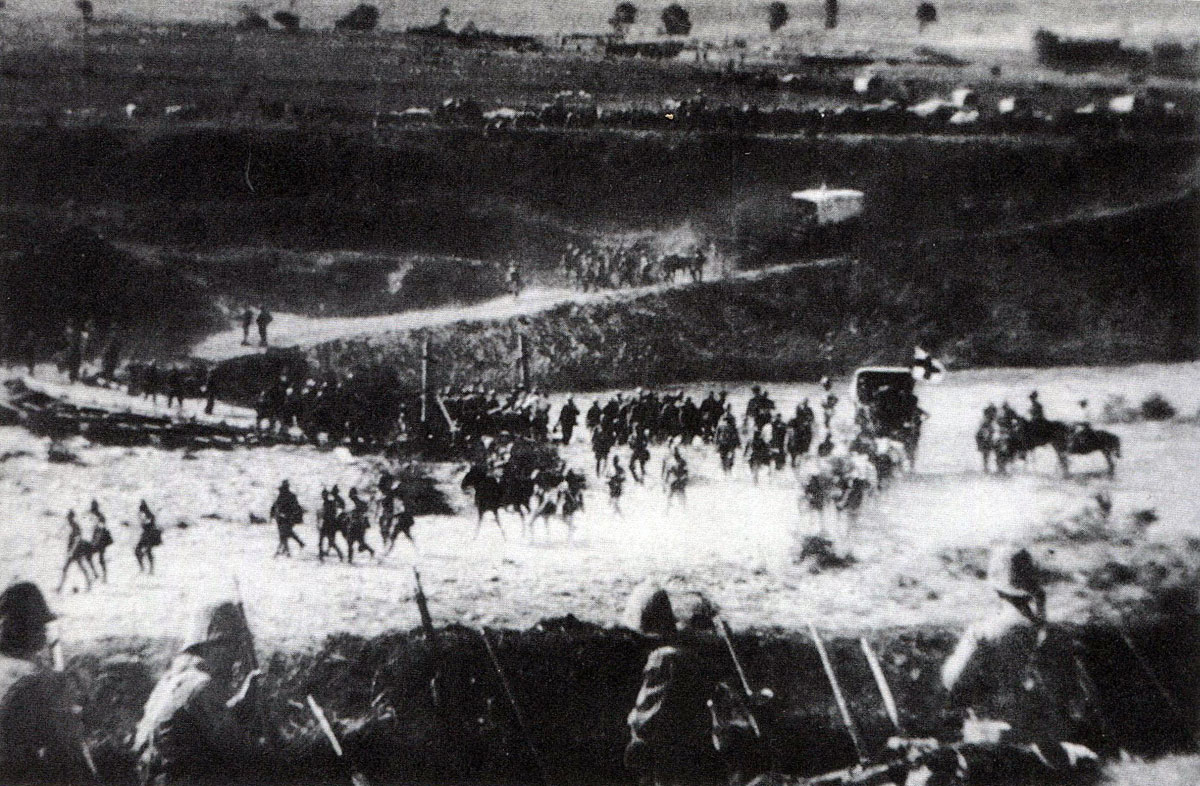
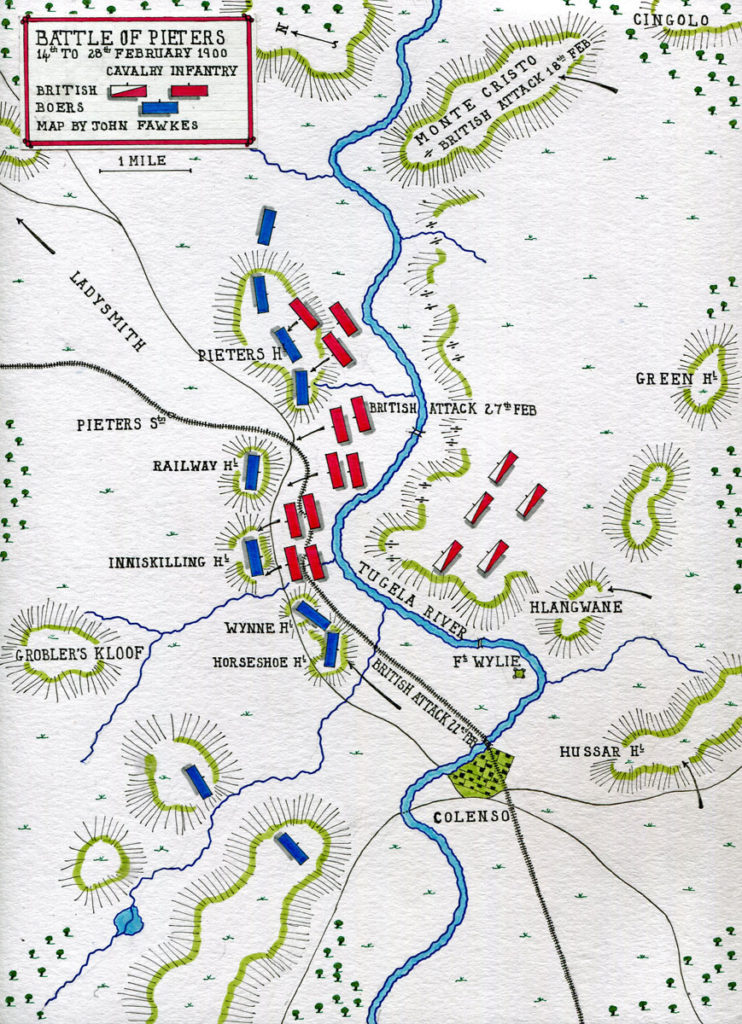


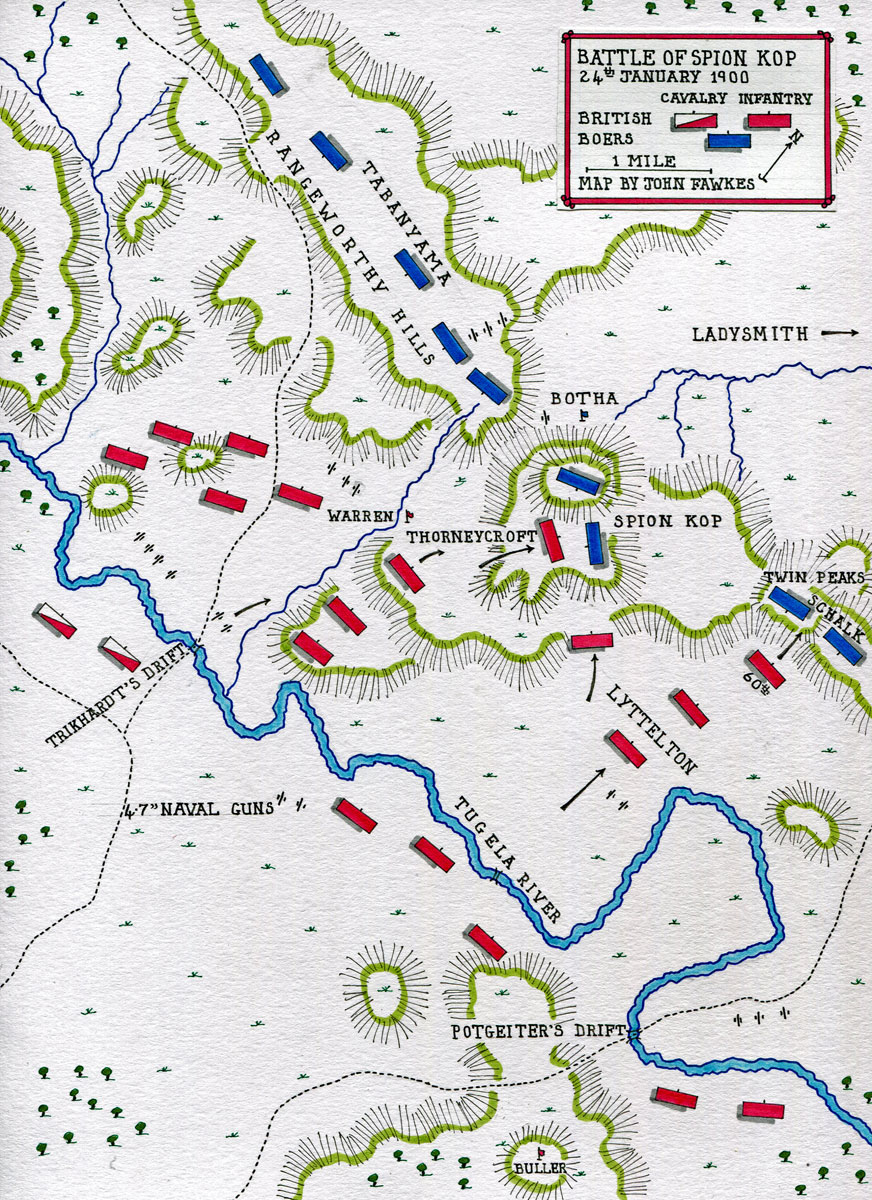

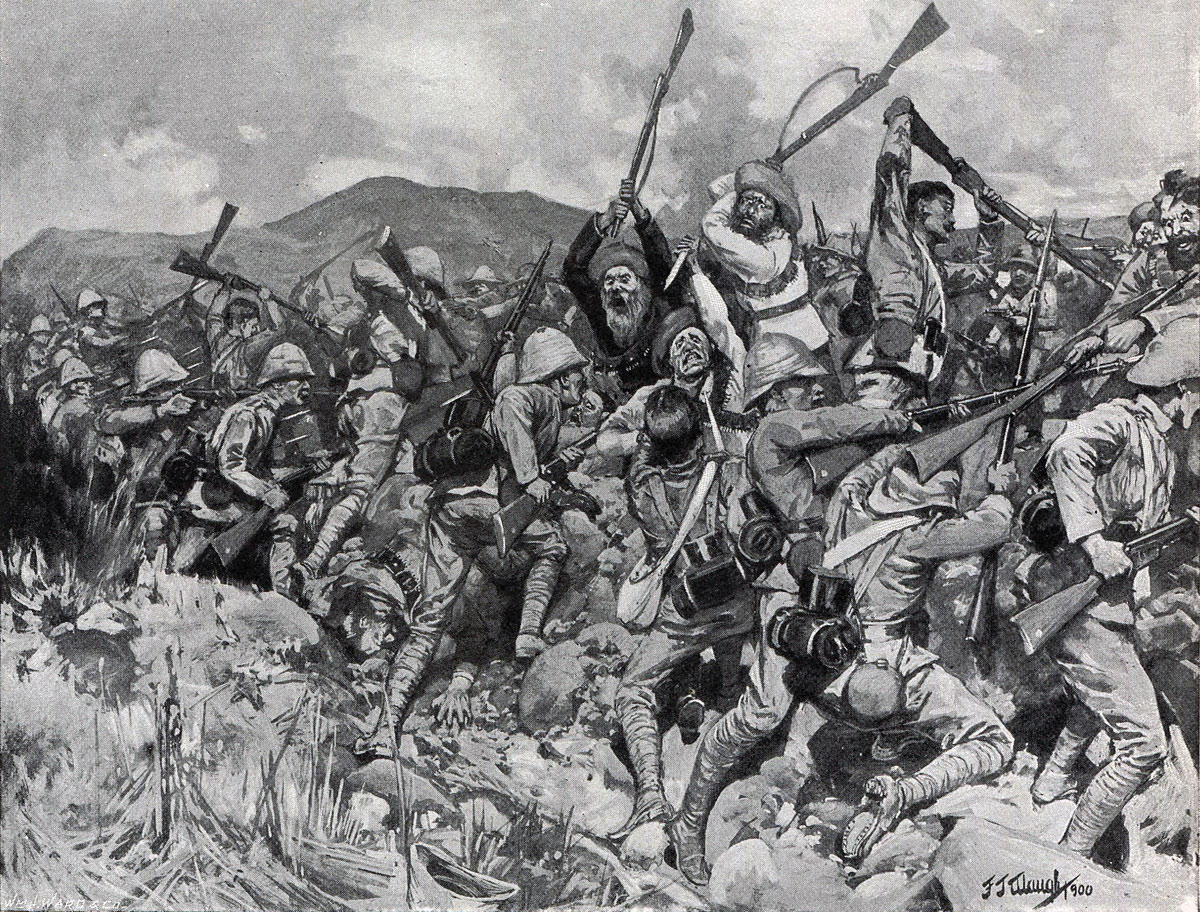

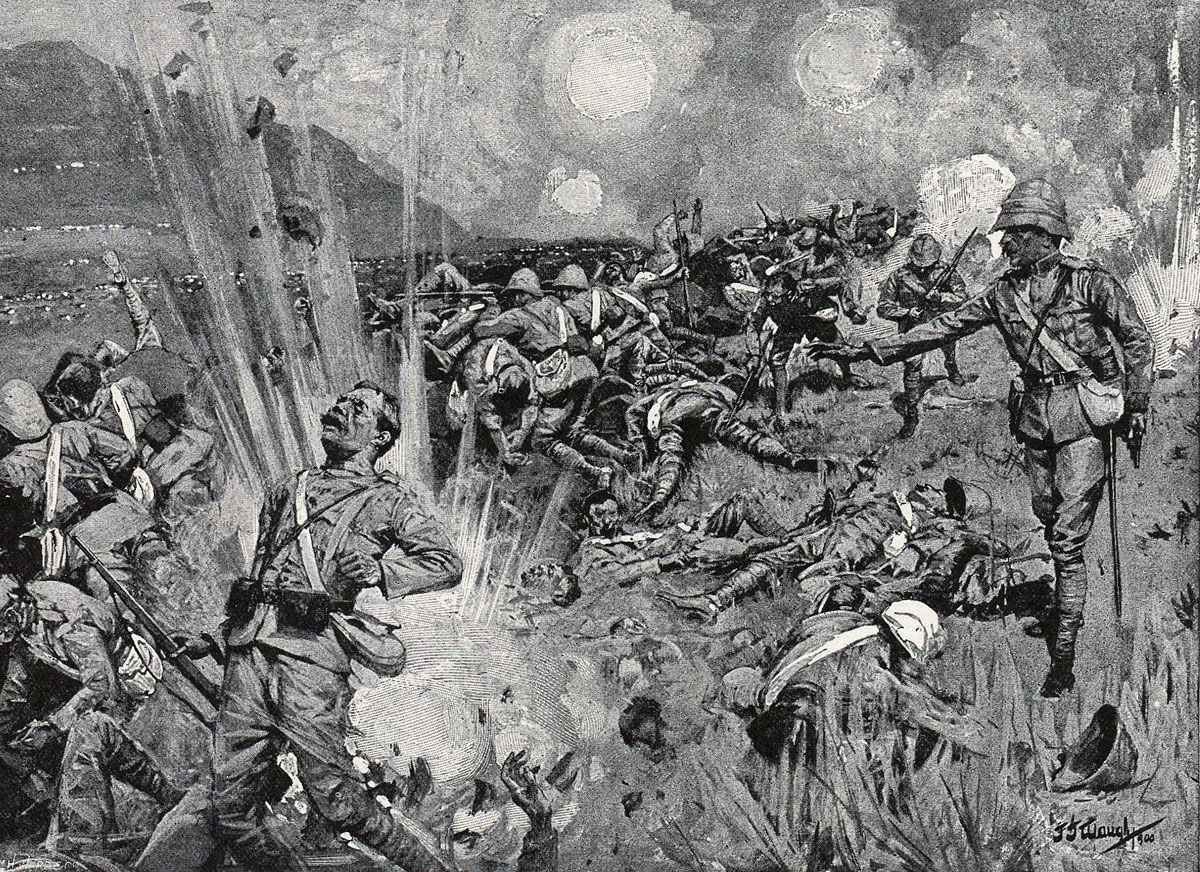
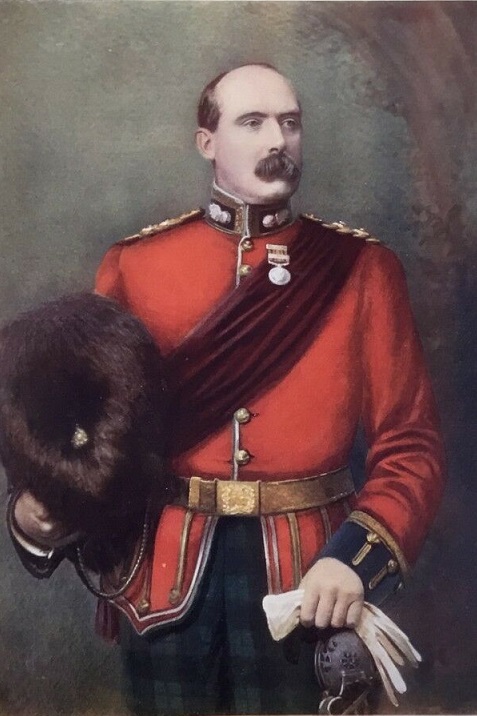
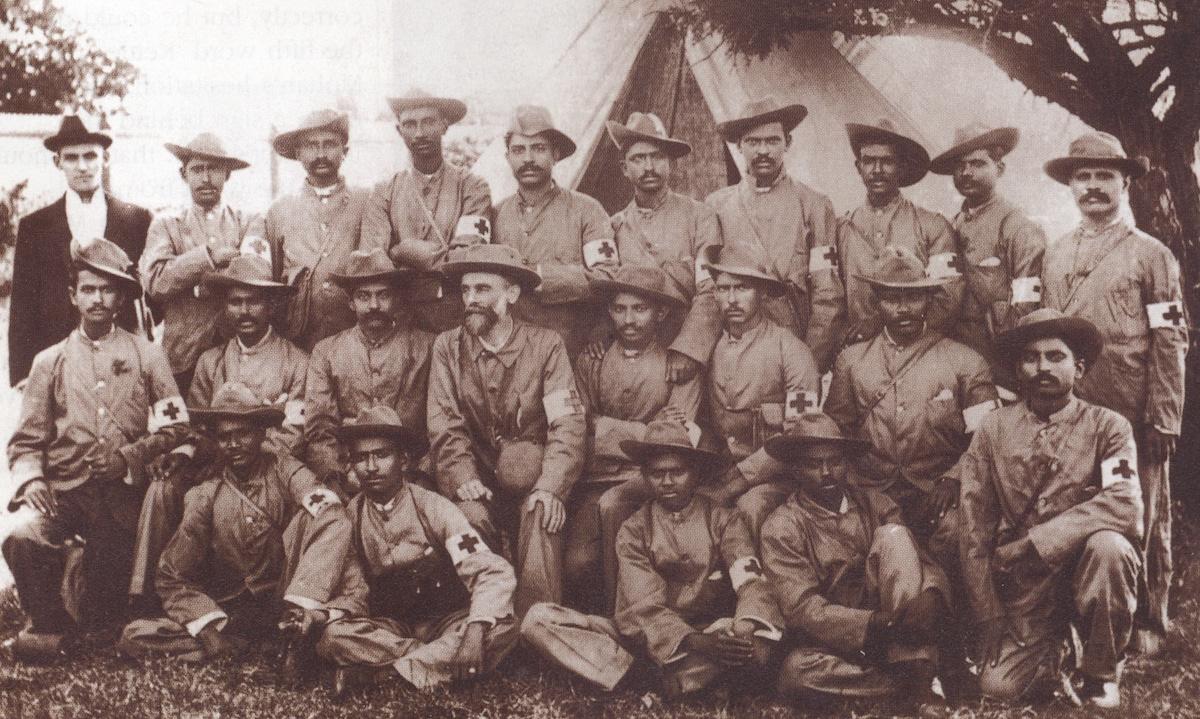


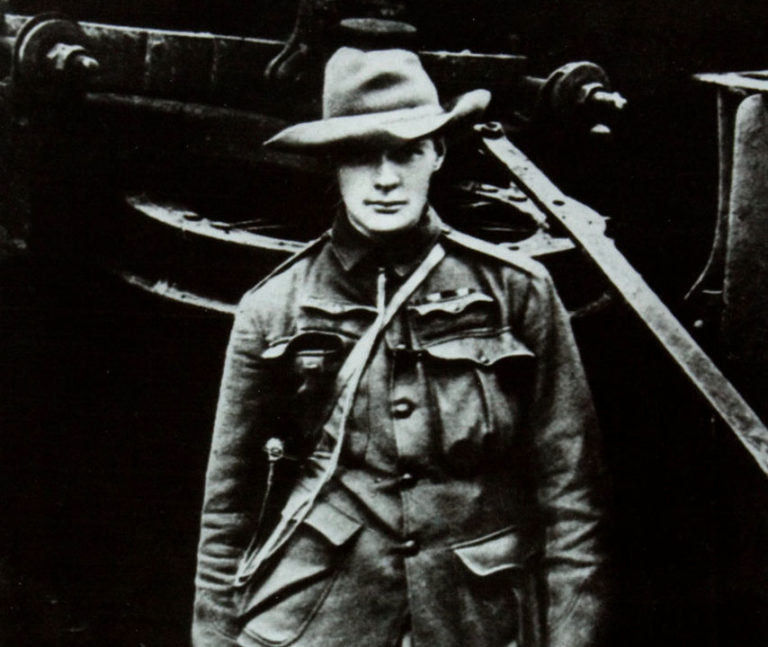
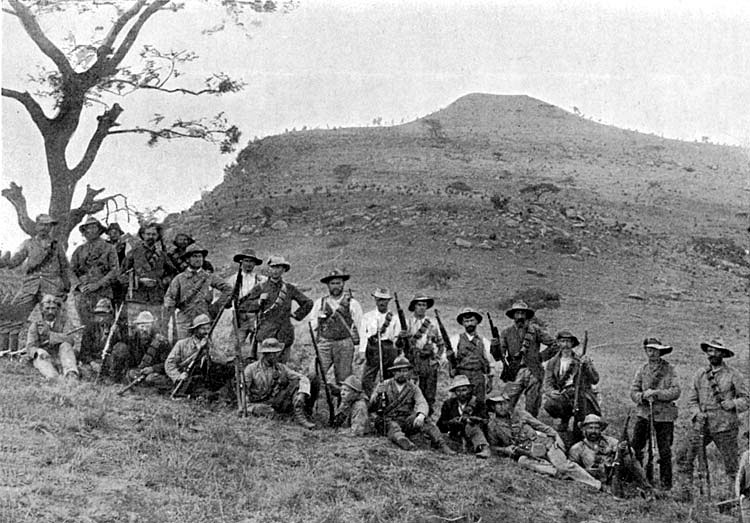
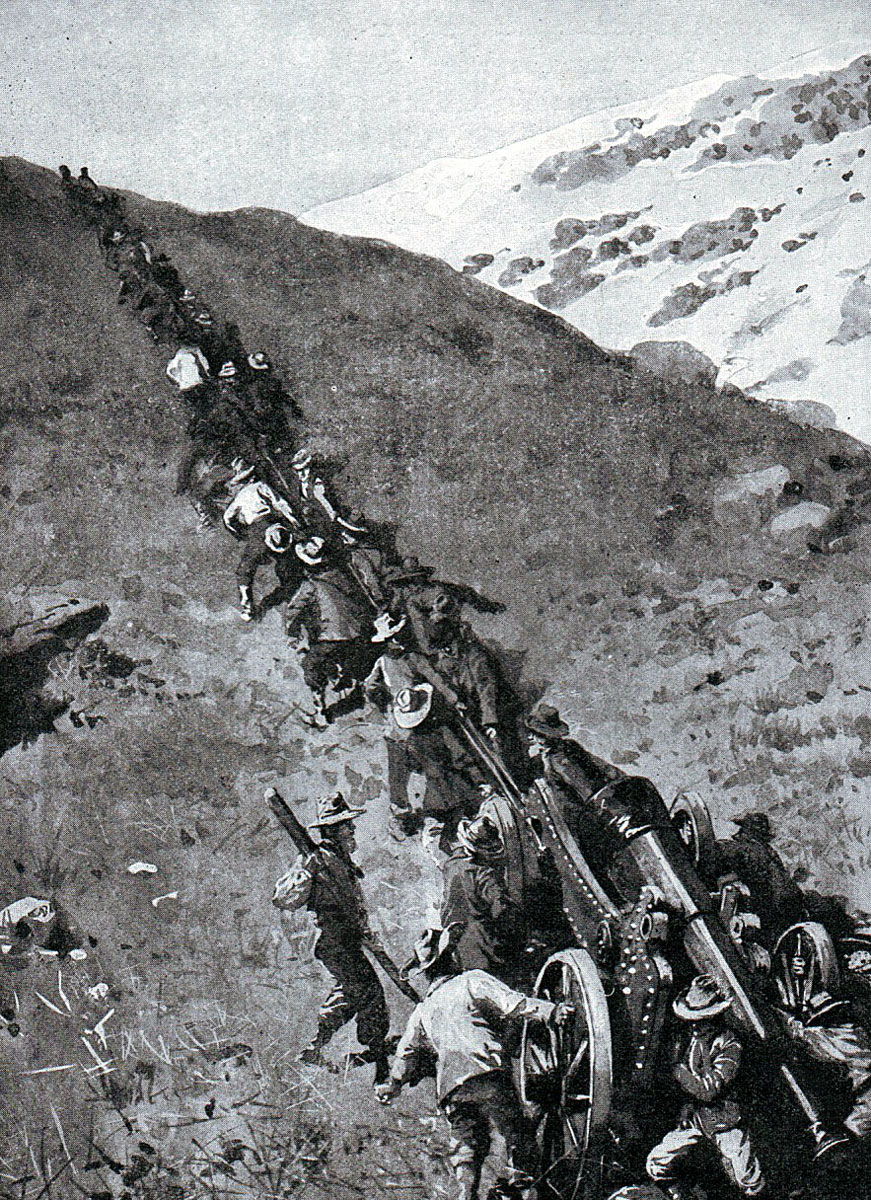
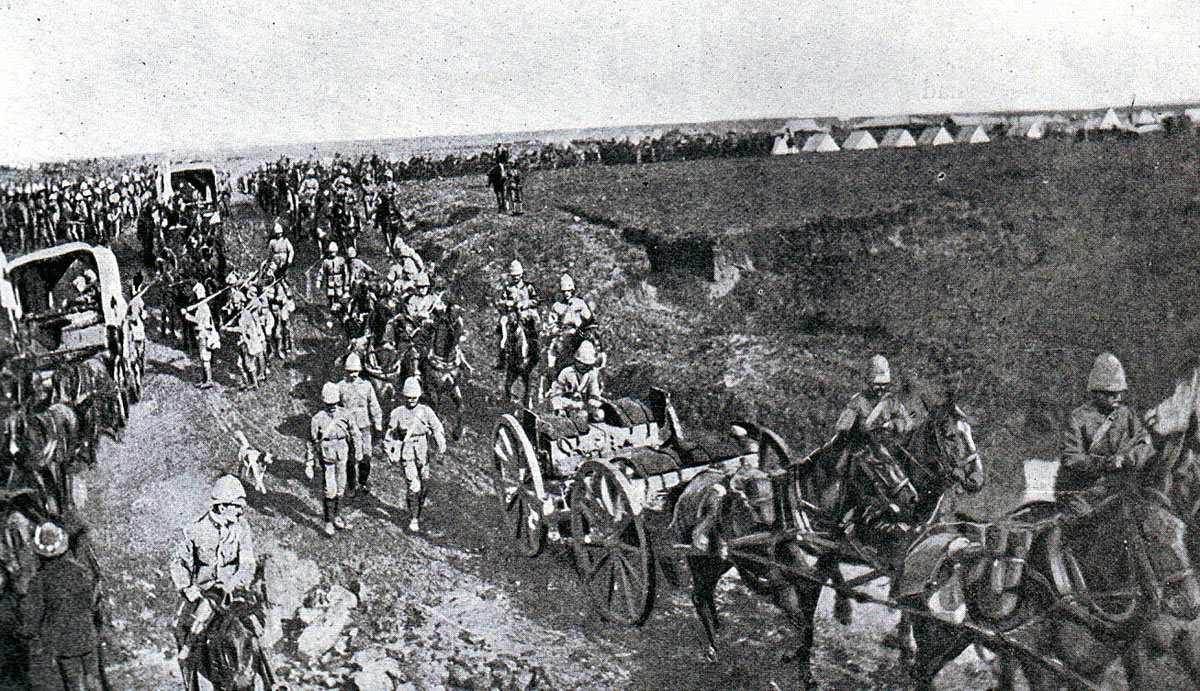


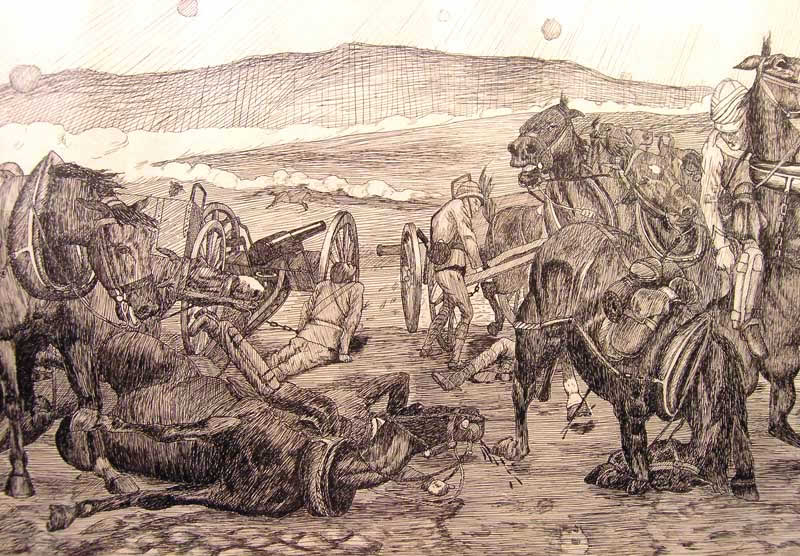
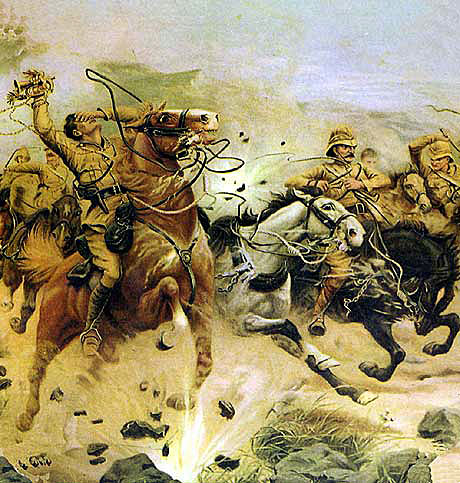
 Gwangju Dreaming