
The N3 highway from Durban to Johannesburg is the single best highway in South Africa. Absent are the otherwise ubiquitous potholes, which make highway driving a high-stakes obstacle course where failure means you’re stranded ten miles outside Lusikisiki, and two hundred miles from anywhere of consequence (long story). Absent, too, are the frequent single lanes such as stretch across the Karoo, necessitating either hair-raising games of chicken with oncoming traffic or accepting spending 6 hours staring at the rear of the semi in front of you. In fact, outside of a few winding hills outside of Pietermaritzberg, the N1 is straight, flat, and remarkably well maintained (at over 300 rand in tolls to drive from Durban to Joburg, it had better be, dammit).
My wife and I passed through Ladysmith one afternoon. It was late spring in southern Africa – the chilly rains of winter had passed and the dry brown hills were blooming into green. We got off on a small provincial road just beyond the town, heading for the small hamlet of Winterton and beyond that, nestled in the Drakensberg foothills, a small cabin that was our latest stop for the evening.

We were five days out of Cape Town, and I had grown used to the sights of the road – the long flat bush of the Karoo, interspersed with slices of green as the little dongas flowed across the high veldt, the odd flat-topped hills dotting the landscape, the constant livestock and their African herdsmen wandering along the road. So I didn’t realize for long minutes the significance of the hill I was staring at, a big old monster looming over the winding Tugela River. I mulled over our destination for the night, over my coming trip to nearby (ish) Isandlwana I was already planning, and other history that might have happened in the area, when I belatedly realized: We had just passed through Ladysmith. And that meant that that hill was…
I scrabbled for my phone as the hill slid by on our left – a black screen. I had powered it off to save on battery life, in case of emergency on the road. Well, this qualified. I held the button impatiently, watching as the Samsung groggily made its way through its morning routine. As soon as the screen lit up, I opened up Maps and hit my location. No signal out here in the African bush. Of course not. I manually thumbed through the offline map over to Ladysmith, then traced the road down to Winterton. That bend in the road was just – there – and that meant that the hill looming over us now was – the Kop. I had practically tripped over it.
There are ten thousand or more kops in South Africa. A kop is just an Afrikaans word, meaning hill, and most of them are completely unremarkable (once you get used to their steep sides and flat tops, like little islands in the sea of grass that makes up the veldt). But there is one kop that stands out. Immortalized at soccer stadiums all over the former British empire, it is most notable for lending its name to the stands at Liverpool: Spion Kop.
At that moment, I rode by in the shadow of Spion Kop itself.
Today it’s known more for its immortalization among the fans of Liverpool, including the lyrics of their song Poor Scouser Tommy, or in the excited memoirs of Winston Churchill, who once dodged bullets on those long slopes. The hill itself sits in the African wilderness, alone, almost entirely unmarked, and a long way from anywhere. But for a few desperate hours in the high summer of 1900, it was the arena of bloody battle between British and Boer that came to symbolize the senseless, stupid slaughter of the South African War between the two white races of the region. It was a place of heroism – but also abject incompetence. It was a stubborn, defiant stand of outnumbered soldiers – against an enemy that was himself outnumbered by the British army present on the field. It was a magnificent victory against long odds – that was thrown away at the literal last minute by exhaustion, by ignorance, or by incompetence.
And, of course, in the end, it was entirely pointless.
Perhaps it’s like most battles in most wars in that respect.
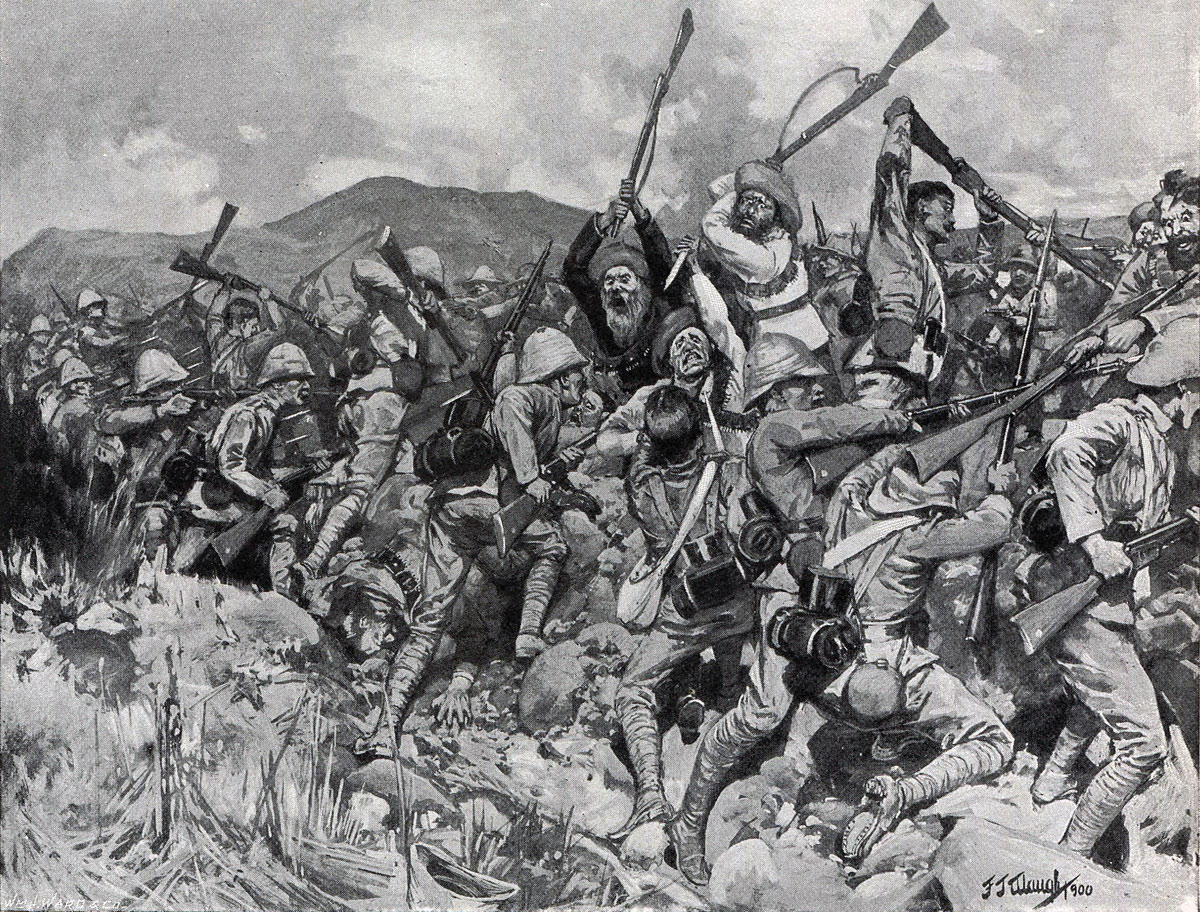
For the next few days, let’s take a few moments to remember the bloody battle of Spion Kop, most famous and terrible of all the battles in the Great Boer War. I’ll see y’all tomorrow.
 Gwangju Dreaming