The limousine rolled up to the gates of the Presidential palace as the sun sank down towards the Yellow Sea on October 26, 1979. Long evening shadows stretched over the humming streets and alleyways of Seoul, over the grassy parkland surrounding the palace, and splashed across the walls of a small safehouse. Sim Soo-bong nervously rolled down her window so the guards could inspect her and her friend, Shin Jae-soon. After a cursory glance at the two young women, they waved her through. The young singer was expected, and had been a guest of the president before.
Sim was an up-and-coming singer in the world of Korean entertainment. Of course, in the Winter Republic one couldn’t be too radical an artist, but she had made her name as a trot singer, a rollicking, upbeat Korean music genre just then at the height of its popularity. The daughter and niece of musicians, but unable to gain admission to university as a singer, she had been majoring in Business Administration at Myongji University. The year before, though, at the age of 23, she had won the MBC College Song contest with a song of her own composition, catapulting her to the limelight. She had whirled around the Seoul music industry, and Park himself had become a fan. Since then, she had twice been invited to banquet with the President.

The women were ushered through the gates, and the limo rolled to the safehouse. Inside, the dinner party assembled: the two young women, who were to be the evening’s entertainment, Chief Party Secretary Kim Gye-won, KCIA Director Kim Jae-gyu, the President’s bodyguard Cha Ji-Chul, and, of course, Park Chung-hee himself.
The man who had ruled the Republic of Korea for most of two decades was a shrunken shadow of his former self. Gone was the handsome, energetic young officer who had once converted the men sent to arrest him to his cause by the simple force of his charisma. Gone, too, was the powerful, forceful President who had transformed Korea into a modern nation. The years of clinging to power, fending off protests and internal challenges, navigating Korea through the dangerous waters of East Asia in the Cold War, the murder of his wife, had left Park a sad, lonely old man. He filled his days with political struggles against the NDP and cracking down on protestors, and his nights with lush banquets attended by pretty young women he brought in to distract him for a time.
The atmosphere that evening, though, was anything but festive. Sim wasn’t party to internal palace politics, but she could feel the tension in the air. It crackled between KCIA Director Kim and Bodyguard Cha, the two men glaring daggers at each other. Party Secretary Kim nervously tried to keep the peace between the two men, making poor attempts at small talk, but he failed. The President was no help at all – the discussion between the three men kept coming back to politics.
Cha took the lead, angrily berating Director Kim for his appalling failure to crush the ongoing protests in Busan. He pounded the table, saying that tanks and planes were too good for these traitors, these Communists, undermining the regime.
Director Kim flushed, angrily defending his KCIA. He had helped keep Park on his throne for 18 years, working his way through the ranks until he had at last become director 3 years before, and now this joker dared to criticise him? Cha had only come around after Youngsoo’s murder in 1974, but had quickly become the favorite of the President. At every turn he took his opportunities to undermine Kim, including now. It was KCIA’s responsibility to crush the protestors.
“We must be cautious, Mr. President,” Kim said. “Moderation is needed – let my agents handle this. We can soothe the protestors, make them go away, and no blood need be shed.”
“I’ve had enough of your ‘moderation,’” Park snapped. “We’ve been moderate for weeks now, and where has it gotten us? I pay you to deal with these traitors, not coddle them.”
Cha nodded vigorously. “It’s obvious the KCIA is failing us, Mr. President,” he said. “If I had my way, these protestors would all be mowed down with tanks!”
Park nodded. “Listen to Mr. Cha, Kim. Sometimes I think he should be in charge of more than just my security. At least one person here talks sense to me!”
Kim, his jaw clenching, stood up and excused himself. Sim, nervously watching with her friend, was relieved to see him go – maybe the evening would calm down from there. She was, of course, wrong. The argument that she witnessed and later reported was perhaps the most consequential in Korean history.
The tension between Director Kim and Chief Bodyguard Cha, which boiled over tonight, had been building for a long time. In his last days, from a Seoul prison cell, Kim would claim that he had always been a supporter of human rights and democracy. Cha, by contrast, was a brutish lout of a man who would cheerfully run over a college student with a tank if only Park would let him.
Kim was an old friend of Park’s. The two men had come up in the same class at the military academy, and he had ridden his friends’ coattails as Park rose to the very heights of power in the Republic. When Kim was detained by revolutionaries in 1961 because of suspected support for the liberal regime, Park had personally intervened for his release. Kim had then commanded the 6th Division (Park’s old command), then Defense Security Command in 1968, an agency within the military that spied on, well, the rest of the military on behalf of the dictator.
Kim would say that it was the Yushin Constitution that turned him against Park, and that he repeatedly plotted his old friend’s assassination in the 8 years since, but had never been able to bring himself to do it. He privately opposed a rising clique within the military, the Hanaho, a group of officers led by one Chun Doo-hwan which swore fanatic loyalty to the Korean Napoleon. He kept his growing resentment of Park quiet, though, and by 1976 he was in command of the KCIA, the main security body for Park’s regime.
In contrast to Director Kim’s moderate, some would even say soft, ways, Chief Bodyguard Cha was an ass. Appointed in the days following First Lady Yuk’s assassination, Cha had exploited his position near the lonely old man to steadily grow his own turf. He commanded the equivalent of a division in tanks and helicopters to assure the security of his Chief. He manipulated the Presidents’ schedule to cut out rivals – Kim’s KCIA briefings, once the first thing in the morning, were pushed to the late afternoon. And he wasn’t afraid to get his own hands dirty – he once assaulted a provincial governor who had surprised the president while lighting his cigarette.

Over the next 3 years, the rivalry between the two men sharpened and grew. Kim, once Park’s oldest friend, found himself more and more shut out of power by the growing influence of Cha. In the autumn of 1979, the turf war reached its climax.
Kim’s KCIA had been busily interfering in the internal elections of the opposition NDP, seeking to prevent the rise of a hardliner, Kim Young-sam, to power*. This was all old hat for the KCIA, which had been at this nearly 2 decades, and thus far had managed to keep the opposition mostly toothless and confined to pro forma arguments in the assembly and useless protests by college students. This time, though, Cha decided the KCIA’s efforts weren’t good enough and attempted to interfere in the election on his own. The two security services’ dirty tricks departments collided, and farcically, cancelled each other out. Kim Young-sam was elected and immediately pledged not to cooperate with Park until the Yushin constitution was repealed. Cha blamed the whole debacle on the KCIA.
Director Kim urged moderation, wanting to wait for things to blow over. He had tried to soothe Assemblyman Kim as the crisis escalated, even as Park – at Cha’s urging – arranged Kim’s expulsion from the assembly and invalidated his election. Assemblyman Kim refused, the entire NDP resigned, and the US even withdrew its ambassador. Kim’s home region of Masan and Busan erupted into protest.

Worried, Director Kim travelled to the tumultuous cities – this was the region that had brought down President Rhee 20 years before, after all. He expected to see the usual college idiots in the streets, but instead was confronted with adults – it was a popular uprising. Kim hurried back to Seoul, where Cha continued to whisper in Park’s ear that the whole crisis was a result of KCIA’s weakness and incompetence. Park pledged to shoot protestors in the street if necessary, while Kim privately warned him that the protests might spread to Korea’s other large cities if things were allowed to deteriorate.
By now, the two men, Kim and Cha, despised each other utterly, and could hardly stand to be in the same room (which I imagine made for amusing meetings of Park’s inner circle). The morning of October 26, President Park had attended a ribbon cutting ceremony for a dam and a new TV station (run by the KCIA). The men walked out onto the helicopter pad near the Blue House, where the presidential vehicle sat, rotors humming. Park climbed on board, but as Kim made to enter behind him, Cha, smirking, placed his arm across the door. He had decided that Kim no longer merited riding in the same helicopter as the President. Kim, enraged, muttered a few excuses and abandoned the trip entirely.
Just before they entered the dining room that night, Director Kim had told Secretary Kim that he would get rid of Chief Bodyguard Cha. Secretary Kim had cocked an eyebrow in confusion, but Director Kim said no more.
Inside, the girls joined them, the dinner arrived, and, despite Secretary Kim’s best efforts, the conversation turned again and again to the ongoing protests, and Cha continued to needle Kim again and again, with the old President Park nodding blithely along…and Kim stood up, and stormed out.
It isn’t known, to this day, whether or not Kim planned all the events that followed. Perhaps it was spur of the moment. Perhaps it was the product of a meticulous plot. Perhaps he had intended it, and was waiting for only the right moment. The truth can probably never be known, since all the men involved are now dead. What is known is this:
Director Kim left the dining room, and met with two of his close subordinates, who were in the safehouse the dinner was being held in. They were Park Heung-ju, Kim’s secretary, and his chief agent, Park Seon-ho.** “Chief Staff and Deputy Director are here as well,” he told the two men. “Today is the day.” Kim then seized a pistol and marched back into the room, with a look of terrible wrath upon his face.
As the guests cried out in panic, Kim opened fire. Chief Bodyguard Cha was shot in the arm, and he abandoned his charge, fleeing to a nearby bathroom, where he cowered. Park took a bullet to the chest, but he still lived. Kim pursued Cha, but the old pistol jammed. Kim worked furiously at the jam for a few moments, then, glaring at Park, he left the room. He fetched Seon-ho’s service pistol, marched back into the dining room, and threw open the door to the bathroom. Kim took special satisfaction in dispatching his rival with a shot to the abdomen before turning back to Park.
No one knows exactly what he said to the old president, but after an exchange of words, Kim leveled his pistol and executed him with a single bullet to the head. Park Chung-hee, the Korean Napoleon, the man who had ruled Korea for 18 years and transformed the entire country in his image, was no more.
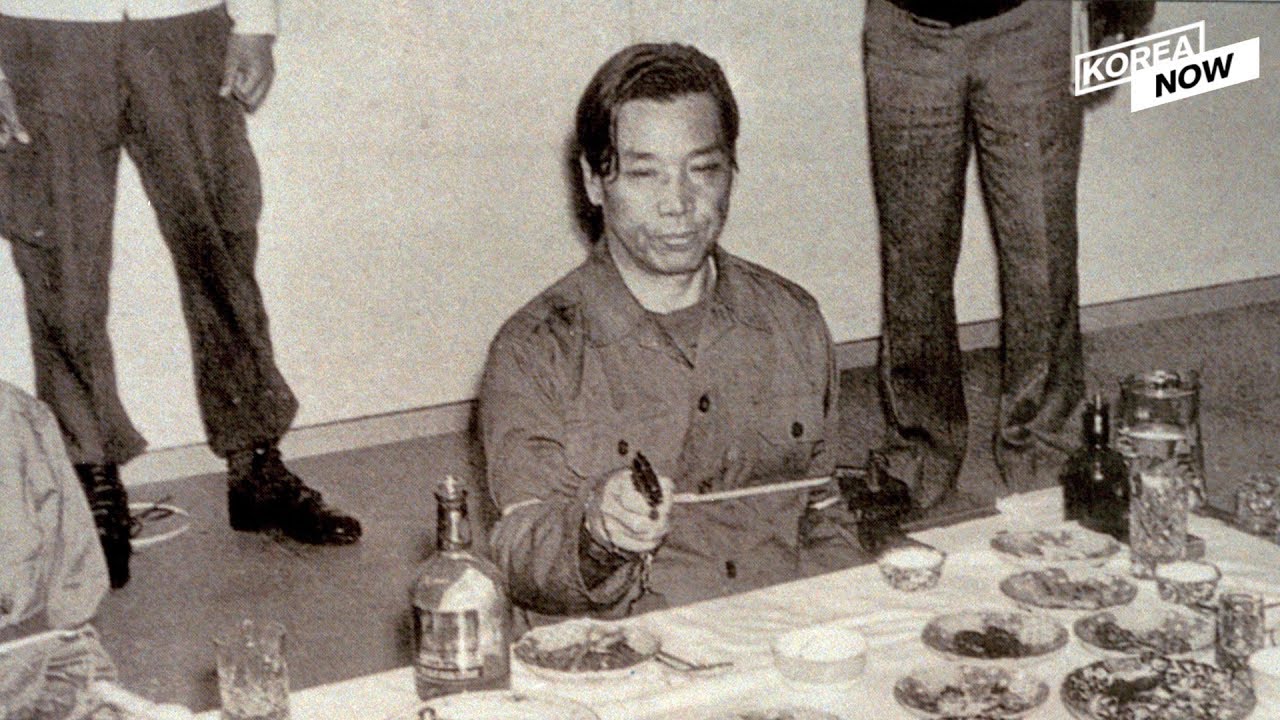
As the firing broke out, Kim’s subordinates raced through the house. Seon-ho took two bodyguards at gunpoint, including a friend of his. He hoped to hold them prisoner, but one of the men made a dive for his gun. Seon-ho cut them both down. Meanwhile, Heung-ju stormed the kitchen with 2 other KCIA agents and killed the remaining bodyguard. Somewhere in all thsi crossfire, the presidential chauffeur outside was also killed, bringing the night’s bodycount to six.
Kim, presumably slightly dazed by what he had just done, ran out of the room (leaving the terrified Sim and Shin cowering by the table). He ordered Chief Secretary Kim to secure the safe house (Kim obeyed more out of habit than anything else) and then raced to the nearby KCIA building. He found the Army Chief of Staff, Jeong Seung-hwa, there. Jeong, one of the highest ranking officers in the military, could be a powerful ally. Kim could place him on the throne as president, and rule from behind the scenes himself. It wasn’t like the KCIA director was spoiled for choice – having just shot dead the President, his bodyguard, and 4 other human beings in a fit of rage he would now either conquer or die. The President’s chair or the hangman’s noose were his only two options remaining.

General Jeong had no idea what was happening. He had heard the gunshots, though, and as Kim, breathless, ran in through the door he demanded to know what was going on. Perhaps thinking it tactless to say “Well, I just murdered the man who has ruled our country for 18 years, plus, like, a lot of other people, including that bastard Cha,” Kim instead in a fit of understatement announced that an emergency situation had arisen. He urged Jeong to come with him to impose martial law and get a grip on things (before the ever-dastardly North Koreans invaded, of course).
Jeong, confused and hustled along by Kim, climbed into a car with him and the two sped off for KCIA headquarters. Kim’s base of power was there, and from that location, he could set in motion a quick coup to stabilize his control of Seoul and thereby the rest of the ROK. On the way, though, Kim told Jeong that Park had died, although he failed to mention exactly how that situation came to be (again, imagine how awkward that conversation would have been. Much best to wait, yes).
And then the conspirators (for a conspirator Jeong was now, although he didn’t realize it yet) had to make a decision as their car sped through the nighttime streets of Seoul. Ahead and to the left lay Namsan district (today famous for Namsan tower, which dominates the Seoul skyline) and the KCIA headquarters where Kim usually laired. Further ahead and to the right was Yongsan, where the Korean armed forces were headquartered, Jeong’s usual base of operations. Jeong resisted going to KCIA headquarters – if martial law was declared (and it would have to be, with Park Chung-hee’s body presently cooling in a bloody dining room somewhere), he’d need to be in contact with his army units. The car should go to army headquarters.
Kim resisted, understandably. At KCIA, he’d be surrounded by his minions. Jeong would know exactly what Kim wanted him to know, and he’d have Jeong entirely in his power if the Chief of Staff needed persuading to see things the Director’s way. The opposite would be true at army headquarters – Jeong would be secure in his own power base, with access to his own sources of information, unable to be hustled the way Kim wanted him hustled. But Jeong was the only high-ranking member of the military Kim had access to that night, and if he coudln’t get the military to support or at least stay neutral, then his coup would fail (and he would hang). Kim begged, he pleaded, he even wheedled (a bit), but Jeong was firm. No army, no martial law. No martial law, no coup. So the car turned right and went to army headquarters and thereby Kim Jae-gyu’s fate was sealed.

Chief Party Secretary Kim, meanwhile, had been left back at the safehouse with all the dead people (and two terrified college students) lying around. Secretary Kim, who had either done this sort of thing before or else possessed an admirable ability to keep his head in a crisis, organized a cleanup, quickly took the two surviving witnesses (besides himself) into custody, and sped the Presidents’ body to a nearby army hospital and ordered the doctors to save him at all costs. My sources note that he specifically did not reveal the man’s identity to the doctors, but it seems that would hardly be necessary. Then he raced to the Prime Minister’s office, Choi Kyu-ha, to tell him everything that he had seen.
At Army Headquarters, Director Kim was busy spinning a thrilling tale of North Korean commandos, who had burst into the KCIA safehouse (no doubt casting serious doubt on the competency of the KCIA in the process) and gunned down President Park and Chief Bodyguard Cha*** before, er, vanishing into the night. Anyway, no time for questions, it was essential that Jeong declare martial law and control the city before the assassins escaped and the North took advantage of the confusion. Jeong would not be stampeded into anything, though, and he insisted on contacting the Prime Minister first, as the only real “civilian” authority left in the wake of the President’s death.
Here things began to unravel for Director Kim. He may have trusted to Secretary Kim’s loyalty, or hoped to reach Kim later to tell him the “official” story, but his need to go after Jeong first, and then allowing Jeong to take him to army headquarters, had made that impossible. And by not murdering Secretary Kim along with everyone else, he had inadvertently allowed a narrative to escape that would challenge his own: namely, that Director Kim himself had murdered the President and Cha (and, it should not be forgotten, a bunch of other people!) in a fit of rage. But why would Director Kim have murdered Secretary Kim? His resentment and frustration were directed at Cha, and the way Cha had turned his old friend Park against him. He had no quarrel with the party. And thus the mercy of Kim proved his undoing.
The Chief of Staff left Kim at army headquarters and hurried to the side of Prime Minister Choi. There, an emergency meeting of the cabinet was convened. Jeong heard the entire story from the Prime Minister, and his face grew stiff, and cold, and he knew what he must do.
Kim had a strong base of power in the KCIA, which was the most feared organization in the ROK at that time as the primary enforcers of Park’s regime. But Kim was cut off from most of the KCIA, and vulnerable. Jeong asked Kim to meet with him at a secluded area, outside army headquarters. Kim still knew he needed Jeong’s support, and he, fatally, consented. When he arrived at the meeting spot, Kim found not the Army Chief of Staff waiting for him, but armed military police to take him into custody.
Jeong acted quickly to neutralize the power of the KCIA. He turned to the only other internal security apparatus the ROK had, the Security Command under Chun Doo-hwan, and ordered him to investigate the incident.
This is the spark that eventually explodes in Gwangju, 9 months later.
Remember, Chun Doo-hwan was head of a clique of young officers fanatically loyal to Park. He was enraged at hsi mentor’s death, and he was ruthless in dismantling the KCIA. The Security Command, which you will also recall was the agency charged with keeping tabs on the military itself, was perfectly positioned to move efficiently through the upper reaches of power. Kim and his handful of minions were all swiftly arrested, tortured, and, ultimately, for most, executed. In so doing Chun Doo-hwan demolished the grip KCIA had over internal Korean politics, and at the same time established his own, new power base. While Chief of Staff Jeong moved tentatively toward civilian rule, Chun and his coterie found themselves with a sterling opportunity to preserve Park’s legacy and continue the rule of the military.
As for Director Kim, he was imprisoned and tortured, naturally. Most of the information contained in this narrative emerged from the sensational trial of Kim Jae-gyu over the next six months.
Kim argued that he acted out of a hither-to unsuspected love of democracy in his trial. He claimed that many times he had attempted to or thought about arresting or murdering Park, but each time had backed down. He also revealed long-held contacts with opposition leaders (like his attempt to smooth things over iwth Kim Young-sam just before this crisis). He also claimed the American CIA had backed him, which is not as implausible as I would like.
Chun Doo-hwan, meanwhile, somehow kept a straight face as he declared that the assassination was clearly the product of a long-running conspiracy by Kim to murder the President and subvert democracy. He cheerfully ignored such objections as the fact that Kim clearly had no plan at all for after the assassination, the fact that he’d had to borrow a gun to carry it out, the fact that he vented his rage and resentment towards Cha aloud while shooting him, and the fact that he hadn’t even given his own agents like Park Seon-ho more than about 5 minutes’ warning.
But it’s good to be the dictator, and dictator Chun Doo-hwan was. Kim and his fellow conspirators were quickly sentenced, one after another. Colonel Park heung-ju, Kim’s secretary, was easiest to deal with. As a member of the military he could be summarily convicted and executed by firing squad, which he was on March 6, 1980. The remaining conspirators – Director Kim, his agent Park Seon-ho, the driver Yoo Seong-ok, head of safehouse security Lee Ki-ju (convicted presumbly on the grounds that he was fucking terrible at his job), and Kim Tae-won, a security agent who tried to help the whole affair look like a Nork attack, were all hanged on May 24, 1980, neatly closing the affair.
Except that on May 24, 1980, the Chun administration had much, much larger problems on their minds – namely, the revolt against their rule that had broken out the week earlier in Gwangju, on May 18, 1980. We’ll get there.
As for the college students, Sim and Shin, both women were imprisoned for around a month while the authorities sorted out what the hell had happened (and what the hell they would tell the public, notably not the same thing). They were released more or less unharmed apart from the psychological trauma, but Sim was banned from television until 1984 (who knew what she might say if given a platform?). Her career nevertheless survived and she went on to modest fame and success. Forever and always, though, she is most well known as one of the most intimate witnesses of the end of the Winter Republic.****
As for Chief of Staff Jeong and Security Command chief Chun, the two men found themselves unexpectedly at the apex of Korean politics, a situation neither had dreamed of even a week before. Now they had to sort out the pecking order between them, and the fallout from their confrontation is the final, irrevocable step on the road to the Gwangju Uprising.
Next time: The War of the Stars!
*There are only a few surnames in Korea. By far the most common are Kim, Park, and Lee. I apologize for any confusion which results.
**No relation to each other or to the President. See previous note.
***The fact that those just happened to be two people that Kim really fucking hated was purely a coincidence, of course.
**** The events of October 26, 1979, were satirized in the Korean black comedy film The President’s Last Bang! from which I have of course drawn my title. It’s a good movie and fairly accurate to events – accurate enough that the maker won a defamation suit brought against him by the children of President Park. Here’s the trailer. I recommend it if you can find it:
 Gwangju Dreaming