Happy countries are all alike, but each unhappy country is unhappy in its own way. On the northern half of the Korean peninsula, the Democratic People’s Republic of Korea, Kim Il-Sung’s Stalinist dictatorship, was a cult of personality of mythic proportions. Freedom of assembly, freedom of speech, freedom of thought was not just unheard of but unthinkable for most. After all, the leader represented the will of the people – he essentially was the people, and how could the people criticize themselves?
To the south, the Republic of Korea was also unhappy. The essential alliance with the United States required that the leaders of Korea pay lip service to the ideals of freedom and democracy (and most especially anti-communism), but the reality was of course, different. Free elections were nonexistent, and political repression, while not as total as in the North, was a constant fact of life.

Still, for a few months in the spring of 1960, that summer of hope when in the United States John Kennedy ushered in a new generation of political leadership, and the civil rights movement promised yet another birth of American freedom, it seemed like the ROK might become a republic in fact, and not just in name. The Second Republic was weak, and unsteady, yes, but it allowed political opposition, failed to murder or even beat protestors in the street – why, it even allowed opposing newspapers to print!
But the most dangerous time for any new government is its first few months of existence, when it is vulnerable to all manner of opportunistic ambush predators. The Second Republic was vigilant and survived all efforts by the North to topple it. It was not so lucky against predation from within. Park Chung-hee saw to that, and in so doing inaugurated a series of military regimes that would remain power until 1993, maintaining themselves in command through increasingly bloody reprisals against the people. The bloodiest of all came in Gwangju, in May, 1980.
Park was born in 1917, in the Japanese-occupied countryside of Korea. I didn’t emphasize last time how thorough and oppressive the Japanese regime was, but it should not be overlooked, either: Korean culture and language was suppressed, while Japanese culture was propped up and Japanese history was glorified. The twisted Bushido warrior code, bearing only the faintest resemblance to the samurai codes that would have been familiar to Miyamoto Musashi, condemned the Koreans for being so weak as to allow themselves to be conquered. A truly worthy people would have resisted to the death. Thus, the fact of the Koreans’ oppression became self-justifying. The Koreans were a despised second-class race of citizens within their own country.
Park grew up in this environment. He was given a Japanese name, as most Korean boys his age were, and was brought up to revere Japan and the Japanese military. Repeatedly, he expressed admiration for Emperor Meiji and the dramatic fashion in which he had modernized Japan. The first emperor to rule with any authority in over a thousand years, Meiji had overthrown the Shogun (the military ruler of Japan for centuries), broken the power of the samurai, and remade the one-backwards island nation into the mirror of Western imperial powers the world over. Japan had become the sole Asian nation to defeat a European nation in open warfare (Russia, in 1905), and had eventually acquired an empire large to challenge the United States, Great Britain, and the Soviet Union simultaneously.* As Park grew up, Japan was undoubtedly the wealthiest, most modern country in Asia, and a model for good governance in his mind.
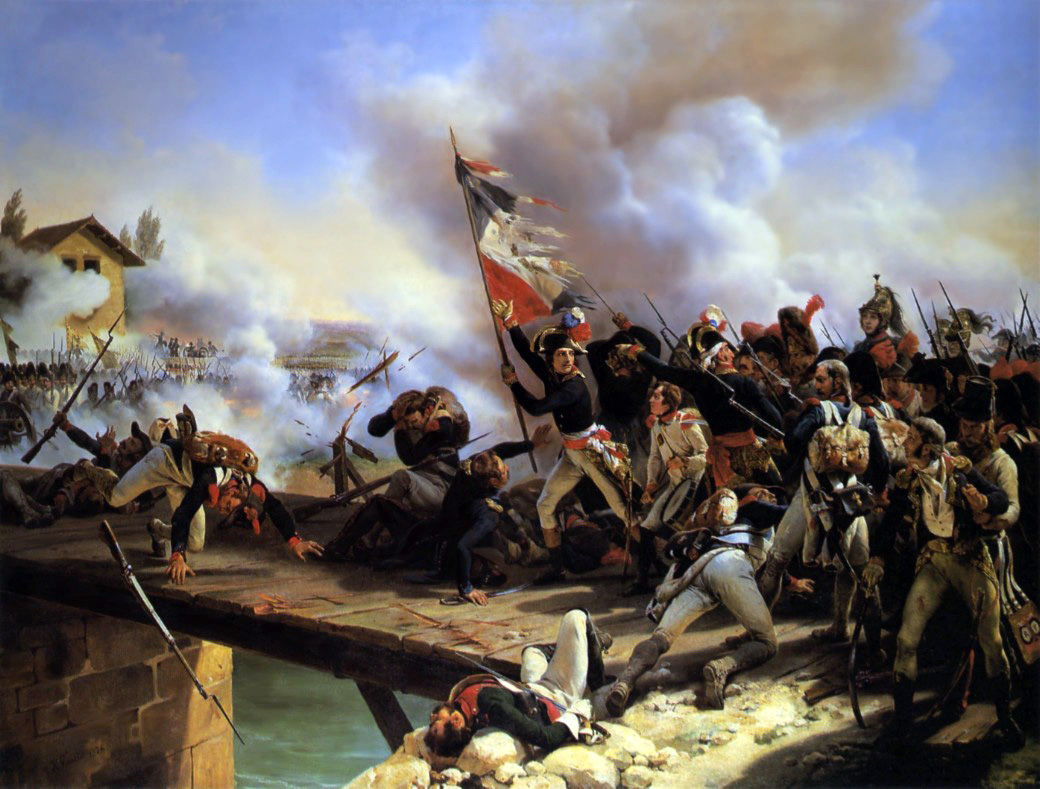
The other model for Park, tellingly, was Napoleon. Napoleon had masterfully unified the military and civil governance of France, bringing a final end to the chaos of the Revolution and rising from obscurity to Emperor within 10 years through his political and military genius. His Napoleonic Code of laws still serves as the basis of law in countries all over Europe, and his soldiers exported the French Revolution to every major state on the Continent, and caused thrones to tremble from Madrid to Moscow. He was, without a doubt, the titan of his age.
Of course, he had also been unable to contain his ambition, and his overreach had eventually culminated in his overthrow by a coalition of every major power in Europe. He had been a despot and an authoritarian at home who betrayed the democratic ideals of the Revolution, one who cruelly used and abused his own loved ones in pursuit of his own ambition for glory. But details like that were irrelevant, in Park’s mind, compared to Napoleon’s masterful command of his time. Park’s only regret was that as a poor boy growing up in rural Korea, a backwater of a backwater, was that there was no outlet for his own genius and ambition.
When Japan’s militarist clique pushed the nation into war with China, Park Chung-hee had his chance. He took his Japanese name, Takagi Masao, and enrolled at Changchun Military Academy. Talented and intelligent, his Japanese masters recommended him for staff training at the Imperial Japanese Army Academy. He graduated as a lieutenant in 1944 and served with the army in Manchuria.
Escaping August Storm, Park returned to Korea, where he again commissioned as an officer in the embyronic ROK Army. A political difference of opinion with Rhee led to him getting the boot in 1948, but the war demanded every single able-bodied Korean and Park at last had a chance to show his quality. He returned to the ranks and quickly began to rise. A major in July 1950, he was a lieutenant colonel by September and a full colonel by April. War tends to sort out the wheat from the chaff, and the rapidly expanding Korean army needed any command talent it could get. By the time the war ended in 1953, Park was a brigadier general commanding artillery corps (his hero, Napoleon, had also got his start in the artillery).
His wartime service had marked him as a man of talent, and he was sent to the United States for further training. He returned, headed up the Artillery School, commanded several divisions, then was made Chief of Staff of First Army, responsible for the defense of Seoul itself. It was up, up, up for General Park. By 1960, he had been made Chief of Staff of Operations for the whole Korean army. It was the perfect place for a man of ambition as Korea’s First Republic drew to an end in the April Revolution, Rhee was ousted, and the Second Republic began.

If this was to be the dawning of a new age of democracy and freedom for the Republic of Korea, it was, well, a bit disappointing. The liberal Democratic party, in the grand tradition of liberal parties** throughout history, couldn’t find its ass with both hands. The new president and prime minister, mostly non-entities whose names are unimportant, were caught between the conflicting demands of the student protestors who had largely been responsible for driving Rhee out of power, and the economy, which was basically in shambles after a decade of Rhee’s mismanagement and corruption. No liberal politician could truly command a majority of the House, the prime minister was elected by a razor-thin margin of 3 votes, he created his cabinet, then recreated it, then desperately recreated it a THIRD time in the space of a year as he scrambled to piece together some kind of powerbase, and the conservative military was skeptical of them all.
While the government mostly tried to hold itself together, outside in the streets students regularly flooded out, demanding a wide range of social and economic reforms. The tight political controls of the Rhee government had been relaxed, and leftist and reformist groups took full advantage. No one trusted the police after the April Revolution, and public security deteriorated. Popular support for the Second Republic waned.
At the same time, the government’s footing was too shaky to eject the clique of what were called “liberation aristocrats” – Koreans who had ingratiated themselves with the United States military government and made their careers in the early years after independence, of whom Rhee was only the most significant example. They still infested most of the highest reaches of government and were viewed highly skeptically by most of the military. The military, most of whom, like Park, had been trained by the Japanese originally, remembered with fondness Korea’s economic development under Japan, and looked with envy at the “Japanese miracle” developing on the far side of Tsushima Strait. The conservative “liberation aristocrats”, by contrast, had kept the ROK’s economy agrarian and underdeveloped, with roughly the same per capita GDP as the Stalinist North.
With no real legitimacy of its own, no popular support, facing harsh criticism from the conservative ruling elite and no real love from the military, the Second Republic was weak, tottering, and ready to topple at the slightest provocation. Park did not miss his chance.***
Park Chung-hee, just outside the topmost echelon of the military, was ideally positioned. The military brass were tainted by their association with Rhee’s long term, and a new cohort of reform-minded junior officers were rising. Park was at the top of this new wave. He shared with them ambiguous politics and a strong admiration for the Japanese model of authoritarian development, inculcated during his time in the Japanese military. While the Second Republic flailed ineffectually at its problems through 1960, Park quietly built a network of like-minded officers, many old friends from Manchuria, and laid the groundwork for his own Thermidor. He named his organization the Military Revolutionary Committee.
After several abortive attempts, on May 16, 1961, the plans were leaked to the central government, and the military moved to arrest the plotters. Park now seized the moment. In an eloquent speech to the 6th District Army headquarters, he persuaded the majority of the capital garrison to defect to his cause, arguing, “We have been waiting for the civilian government to bring back order to the country. The Prime Minister and Ministers, however, are mired in corruption, leading the country to the verge of collapse. We shall rise up against the government to save the country. We can accomplish our goals without bloodshed. Let us join in this Revolutionary Army to save the country.” Such was the force of his rhetoric that even the men sent to arrest the mutineers were swept up in the moment and defected. No doubt a voice from a far distant time and place, another failed arrest of a would-be coup, echoed quietly in the back of Park’s mind as he rode out towards the palace, “Soldiers, if you would shoot your emperor, here I am!”

The army quickly flooded out to occupy Seoul. The non-entity Prime Minister fled the city, while the President quietly accepted the coup and continued to serve as a figurehead. The Korean army initially prepared to respond and put down the uprising, but the threat of a North Korean invasion compelled them to remain in their positions at the DMZ. With the civilian government imploding and the military doing nothing to respond, soon more and more officials and soldiers began to switch sides. Within a week Park had fully twenty divisions backing him. Three days later, the Prime Minister and the entire cabinet emerged from hiding and resigned, ceding power to the Military Revolutionary Committee.
Park moved to consolidate power quickly. He quickly isolated and removed any rivals, establishing himself at the head of the MRC, now renamed the Supreme Council for National Reconstruction. The thirty highest ranking Korean military officers were on the council, which held supreme civil and military power in the country – and Park sat at their head. Recognition from John Kennedy and the United States came within days of the coup. Finally, he formed the Korean Central Intelligence Agency, whose primary purpose would be to prevent any future coups.
Within 2 months of seizing Seoul, Park had firmly established himself as the military dictator of the Republic of Korea. Sygnman Rhee had ruled for 12 years. The Second Republic had lasted less than 12 months. Park Chung-hee, who had risen from a poor boy to general of artillery to master of his nation, like his idol, Napoleon, would rule for 18 years. It was his murder that directly set in motion the chain of events leading to the Gwangju Uprising.
*this was, of course, insane and Japan was in no way powerful enough to do this, as its crushing defeat in the Second World War should have shown.
**Meant here in the classical sense.
*** Let me outline my theory of Revolutions here. Feel free to ignore if you’re just here for the Korean history. Some day this will earn me my PhD.
I have come to believe that every revolution consists of, at minimum two waves. The fate of a country usually turns on the outcome of those waves – whether it enters a glorious new era of freedom and equality, or if it spirals into factional chaos and bloodshed. It all depends on the second wave.
The first wave of revolution is usually led by moderates and professional revolutionaries, established men of influence who use their influence to overturn the status quo. These usually have noble, high-minded ideals. These men are the Continental Congress in the United States, the members of the Third Estate who took the Tennis Court Oath in 1789 in France, the early liberationists in Latin America and in Haiti, the liberals who overthrew the Bourbons (again) in France in 1830, too many liberals to count in 1848, Francisco Madero in Mexico in 1910, Sun Yatsen in China, 1912, the February Revolution in Russia in 1917, and the initial moderates in the Arab Spring of 2010.Following the successful “revolution,” the moderates, as I term them, start to establish a government and build a new order. It’s usually light on revenge and heavy on the constitution writing. Forgiveness and moderation are the order of the day. But there’s a danger: legitimacy.
See, a successful revolution undermines the legitimacy of any government, and the new government needs time to rebuild that legitimacy. Legitimacy is a magic force which exists solely in the minds of men, that compels obedience to the authorities and respect for the law as written. Why do Americans not fear that the outgoing president will order the military to seize power and maintain him in office indefinitely? Because the American government has legitimacy, and because of that magic force such a coup is basically unthinkable. Why do the losers of elections not plot to ignore the results and seize the levers of government by force? Because of legitimacy. The legitimate government is respected.
But new revolutionary governments lack that legitimacy. They have just seized power extra-legally, after all, and various centers of power in society don’t yet know what the new heirarchy is and might be. Will the military support the new government? Will the people? The intelligentsia? Will party factions plot their own counter-revolutions, now that the door is open?
The result is that any successful revolution must navigate a period of danger after the revolution, when its resolve will be tested and various factions will attempt to seize power for themselves. If the government can survive this, gradually it will establish its own legitimacy and the danger of further revolution will cease. If it fails, then the legitimacy timer is reset and the country spirals into chaos and bloodshed. Thus, a successful revolution opens the door to further revolution.
This is the second wave. The moderates usually have broad popular support and so are able to successfully challenge the regime. The radicals, though, are usually not supported by the majority and could never achieve power on their own. Once the government is overthrown, though, well, suddenly the path to power is possible with a much narrower base of support. And so the second wave will inevitably be the “radical” revolution, much bloodier and more terrible than the first.*
Let me illustrate by way of some historical examples, from which I derive the theory:
The American Revolution’s first wave is the one we learn about. The continental congress kicks out the British and writes the Articles of Confederation, but there is no widespread social or economic reform. The people in power after the Revolution – the Adams, Washingtons, Franklins – were largely men of influence and power before. Where is the second wave?
Well, remember why the Articles failed. Shay’s Rebellion, the Whiskey Rebellion, the conspiracy of Continental Officers to seize power from the ineffectual Congress? (I know, I blur the timelines). The young republic was repeatedly challenged by more radical elements and it could have fallen to a military coup, to a radical rural social rebellion, etc. Each time, largely through the force and influence of Gen. George Washington, the challenge was defeated. The new Constitution was backed by Washington as the first President, and he gave the young nation the largest shot in the arm of legitimacy any young nation has ever received. We owe everything to George Washington, and that is why he is up there with Lincoln as the greatest President.
The French Revolution – 1789 sees the creation of a constitutional monarchy and slow, steady reform through the new national assembly. It is not until the coup of 1792 that the radical republicans seize power. There was no Washington figure in France, and the National Guard led by Lafayette was not up to the task of maintaining the government. The seat of power being in Paris and subject to the whims of whoever could control the city made it easy for radical factions in the second (and later) waves to seize power. It was these later waves that murdered King Louis, and these later waves htat initiated the Terror, and ultimately paved the way for Napoleon who was able to seize power and establish his own legitimacy through his military victories.
Haiti – initially the wealthy white planters kick out the French and establish independence, but in so doing open the way for the much weaker slaves to in turn topple the planter government and create the only successful example of a slave revolt in history.In Latin America – Bolivar and Iturbide liberate their respective nations, but are unable to maintain their governments in the force of a whirlwind of opposition from conservatives and liberals alike. Mexico and South America both descend into periodic civil wars, coups, and rule by caudillos.
In France, in 1830, the moderates topple Charles XII. An attempt by radicals to restore the repubic is beaten back by the moderates, who swiftly move to place the house of Orleans on the throne. Louis Philippe has sufficient prestige that he is able to create a stable, if shaky, July Monarchy for a few decades.
In 1848, the liberals are initially triumphant everywhere. The second wave is resisted in France, which becomes a republic. In most of the rest of Europe, the second wave of socialists and radicals sweeps in before the liberals can establish themselves. In the ensuing infighting conservative counterrevolution in turn rises up and crushes most of the revolutions.
In Mexico, 1910, Maduro successfully topples the Porfiriato. But as he attempts to establish his government, he cannot make everyone happy, and leaves himself open to Huerta’s coup – the second wave. Huerta’s coup touches off revolts by the Villistas, Zapatistas, and other radicals. Mexico descends into anarchy and civil war for a decade.
Sun Yatsen topples the Qing, but again, lacks his own legitimate support from the army and other centers of power. He is overthrown by a military coup (the second wave), and then radicals (the CCP) and others plunge China into 3 decades of civil war.
In Russia, the February Revolution topples the tsar, but the liberal government is weak and shaky, lacking legitimacy. The second wave arrives in October, when the Bolsheviks seize power. The Russian civil war lasts 3 years.
In the Arab Spring, the democratic reformers chase dictators out of power (or attempt to) in places from Tunisia to Bahrain. In some places, like Tunisia, they successfully stave off the second wave of more radical reformers (here Islamist radicals). In other places, they fail. In Syria, the revolution is unsuccessful but the second wave (ISIS) arrives anyway, and the Syrian civil war is ongoing 10 years later.
Basically, everything hinges on that second wave. If the government successfully beats it off, politically or militarily (usually both), then it will establish itself as the legitimate government of the state and gradually consolidate, as in the United States. If the second wave takes advantage of the weakened state to topple the government, most notably in Russia, France, and Mexico, then the Revolution will last for years and kill a lot more people than it otherwise would have.So when you see some dictator or something get overthrown in the news, don’t celebrate too early. Wait and see. The new government will almost inevitably face a serious challenge to itself within the next couple of years. The result of that challenge will determine the true future of the country.
There you have it – Brad’s two-wave theory of revolutions. Like I said, goin’ earn my PhD with this someday.*Note that I make no moral judgments when I use terms like “moderate” and “radical,” only relative political positions. Moderates don’t go as far and have support from more of the population, because they are nearer the political center. Radicals want more extreme reforms and have support from a smaller base, so they can’t strike at the initial government – but against the weaker revolutionary government, they have a chance. This says nothing about the respective justness or lack of justice of their causes – note that the white planters are the “moderates” in Haiti, and the slaves revolting for their freedom are the “radicals,” but you sure as hell know whose side I’m on.**
**Side? I am on nobody’s side – because nobody is on my side. This is my usual position.
 Gwangju Dreaming