Because I’ve been attempting to be more adventurous lately (did you notice? it’s involved doing things like moving to Korea), I said yes when my coteacher (Park) came to me with a request this weekend: a friend of hers was looking for a native teacher to talk to a class about American history, geography, and culture.
So now tomorrow night I’m off to Jungang Girls’ High School, where from 6-8 I’ll do my best to cram American history and culture into 12 girls’ heads. Note that the girls are of “middling” English ability, and my contact at the high school isn’t so great at the language herself. Well, that’s fine – it’s not like I’m any great shakes at Korean, or indeed, really speak any Korean at all, so it’s just another hill to climb.
No, the real challenge is how the hell am I going to pack this into two hours? The United States is the third largest nation in the world by both population and land area*, with 400 years of white people history alone (more obviously if you throw in the natives before Jamestown & Plymouth Bay colonies). There are over 50 metro areas of more than 1 million souls, over 100 with populations of at least half a million, and nearly 400 individual cities with more than 50,000 people. The nation sprawls across a vast continent with every climate known to man present somewhere within the borders, has an extremely intricate and complex intertwining body of federal, state, and local governments, and has been more or less the global hegemon for the last 70 years.
We’re not going to get all that in two hours. So let me jot down some notes to myself, and organize my thoughts while I try to grapple with how to do this lesson. This will be kind of stream of consciousness and I don’t have time to edit this**, so bear with me.
My approach, instead, is going to be to give the students the tools they need to understand the USA on their own. Let me point out to them some ways to come to grips with the US, a few useful levers that they can use as sticking places in order to do independent exploration. I’ll give them Brad’s Three Keys to Understanding the US.
Key #1: The USA’s founding myth is rebellion against an oppressive government.
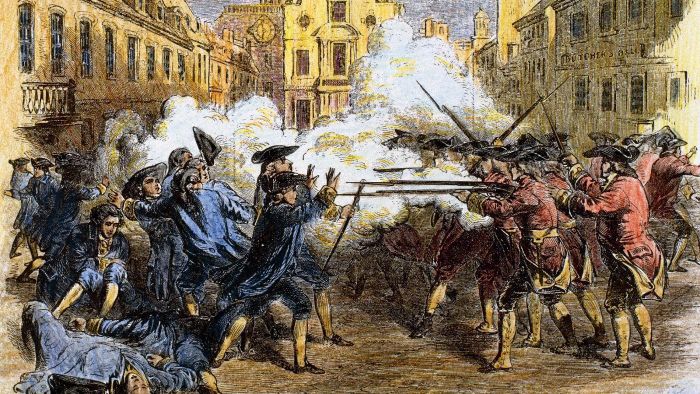
We are far, far more skeptical of government power in the USA than just about anywhere else in the world (even former Communist nations!). Not that our government has ever been especially oppressive (despite Woodrow Wilson’s best efforts), nor was the ministry of Lord North under King George III all that wicked and tyrannical. But the myth is there – that is, the idea that we are doughty independent rebels standing up for our rights against a brutal, centralizing, distant imperial force – is woven into our national DNA. Note that calling something a myth does not mean it’s untrue! Myth here instead refers to a story we tell ourselves to explain why the world is the way it is. The Greek myths explain the Greek worldview, Jewish mythology explains Jewish theology, and just so the American foundational myth creates the American worldview.
This explains our strong state governments, and our (comparatively) weak federal government. While the federal government does continually grow and increase its reach and power over our daily lives, it has to fight tooth and nail for every inch of ground – remember the battle over Obamacare? Over whether the Census should ask if you’re an American citizen? Our continued resistance to a national ID card? Americans are skeptical of anything which seems to give a potential tyrant power over us, and it all stems from the original experience with the British. You don’t find this same skepticism in Korea.
Key #2: You cannot understand America without understanding American race relations.

Perhaps it’s because I was raised in the ’90s and ’00s, when this was all the rage in American history writing, but the theme of race is an undercurrent running down all the way through American history to today. Now, you can certainly write American histories without focusing too heavily on the racial divide – Frederick Jackson Turner’s frontier hypothesis comes to mind, you have Mahan and his naval power, etc. But those histories can only get you so far, and only in a few places. You can, more or less, get through the 18th century, sort of, without mentioning race (if you do your best not to talk about the Southern colonies – but then how will you talk about the relations between the colonials and the Indians? Stuff that’s almost forgotten today, like King Phillip’s War?
All of American history, especially as an independent nation, has its central domestic tension: the large population of African-Americans living in the plantation South, and the efforts of the planter class to maintain control over that population, beginning with the brutal oppression and violence of slavery and continuing through the legal and social humiliation of Jim Crow, and the perversion of the Constitution in order to maintain that racial caste system.
Much of modern America traces back to the initial racial divide. The blighted inner cities? Goes back to white flight, the Great Migration, etc. Fights over whether or not a bakery has to bake a pro-gay marriage cake or if they have the right to their own conscience? Goes back to Jim Crow and “separate but equal” facilities. No IQ tests for important jobs or for important civic duties like voting? Ultimately because those and more besides were once abused by the Southern planters to maintain their power. The modern arguments about affirmative action – especially the discrimination against Asians by many of our top universities, something of great concern to a lot of students here – trace their root back to this.
In many ways, the Civil Rights Era represents a third founding of the United States – after the Revolution and the Civil War/Reconstruction. Many of our founding ideals were at last coded into law at that time, and Martin Luther King has a place in the American pantheon of civic heroes comparable to Abraham Lincoln or George Washington.
As a largely homogeneous society, Koreans haven’t grown up with the same awareness that we have. They’re not steeped in it, the way American students are. But you can’t understand America without understanding race.
Key #3: America is big.

Stop laughing, it matters.
I’ve heard it said that in America, 100 years is a long time, and in Europe, 100 miles is a long way.
People, Americans and non-Americans alike, don’t really appreciate how much larger than most nations the US is, or why that’s a big deal. But it’s a huge deal.
The United States is nearly 10,000,000 square kilometers in area. It runs for 2,680 miles at its widest point and is 1,500 miles from north to south. By comparison, the United Kingdom is about 250,000 square kilometers in land area. France is a little over 500,000. The entire land area of the European Union is 4,500,000 square kilometers (and that figure will soon shrink…maybe)!
Put it this way: the distance from Paris to Moscow is about the same as the difference from Los Angeles to Kansas City. That distance destroyed Napoleon. It’s only halfway across the United States.
Why does it matter?
Think of the troubles the EU has wrangling a continent-wide union, getting British and Greeks and Poles and Portugese all on the same page. Think of China’s struggle to control its own continent-sized empire, with all the necessary repressive measures in Xinjiang, Tibet, and lately Hong Kong. The United States is as large or larger than those polities. And we all have lived under one government, at peace with each other***, for more than 200 years.
But that size has consequences. The population density of the USA is far, far lower than in most of Western Europe. That matters for things like the railroad systems, power infrastructure, and yes, federal spending. It makes things like health care delivery, internet service, hell, even the mail delivery far more complicated for the US than for other nations. It matters for travel – our cities sprawl out into the empty space, and servicing all those suburbs is damned near impossible for mass transit…but we DO have an excellent interstate system. Why do so many Americans own cars? Why are they so large? Well, there you go.
Why do so many Americans only speak one language? Why, a Frenchman might speak French, Dutch, English, German, and Spanish! Perhaps even Italian! But in France, a day or so of driving can carry you from Paris to the border of the Netherlands, of the UK, of Germany, of Spain, or of Italy. In the United States, a day or so of driving can carry you from English-speaking east Texas to…English-speaking west Texas. From Kansas City, in the center of the country, for more than a thousand miles in every direction, there is one language spoken: English. From Berlin, within a thousand miles, there are more than 30 – and that’s me only counting Europe. So yes, many Americans only ever learn English.
Size matters.
It creates a huge diversity of cultures within the US. Florida Man is famous around the country, and Florida has very little in common with its nearest neighbor, Georgia. The Northeast and the Southeast are very different places. East Coast vs. West Coast. The Midwest, the Rust Belt, the Mountain West, the Southwest, New Orleans doing its own thing, the Pacific Northwest, California, Alaska, Hawaii – there’s a hundred different little cultural enclaves in the United States and we all need to get along with each other. Our laws need to be acceptable to the tree-hugging-est hippy in Portland and the rootin’-tootin’-shootin’-est cowboy in Lubbock, Texas. Our political parties need to appease both these people and millions more. That’s why our laws are often a kludgy mess of compromises and we answer so many questions with, “Well, it depends on your state…”

So those are my three keys. If you can grasp those 3 distinctive facts about the United States, you’ll be well on your way to understanding our little idiosyncracies. Is that a decent introduction to American history, geography, and culture? Hell, I dunno.
But it’s what I’m going with, so fingers crossed!
*If we bought Greenland, we’d pass up Canada. I’m just sayin’.
** Full disclosure – I never edit these. Sorry.
*** With one notable exception. More or less.
 Gwangju Dreaming